





![David Lee Roth – California Girls (Official Video) [HD]](https://musicvideosclub.com/wp-content/uploads/2026/10/david-lee-roth-california-girls-360x203.jpg)


Paula Abdul – Straight Up
A Laker Girl turned choreographer recorded a song that wasn’t even written for her — partly in the songwriter’s bathroom, for about three thousand dollars — and a young director named David Fincher turned it into the video that made her a superstar.
Almost nothing about Straight Up was supposed to happen the way it did. The song wasn’t written for Paula Abdul. It was recorded on a shoestring in a songwriter’s apartment, with a neighbor reportedly banging on the wall to complain about the noise. The woman singing it wasn’t yet a recording star at all — she was one of the most in-demand choreographers in pop. And the director who shot its stark black-and-white video would go on to make Se7en and Fight Club. Out of that unlikely combination came one of the defining hits of the late 1980s, and the record that turned Paula Abdul from a behind-the-scenes force into a household name.
Keep watching: explore more 80s → · more Pop →
By 1988, Abdul had already built a remarkable career without ever stepping in front of a microphone. She’d started as a cheerleader for the Los Angeles Lakers at 18, became head choreographer of the Laker Girls, and was discovered there by the Jacksons, who hired her to choreograph their “Torture” video. That led to her defining work shaping Janet Jackson’s breakthrough videos — “Nasty,” “Control,” “What Have You Done for Me Lately” — the routines that helped turn Janet into a phenomenon. Abdul was the movement behind some of the era’s biggest images. But she wanted to be the one in the frame, and Virgin Records took a chance on her.
The song that made it work arrived almost by accident. Elliot Wolff, a journeyman writer and producer who had toured as a keyboardist for Chaka Khan and Peaches & Herb, had written Straight Up for a different singer Virgin had signed — a singer the label then dropped before her album came out. The demo drifted loose, and Abdul’s mother found it through a mutual friend and brought it to her daughter. Abdul loved it instantly, even though, by her own account, the label initially passed and the demo sounded rough. She struck a deal: she’d record two songs the label preferred, ones she didn’t much like, if they let her cut Straight Up. She got her way, recorded the vocal in Wolff’s Pacific Palisades apartment — part of it, famously, in his bathroom — for a budget of roughly three thousand dollars.
The sound of 1989, built on a finger snap
What they captured was a small marvel of late-’80s pop construction. Straight Up opens on Abdul’s voice over a single finger snap before dropping into a syncopated drum-machine groove, a funky synth-bass hook, and the bright stabs of new jack swing that were defining the moment. The lyric is all hard-won confidence — “Straight up now tell me, are you really gonna love me forever?” — a demand for honesty rather than a plea. Released as the third single from her debut album Forever Your Girl on November 22, 1988, it was Abdul’s first single to crack the Top 40, and then it simply took over. In February 1989 it reached No.1 on the Billboard Hot 100, where it stayed for three weeks, and it climbed into the Top 10 in at least sixteen countries. It remains her biggest international hit to this day.
It also did something larger: it pulled the entire album up behind it. Forever Your Girl took a record-setting 64 weeks to reach No.1 on the Billboard 200 — the longest climb to the top in chart history — and became the first debut album ever to produce four Hot 100 No.1 singles. The record went on to sell seven million copies in the United States. Straight Up earned Abdul her first Grammy nomination, for Best Female Pop Vocal Performance, and announced a new pop star fully formed.
The video that launched two careers
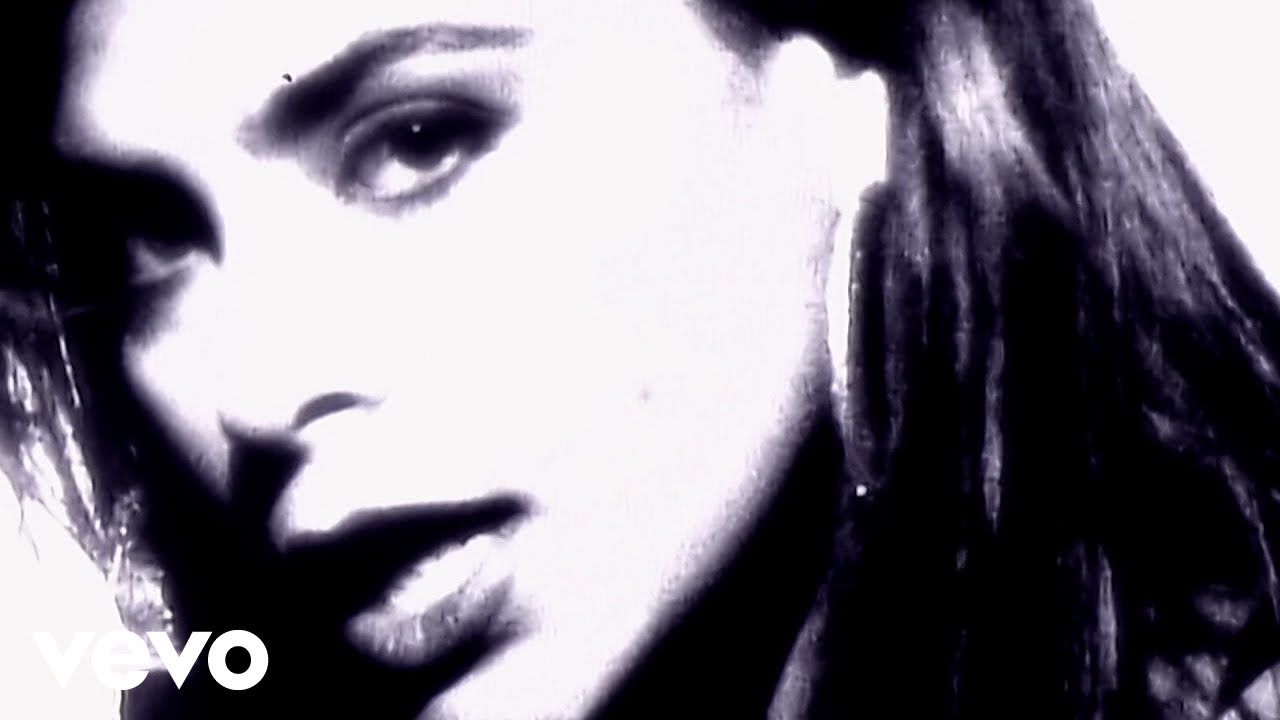
If the song made Abdul a star, the video made her an event. Shot in crisp black and white by a young David Fincher — then a rising commercial and music-video director at Propaganda Films, years before his run of landmark films — it put Abdul’s real gift front and center: her dancing. The choreography was sharp, athletic, and constantly inventive, and it reminded everyone that the woman selling the song had spent years teaching other superstars how to move. The video became a fixture on MTV and helped earn Abdul a reputation as one of the most watchable performers of the era. Fincher would direct two more Abdul videos, including “Cold Hearted,” before moving on to features; Abdul would rack up five MTV Video Music Awards and, in 1990, win a Grammy for the video to “Opposites Attract.”
Decades on, Straight Up still sounds like the exact center of its moment — the snap, the groove, the dare in Abdul’s voice. For a song that nobody planned around her, recorded for pocket change in a borrowed bathroom, it became the foundation of an entire pop career. Paula Abdul turns 64 in June 2026, and the song that wasn’t supposed to be hers remains, unmistakably, the one she was put here to sing.
SONG INFORMATION
Enjoyed this one? New forgotten gems every day — tap Music Videos Club below to visit and follow us on Facebook:
Related videos
 Watch LaterAdded
04:41
Watch LaterAdded
04:41  Watch LaterAdded
03:05
Watch LaterAdded
03:05  Watch LaterAdded
04:50
Watch LaterAdded
04:50