The 5th Dimension passed on it, the man who wrote it was a broke actor convinced his real break would come from movies — and then Karen Carpenter sang it and made it one of the saddest-sounding hits of 1971.
Before it was a Carpenters classic, Rainy Days and Mondays was just another demo in a stack, and its lyricist was an out-of-work actor who didn’t yet believe songwriting was his future. Paul Williams had come to Los Angeles to act — he’d taken small roles in films and was certain the movies would make him. Songwriting was the thing he did on the side. The 5th Dimension, offered the song, passed on it. Then the demo landed on Richard Carpenter’s desk, and everything about its fortune changed.
Richard pulled it from a batch of demos sent over by A&M’s publishing houses, and he knew immediately. Williams and his writing partner Roger Nichols had already handed the Carpenters We’ve Only Just Begun the year before, and this new ballad had the same quality — a melody built for Karen Carpenter’s voice. The song was credited to Williams for the words and Nichols for the music, and it carried a melancholy that ran deeper than its gentle surface. Williams later told of bumping into the great lyricist Johnny Mercer at the record company, who singled out the opening of the second verse — “What I’ve got they used to call the blues” — for praise. Coming from one of the twentieth century’s finest lyricists, that was no small thing.
The recording itself was a study in restraint. Backed by the Los Angeles session players known as the Wrecking Crew, Richard deliberately kept the arrangement sparse, building space around his sister’s voice rather than crowding it. The song opens with a plaintive harmonica figure — played by Tommy Morgan, initially uncredited — that returns throughout like a recurring thought. Karen was just shy of her twenty-first birthday when she recorded it, and what she brought to the song was something no arrangement could manufacture.
How a 21-year-old made world-weariness sound true
That is the quiet miracle of the record. The lyric is a portrait of low-grade depression — feeling like you don’t belong, walking around “like some kind of lonely clown” — and it should have been beyond the emotional reach of a singer barely out of her teens. Instead, Karen delivered it with a weariness that sounded entirely lived-in. Her contralto, warm and close-miked, made the sadness intimate rather than theatrical. Richard’s underrated harmony vocals shadow her throughout, and the whole production seems to lean in toward the listener.
Released as a single on April 23, 1971, Rainy Days and Mondays climbed to number 2 on the Billboard Hot 100, spending seven weeks in the Top 10 and held off the top spot only by the twin force of Carole King’s “It’s Too Late” and “I Feel the Earth Move.” It went to number 1 on the Adult Contemporary chart — the duo’s fourth consecutive chart-topper there. More than half a century later, it remains one of the definitive performances of a catalog full of them: proof that the saddest songs, sung plainly and without a trace of self-pity, are often the ones that last.
SONG INFORMATION
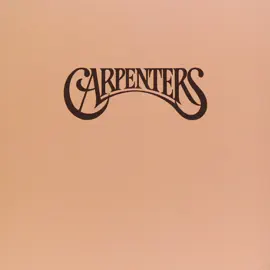
Artist: Carpenters
Song: “Rainy Days and Mondays”
Album:Carpenters
B-side: “Saturday”
Released: April 23, 1971
Recorded: 1971
Label: A&M
Songwriters: Paul Williams (lyrics), Roger Nichols (music)
Producer: Jack Daugherty
Length: 3:36
Chart Performance: No. 2 (Billboard Hot 100, seven weeks in the Top 10); No. 1 (Adult Contemporary)
Lineup: Karen Carpenter (lead vocals), Richard Carpenter (harmony vocals, piano), Tommy Morgan (harmonica), the Wrecking Crew (session backing)