



Rolling Stones – Honky Tonk Women (Hyde Park, 1969)
A song Mick Jagger and Keith Richards wrote on a Brazilian ranch in January 1969 became the bridge between two eras of the Rolling Stones — Brian Jones’s last week as a working member, Mick Taylor’s first as his replacement, and the soundtrack to one of the largest public memorials in rock history, in front of half a million people at Hyde Park.
The song was written on holiday. In late December 1968 and the first days of 1969, Mick Jagger and Keith Richards left London for the small Brazilian town of Matão in São Paulo state, where they spent a few weeks with Marianne Faithfull, Anita Pallenberg, and a guitar between them on a friend’s ranch. Honky Tonk Women began there, in its first form — a slow country waltz inspired by the rural Brazilians around them and patterned after the kind of Hank Williams and Jimmie Rodgers records Keith had been carrying around in his head for years. The title looked back further, to 19th-century saloon-floor America. The lyric, when it arrived, was about a divorced barmaid in Memphis and a “gin-soaked queen” in New York City — Brazilian inspiration, American setting, English author.
The first recording of the song, made at Olympic Studios in London in early March 1969, sounded almost nothing like the version that would soon become the Stones’ biggest single of 1969. Filed under the working title Country Honk, the original take was just what its name suggested — a fiddle-driven country waltz with Brian Jones sitting in. Those March sessions turned out to be the last recordings Jones ever made with the band he had founded six and a half years earlier. By the spring of 1969 he was, as Bill Wyman later put it bluntly, “out of it” — heroin, depression, paranoia about being followed, and a fractured working relationship with everybody else in the room. The band tried to keep him on the record. He could not focus.
Sometime in the late spring, the song transformed. Keith found the electric guitar riff that turned the country waltz into a rock single — Mick Taylor, the 20-year-old John Mayall sideman who had auditioned for the band in May, would later claim he helped find it, though Keith plays it on the released recording. They re-cut the track at Olympic between mid-May and June 8, 1969, with Jimmy Miller producing, Charlie Watts on drums, and Miller himself adding the cowbell intro that the song now begins with as a kind of trademark. Bill Wyman remembered the moment clearly: “We tried various ways before Jimmy sat down at the drums and showed Charlie a rhythm. Jimmy then picked up a cowbell and played it, giving the track the distinct edge that made it so successful. We dispersed with the knowledge that we had completed a winning single.” That same day — June 8, 1969 — the four of them drove down to Cotchford Farm and told Brian Jones he was no longer in the band.
July 3, July 4, July 5
Twenty-five days later, on July 3, 1969, Brian Jones drowned in his swimming pool at Cotchford Farm, the East Sussex house that had once belonged to A. A. Milne. He was twenty-seven. The Rolling Stones had a free concert at Hyde Park scheduled for July 5 — already announced, already rehearsed at the Beatles’ unfinished basement studio on Savile Row, already planned as the public debut of Mick Taylor. After a few hours of private debate, the band decided to play it as a memorial.
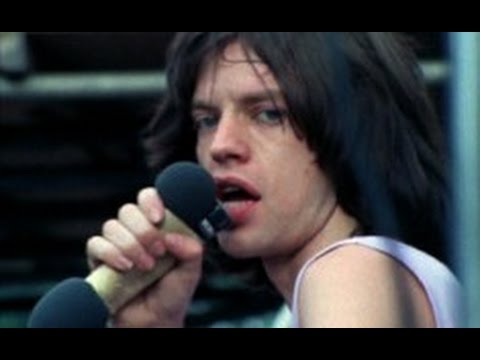
By the morning of July 5, seven thousand people had already gathered. Fans had been arriving in Hyde Park with candles since the previous afternoon. By the time the Stones took the stage in the late afternoon, somewhere between a quarter of a million and half a million people were spread across the park — accounts vary, some sources push the figure as high as 650,000, no headcount was ever definitive. Mick Jagger walked out in a short-sleeved white dress coat made by the London designer Mr Fish, called for the crowd to quiet down, and pulled a calf-bound book of poetry from his pocket. “I really would like to say something for Brian,” he said. He then read two stanzas from Percy Bysshe Shelley’s Adonaïs, Shelley’s 1821 elegy for John Keats: “Peace, peace! he is not dead, he doth not sleep / He hath awakened from the dream of life…”
When Jagger finished, the band’s road manager Tom Keylock released several hundred cabbage white butterflies from cardboard boxes that had been stored in the heat overnight. Many were already dead. The ones that flew became one of the most enduring images in rock photography. The gesture cost the band roughly £300. Then the Stones did the only thing they knew how to do under the circumstances. They opened with a Johnny Winter blues cover they had never played before and never played again, hit the live debut of Jumpin’ Jack Flash, and worked their way to Honky Tonk Women, the song still in its second week of pressing — the single would not be released for another day in the UK. After the concert, fans who stayed to help clean the field were handed free copies of the new 45.
Honky Tonk Women spent five weeks at number one on the UK chart and four weeks at the top of the Billboard Hot 100 starting August 23, 1969. The Granada television film of the Hyde Park concert, directed by Leslie Woodhead, aired in Britain on September 2 as The Stones in the Park; almost six decades later, it remains the most-watched document of a band saying goodbye to one member and hello to the next on the same hot afternoon. Mick Taylor was twenty years old. He would stay in the band for five years, leave in 1974, return as a guest at Glastonbury and Hyde Park in 2013, and be welcomed back as the only living former Stone the band has ever wanted to share a stage with. Honky Tonk Women is still in the Rolling Stones setlist today, fifty-seven years later. Keith still plays the riff. Mick still sings it. Some songs do not stop. Watch the video.
SONG INFORMATION
Related videos
 Watch LaterAdded
04:53
Watch LaterAdded
04:53  Watch LaterAdded
04:22
Watch LaterAdded
04:22  Watch LaterAdded
03:21
Watch LaterAdded
03:21