



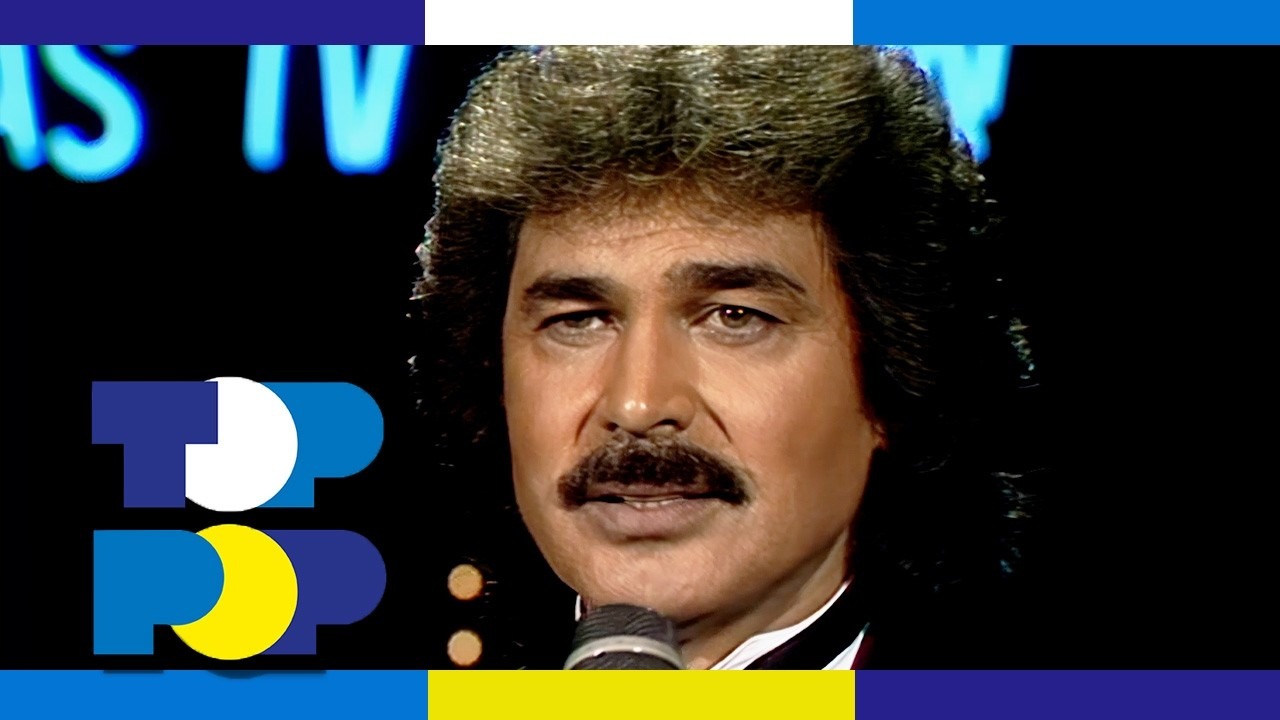





Engelbert Humperdinck – Please Release Me
A 1949 American Country Song Written in an Hour Before a Gig, Offered First to Tom Jones, Recorded by Engelbert Humperdinck in Late 1966 — and the Single That Kept the Beatles Off the Top of the UK Chart for the First Time Since Their Debut, Sold 1.38 Million Copies in Britain, and Launched a 140-Million-Record Career.
The song that gave Engelbert Humperdinck his career — that took a thirty-year-old Leicester-via-Madras nightclub singer who had been struggling under the stage name Gerry Dorsey for almost a decade and turned him, within eight weeks, into the man who had ended The Beatles’ four-year run of UK number-one singles — had been written nearly two decades earlier in San Francisco. The American country songwriter Eddie Miller, born in Camargo, Oklahoma in 1919 and working as a locomotive railroad engineer when he wrote his first published song in the mid-1930s, was in a bar with his bandmates the guitarists Bobby Gene Yount and Dub Williams when he overheard a married couple arguing at the next table. The wife said, by Yount’s later recollection: “If you’d release me, we wouldn’t have any problems and everything would be all right.” Miller took the phrase back to the band. They worked on the song in the dressing room before the gig that night. The basic version was finished in about an hour. Miller recorded the first version in 1949 with his Western swing band Eddie Miller and his Oklahomas for the California label Four Star Records, where he was working as both a songwriter and a recording artist. The single did not chart. Release Me would, however, be recorded by half a dozen American country and pop acts across the 1950s — Jimmy Heap and the Melody Masters in 1953, Ray Price and Kitty Wells both in 1954, Patti Page in 1961, Jivin’ Gene Bourgeois and the Jokers in 1960 — before Little Esther Phillips’s 1962 R&B version reached number one on the Billboard R&B chart and number eight on the pop chart, finally crossing the song into the popular American market.
The song’s arrival in Engelbert Humperdinck’s catalogue, fifteen years after Miller’s first recording, was the work of his manager Gordon Mills. Mills — the Welsh music impresario who had already turned the Welsh nightclub singer Thomas Woodward into Tom Jones in 1963 and would handle both careers in parallel through the rest of the 1960s — was looking, in late 1966, for a hit for his other recently rebranded client. Arnold George Dorsey had been Gerry Dorsey for years. Mills had renamed him Engelbert Humperdinck in early 1965 after a German nineteenth-century operatic composer, on the simple logic that the name was so unusual British audiences would not forget it. The new name had not yet, by autumn 1966, found him a hit single. Mills heard the British saxophonist Frank Weir’s instrumental version of Release Me on the radio and recognised the melody’s commercial possibility. He found the lyrics. He recorded a gospel-styled version with Tom Jones the week before he played it to Engelbert. Jones did not like the result and rejected it. Mills offered the song to Engelbert instead. “I heard the melody and thought it could be a hit,” Engelbert told Billboard fifty years later. “When we heard the words, it was a double whammy for me because they sounded terrific.”
The Recording, the Lasso, and the Sunday Night at the London Palladium Live Debut
The arranger Charles Blackwell — a British orchestral writer who had previously worked with Petula Clark, Frankie Vaughan, and Joe Cocker — was brought in to reshape Tom Jones’s gospel arrangement into something completely different. “Tom Jones’s version was more gospel,” Blackwell explained years later. “So for Engelbert I changed the arrangement into what you might call orchestral country music.” The 1967 Decca session, produced by Peter Sullivan, paired Engelbert’s three-and-a-half octave vocal range with a smooth Blackwell string arrangement, a country pedal steel feel rebuilt for British orchestral pop, and a chorus of session vocalists joining Engelbert on the third refrain. The session guitarists were Big Jim Sullivan — the most-recorded British session guitarist of the 1960s — and a twenty-three-year-old Jimmy Page, who at that moment was still in The Yardbirds and would form Led Zeppelin the following year. The B-side of the single was Ten Guitars, a song that would itself become a surprise number-one hit in New Zealand on the back of the single’s distribution. Decca released the single in January 1967.
The breakthrough moment came on the television variety programme Sunday Night at the London Palladium, the most-watched British variety show of the 1960s, broadcast on ATV. The Palladium had booked the British crooner Dickie Valentine as the principal musical act. Valentine fell ill the day before the broadcast. The producers needed a replacement at short notice and pulled Engelbert in to perform Release Me. The Sunday-night appearance, watched by an estimated twenty million British viewers, sent the single climbing through the chart immediately. By March 2, 1967, Release Me had reached number one on the UK Singles Chart. It stayed there for six consecutive weeks. The record blocked The Beatles’ double A-side Penny Lane / Strawberry Fields Forever from the top of the chart through all six weeks of its run — the first time since The Beatles’ 1962 debut single Love Me Do that any Beatles record after the band’s commercial breakthrough had failed to reach number one in Britain. The chart story has been part of British pop music historiography ever since. The Daily Mail journalist Peter Hitchens later described the record as the actual revolutionary popular-music moment of the 1960s, arguing that it was more genuinely influential than anything Bob Dylan released that decade — the song spoke, in his reading, to the broader public’s desire to be released from the social conservatism of the postwar period in a way that the era’s countercultural music could not.
The Sales, the Chart Longevity, and the 140 Million Records That Followed
Release Me sold at a peak rate of 85,000 copies per day during the chart run. Total UK lifetime sales of the single reached 1.38 million copies, making it the highest-selling UK single of 1967 — outselling every Beatles, Rolling Stones, Kinks, Who, Cream, and Hollies single released that year. The record spent fifty-six consecutive weeks in the UK Top 50, a chart-longevity record that has held for more than five decades. The single reached number four on the US Billboard Hot 100, the first international success of Engelbert’s recording career, and became one of the best-selling singles of the entire 1960s in Britain. The follow-up The Last Waltz, released later in 1967, also went to UK number one and also sold over a million copies. There Goes My Everything followed, then Am I That Easy to Forget, then A Man Without Love, then Les Bicyclettes de Belsize, then The Way It Used to Be, then I’m a Better Man (For Having Loved You), then Winter World of Love. The albums followed at the same rate. By the end of the 1960s Engelbert had become one of the most commercially successful balladeers in the English-speaking world, with the rapidly growing “Humperdinckers” fan base — a demographic of mostly women, in the 1967 chart language of the British music weeklies — driving sustained record sales across both Britain and North America. The Variety Club of Great Britain named Engelbert Show Business Personality of 1967. ATV gave him his own television variety series, The Engelbert Humperdinck Show, which ran for two seasons across 1969 and 1970. He recorded across the next five decades — orchestral records, country crossover records, a gospel album that earned a Grammy nomination in 2003, the 2014 duets album Engelbert Calling, and a 2012 Eurovision Song Contest entry for the United Kingdom in Baku. Total worldwide record sales across the catalogue: over 140 million units. He was appointed a Member of the Order of the British Empire in the 2021 Birthday Honours for services to popular music and to charity. He turned ninety on May 2, 2026 and continues to perform. The song that began the entire career was a 1949 American country song written by a railroad engineer in San Francisco, rearranged in 1967 by a British orchestrator after Tom Jones rejected it. Sometimes the records that change a singer’s working life were written by someone else in another country before the singer was born.
SONG INFORMATION
Related videos
 Watch LaterAdded
04:05
Watch LaterAdded
04:05  Watch LaterAdded
02:57
Watch LaterAdded
02:57  Watch LaterAdded
03:04
Watch LaterAdded
03:04