Cass Elliot’s “Make Your Own Kind of Music” barely cracked the Top 40 in 1969, then became inescapable decades later
When Make Your Own Kind of Music came out in September 1969, it stalled at No. 36 on the Billboard Hot 100 and was written off as a commercial disappointment. It would be Cass Elliot’s last solo trip into the American Top 40. And yet, decades after everyone had filed it away as a minor entry, it became one of the most recognizable songs of her career — pulled back into the culture by television, film, and eventually millions of phone screens.
Elliot wasn’t the first to sing it. The song came from Barry Mann and Cynthia Weil, the married Brill Building team behind a stack of 1960s hits, and it was first recorded by the vocal trio the Will-O-Bees. Their version went nowhere. When Elliot cut her own, produced by Steve Barri for Dunhill, it was her second straight Mann and Weil single, following “It’s Getting Better,” her hit from the summer of 1969. The lyric — a plea to follow your own path no matter who’s telling you otherwise — fit exactly where she was in 1969, several singles into a career built to prove she was more than the group she’d left behind.
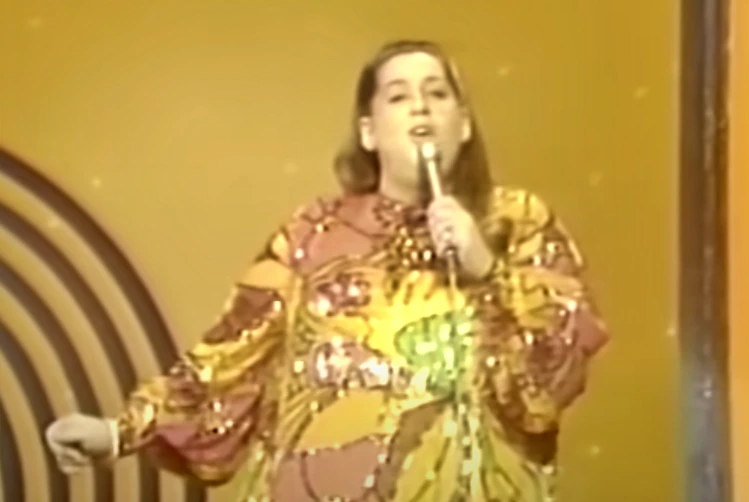
She promoted it the way stars did then, on television. And the modest chart number feels beside the point next to the record itself — her voice bright and unforced, the delivery warm and completely her own. The message of the song and the woman singing it line up so cleanly that it plays less like a plug for a single than a statement of who she’d decided to be.
What happened next took thirty-odd years. In the 2000s the song resurfaced on television — memorably on Lost, where its sunny tone was turned into something quietly unsettling, and later on Dexter. It turned up in the 2021 film Free Guy, spread across TikTok as a meme soundtrack, and by 2023 was familiar enough to be the subject of a Saturday Night Live sketch imagining its original recording session — a joke that landed precisely because the song really had been half-forgotten before roaring back. A record that barely dented the chart in its own moment had become, improbably, a permanent piece of the pop-culture furniture. Elliot didn’t live to see any of it; she died in 1974, at 32. The voice did the traveling without her.
You can hear the studio recording here:
SONG INFORMATION
Artist: Cass Elliot
Song: “Make Your Own Kind of Music”
Album:Make Your Own Kind of Music / It’s Getting Better
B-side: “Lady Love”
Released: September 1969
Studio: Western Recorders, Hollywood
Label: Dunhill
Songwriter(s): Barry Mann, Cynthia Weil
Producer(s): Steve Barri
Length: 2:25
Chart Performance: No.36 Billboard Hot 100; No.6 Billboard Adult Contemporary
Original Release: The Will-O-Bees
Performance: American television, archival footage