



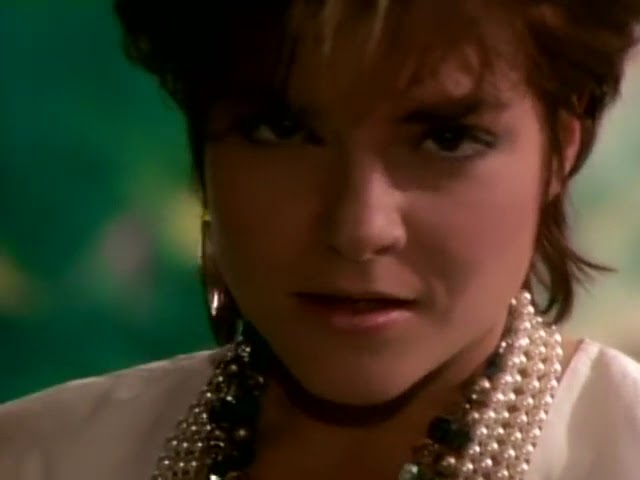







Rosanne Cash – I Don’t Know Why You Don’t Want Me
Rosanne Cash lost a Grammy in 1983, and on the drive home — in the new dress and shoes she had bought for the ceremony — she started writing a self-deprecating song about rejection. That song won her the Grammy three years later.
Rosanne Cash had bought a new dress and new shoes for the 1983 Grammy Awards, and she had lost. She had been nominated for Best Country Vocal Performance, Female, for her single “Ain’t No Money,” in a category that also held Dolly Parton, Emmylou Harris, and Sylvia — and the award went to Juice Newton for her recording of “Break It to Me Gently.” Cash got in the car to drive home. And somewhere on that drive, dressed up with nothing to show for it, she started — half as a joke, entirely at her own expense — to put together a song. The line that came to her was a complaint that sounded like heartbreak but was really about an awards ceremony: “I don’t know why you don’t want me.” It was a self-deprecating shrug set to a melody, the sound of a woman laughing at her own disappointment on the highway home. She did not yet know it would become the most important song of her career.
Cash finished the song with Rodney Crowell, the singer-songwriter she had married in 1979 and who was both her husband and one of her closest creative partners. The finished “I Don’t Know Why You Don’t Want Me” kept the double meaning intact. On its surface it is a straightforward country song of romantic rejection — a singer asking, plainly and repeatedly, why she has not been chosen. But Cash has been candid for forty years about what the song is actually about. “You always think of it as being a love song,” as the story has been told, “but she was actually talking about” the awards. The genius of the writing is that the listener does not need to know that. The song works as a breakup song for anyone who has ever been passed over for anything — a job, a person, a prize — and the specificity of its origin only sharpens it. Cash had taken the most deflating professional night of her early career and turned it into a song that everyone could hear as their own.
The record that defined a run of number ones
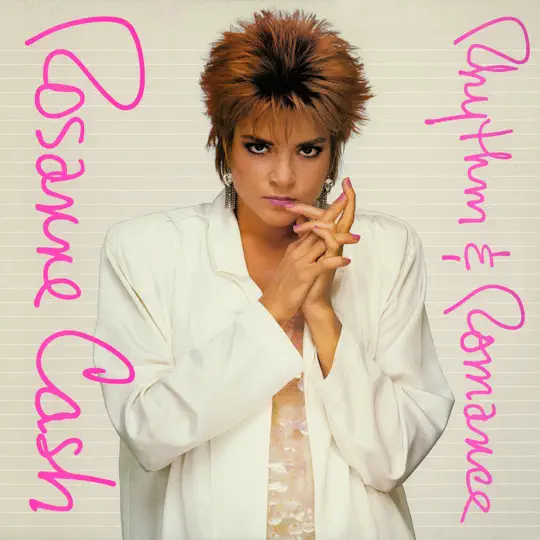
“I Don’t Know Why You Don’t Want Me” was recorded for Rhythm & Romance, Cash’s fifth studio album, and produced by David Malloy. It was released as the album’s lead single on February 6, 1985, three months ahead of the album, with “What You Gonna Do About It” on the B-side. Cash by this point was one of the biggest names in country music — her 1981 breakthrough “Seven Year Ache” had topped the country chart and crossed into the pop Top 30 — but Rhythm & Romance marked a particular milestone in her writing life. It was the first of her albums on which she wrote or co-wrote the majority of the songs, a deliberate step further into authorship for an artist who had grown up as the eldest daughter of Johnny Cash and had every opportunity to simply record other people’s material.
The single performed the way a lead single is supposed to. “I Don’t Know Why You Don’t Want Me” reached No. 1 on Billboard’s Hot Country Songs chart, where it spent a week at the top and a total of fifteen weeks inside the country top 40. It went to No. 1 on Canada’s RPM Country Tracks chart and reached No. 16 on Billboard’s Adult Contemporary chart, a measure of the genre-crossing reach Cash’s records had in the mid-1980s. It was her fourth No. 1 on the US country chart. Rhythm & Romance, released on May 6, 1985, became Cash’s second No. 1 country album and produced a second chart-topping single in “Never Be You,” a Tom Petty and Benmont Tench composition, along with the top-five singles “Hold On” and “Second to No One.”
The loss that became the win
The full arc of the song’s story closed at the 28th Annual Grammy Awards, held in February 1986. “I Don’t Know Why You Don’t Want Me” was nominated for Best Country Vocal Performance, Female — the exact category Cash had lost three years earlier. The other nominees included Emmylou Harris and Dolly Parton, both of whom had been in the room for the 1983 defeat, and Juice Newton, the artist who had beaten her then. This time Cash won. The song she had begun writing on the drive home from a Grammy loss had become the song that won her her first Grammy. It is one of the cleaner pieces of poetic justice in the history of the awards: an artist who turned a snub into a composition, and then watched that composition collect the prize the snub had denied her. Cash performed the song on Saturday Night Live the same year, carrying it onto national television at the peak of its chart life.
Rosanne Cash’s career since has moved well beyond the country mainstream of the mid-1980s. Her 1990 album Interiors broke sharply from her pop-country past; she divorced Crowell in 1992, moved from Nashville to New York City, and built a second career as an Americana artist and an author, winning three more Grammy Awards for 2014’s The River & the Thread nearly three decades after her first. But “I Don’t Know Why You Don’t Want Me” remains a particular kind of landmark in that catalog — not her most ambitious record, not her most personal, but the one with the best story attached. It is the song that proves a useful thing about songwriting: that the worst night can be the raw material for the best result, if the writer is paying enough attention on the drive home.
SONG INFORMATION
Related videos
 Watch LaterAdded
02:57
Watch LaterAdded
02:57  Watch LaterAdded
03:04
Watch LaterAdded
03:04  Watch LaterAdded
03:58
Watch LaterAdded
03:58