



Bob Dylan – Like A Rolling Stone (Live at Newport 1965)
Bob Dylan’s own official channel labels this performance two different years. Only one of them is possible, and the song itself settles the argument.
The video caption reads 1963. The description directly beneath it reads 1965. Both sit on Bob Dylan’s official channel, a few pixels apart, and they cannot both be true. The song decides it: Like a Rolling Stone did not exist in 1963. Dylan wrote it in June 1965, cut the master on June 16, and Columbia released it on July 20 of that year. What you are watching happened on July 25, 1965, when the record was five days old.
Keep watching: Bob Dylan – Mr. Tambourine Man
The error is an easy one to make, which is probably why it has survived. Dylan really did play the Newport Folk Festival in 1963, as Joan Baez’s guest, and again in 1964. Two acoustic appearances, both warmly received, both part of the reason the third one landed the way it did. A caption reading 1963 looks plausible to anyone who knows he was there. It is simply the wrong year for this song.
The record had been finished barely a month. Dylan came back from a punishing tour of England in the spring of 1965 and wrote a long, furious stretch of verse, then cut it down to four verses and a chorus. On June 15 he brought it into Studio A at Columbia on Seventh Avenue in Manhattan, with Tom Wilson producing and Mike Bloomfield on guitar. The first day went nowhere. They tried it as a waltz, and it sat there.
What changed it was somebody who was not supposed to be playing. Al Kooper had come as Wilson’s guest, brought a guitar in the hope of talking his way onto the session, heard Bloomfield play, and quietly put it away again — he later wrote that he was in over his head. When the organ seat came free he took it, having never really played one, and felt his way through a part that has been inseparable from the song ever since. Dylan, hearing the playback, told Wilson to push the organ up in the mix. Wilson pointed out that Kooper was not an organ player. Dylan was unmoved. Take four of fifteen became the single.
Six minutes nobody wanted to release
Columbia did not want to put it out. It ran past six minutes, roughly double what radio would tolerate, and the electric arrangement did not match anything the label had successfully sold under Dylan’s name. The record sat. What broke the impasse was an acetate that found its way to Arthur, a Manhattan club, where disc jockeys heard it and started asking for copies. Columbia released it on July 20, 1965, backed with Gates of Eden. It entered the Billboard chart the week ending July 24, stayed twelve weeks, and stopped at No. 2 — the highest Dylan had ever charted.
Five days after release, he walked onto the Newport stage with a Fender Stratocaster and a band assembled at short notice: Bloomfield on guitar, Jerome Arnold on bass, Sam Lay on drums, Barry Goldberg on piano, and Kooper again at the organ. Most of that group came out of the Paul Butterfield Blues Band. The electric portion of the set ran three songs — Maggie’s Farm, then this one, then an early version of It Takes a Lot to Laugh, It Takes a Train to Cry. All three were live debuts.
Nobody agrees on what the crowd was doing
The booing is documented. What it meant is not. Some who were present describe an audience offended by electric instruments at a folk festival. Others insist the complaint was the sound, which was badly mixed and painfully loud in the field. Others still say the crowd was angry the set was over after three songs. Pete Seeger’s fury is part of the folklore, including a story about an axe that he spent decades denying; his own account was that he could not make out the words and wanted the volume fixed. Britannica’s summary is blunt about it — there is no consensus, and there has never been one.
What is not in dispute is what Dylan did next. He came back out alone with an acoustic guitar and a harmonica and played It’s All Over Now, Baby Blue and Mr. Tambourine Man. The encore is often read as an apology. It works just as well as a demonstration that the acoustic material was still his and he was simply finished being confined to it.
One thing worth being clear about: the performance on this page is not the record that charted. The studio version, with Paul Griffin’s piano and Bobby Gregg’s drums and Kooper’s organ mixed forward, is a different recording made six weeks earlier in a room in Manhattan. What Newport captures is a band that had barely rehearsed playing a song almost nobody in the field had heard more than once, in front of an audience that had not decided yet what it thought.
Highway 61 Revisited followed on August 30, 1965, with the song as its opening track. Sixty-one years on, the argument about that July evening is still running, and the caption on Dylan’s own channel has quietly joined the pile of things about it that are wrong.
SONG INFORMATION

Related videos
 Watch LaterAdded
03:04
Watch LaterAdded
03:04  Watch LaterAdded
04:06
Watch LaterAdded
04:06 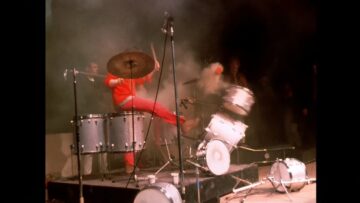 Watch LaterAdded
03:03
Watch LaterAdded
03:03