



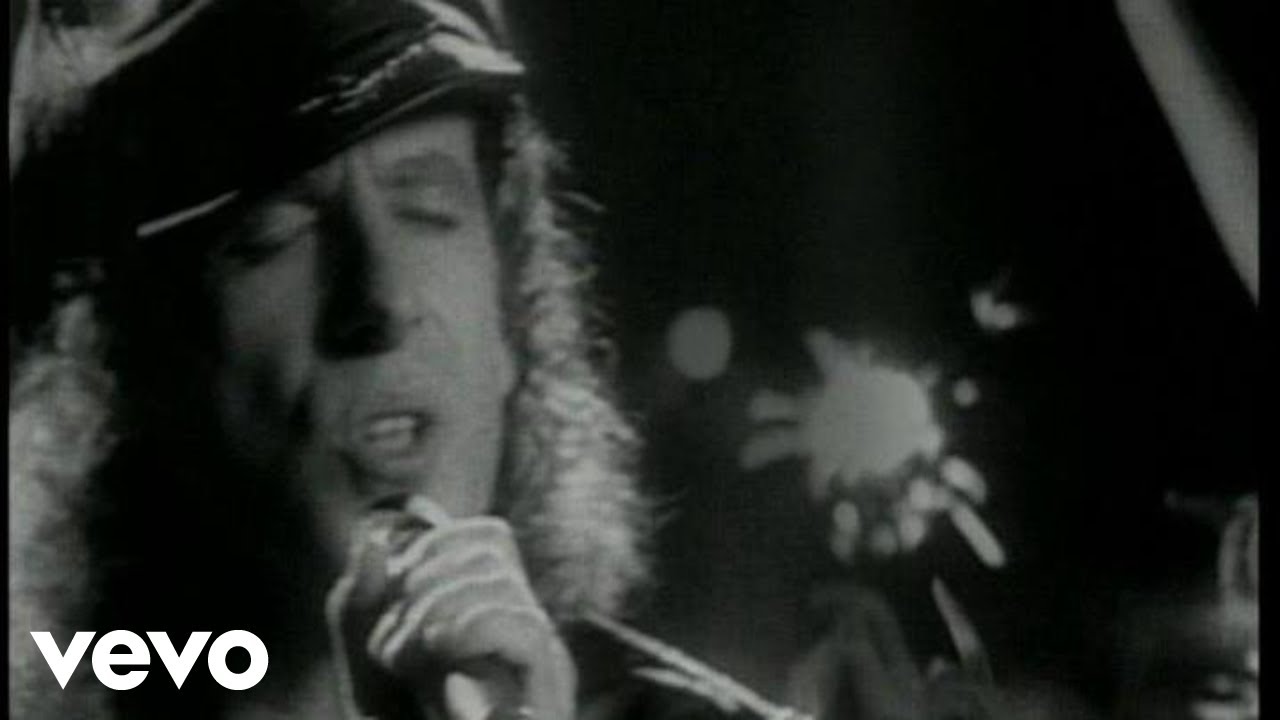







Scorpions – Wind Of Change
The most famous sound in the song is a whistle, and Klaus Meine only whistled it as a placeholder — a stand-in he expected to replace later. The producer heard it and refused to let him take it out.
The defining sound of “Wind of Change” — the melody most listeners can reproduce from memory, the part that announces the song before Klaus Meine sings a word — was never meant to survive the recording sessions. Meine, the Scorpions’ lead vocalist, had whistled the song’s opening melody as a placeholder. It was a working idea, a stand-in to mark where some instrument or vocal line would eventually go, the kind of temporary sketch that gets replaced once the arrangement is finished. The band was uncertain about keeping it. A whistle, on a rock single, from a German hard rock band best known for “Rock You Like a Hurricane” — it was not an obvious choice. But the American producer Keith Olsen, brought in to make the record, heard the whistled melody and recognized something the band had not. Olsen said that hearing the song raised the hairs on his arms. He described it not as a political rallying cry but as a genuine emotional statement. He insisted the whistle stay. It became one of the most recognizable sounds in popular music.
The song behind the whistle had been written in a specific place at a specific moment in history. In August 1989, the Scorpions traveled to Moscow to perform at the Moscow Music Peace Festival, held over two days at the Lenin Stadium in front of an audience of roughly 300,000 people. It was the first time Western hard rock and heavy metal acts had been permitted to perform in the Soviet capital — the Scorpions shared the bill with Ozzy Osbourne, Mötley Crüe, Cinderella, and Skid Row. For a West German band that had grown up with the Iron Curtain running through its own country, performing in Moscow at the precise moment Mikhail Gorbachev’s policies of glasnost and perestroika were loosening the Soviet system was a profound experience. Klaus Meine has described sitting in Gorky Park on a summer night, looking out at the Moskva River, watching Soviet soldiers and American musicians and Russian fans mixing together — and feeling the change in the air. The song’s opening lines describe that exact scene. He wrote “Wind of Change” as the document of a moment when the world seemed to be turning.
The producer change behind Crazy World
“Wind of Change” was composed entirely by Klaus Meine and recorded for Crazy World, the Scorpions’ eleventh studio album, released in November 1990. The album marked a significant break in how the band worked: for the first time in roughly fifteen years, the Scorpions recorded without their longtime producer Dieter Dierks, the man who had shaped the sound of their commercial breakthrough across the late 1970s and 1980s. In his place was Keith Olsen, the American producer whose résumé included Fleetwood Mac’s self-titled 1975 album. The classic Scorpions lineup played the session — Meine on lead vocals, Rudolf Schenker on rhythm guitar, Matthias Jabs on lead guitar, Francis Buchholz on bass, and Herman Rarebell on drums — a lineup that by 1990 had been together for well over a decade. “Wind of Change” was held back as the album’s third single, released on January 21, 1991, after “Tease Me Please Me” and the title track.
What followed was beyond anything the band had experienced. “Wind of Change” reached No. 1 in Germany — the only Scorpions single ever to top the chart in their home country — and went to No. 1 in Austria, France, the Netherlands, Norway, Sweden, and beyond. It reached No. 4 on the US Billboard Hot 100 on August 31, 1991, and No. 2 on the UK Official Singles Chart. Its estimated worldwide sales of around 14 million copies make it the best-selling single by a German artist in history and one of the best-selling singles ever released by anyone. In 2005, viewers of the German television network ZDF voted it the “song of the century.” For a band that had spent two decades as a hard rock act, “Wind of Change” became something a hard rock single almost never becomes: a piece of the historical record, the song attached in public memory to the fall of the Berlin Wall and the end of the Cold War.
The video that put the song inside history
The music video, directed by Wayne Isham, made the song’s connection to history explicit. Rather than building a standard performance clip, Isham traveled to Berlin to meet the band and constructed a visual narrative around archival footage — the construction and the destruction of the Berlin Wall, the late-1980s revolutions across Eastern Europe, and other pivotal moments of the era — intercut with the Scorpions performing. The video placed the band inside the historical footage rather than apart from it, and it has since accumulated well over a billion views. The song’s life outside the video has been just as bound to history. The Scorpions presented Mikhail Gorbachev with a gold record and $70,000 in royalties from the single, directed to children’s hospitals. They recorded versions in Russian and Spanish — Rudolf Schenker had pushed for the Russian version so the message would reach listeners who did not speak English, and it became a fixture on Russian radio. The band performed the song at the Brandenburg Gate on November 9, 1999, for the tenth anniversary of the fall of the Wall.
The decades since have complicated the song in ways its writer could not have foreseen in Gorky Park in 1989. Following the 2022 Russian invasion of Ukraine, the Scorpions — for whom “Wind of Change” had been a song of hope built on the specific optimism of the early 1990s — began performing it with altered lyrics, stepping away from the imagery that now read differently against a European war. It was an acknowledgment that the moment the song had captured was a moment, not a permanent condition. But the recording itself remains exactly what it was: a German rock band’s document of a summer night in Moscow when the world appeared to be changing, carried by a whistled melody that was only ever supposed to be a placeholder. More than three decades on, it is still the best-selling single any German artist has ever released, and still, for millions of listeners, the sound of a wall coming down.
SONG INFORMATION
;
Related videos
 Watch LaterAdded
02:46
Watch LaterAdded
02:46  Watch LaterAdded
07:45
Watch LaterAdded
07:45  Watch LaterAdded
03:40
Watch LaterAdded
03:40