









Suzi Quatro – 48 Crash
Nicky Chinn and Mike Chapman Wrote a Deliberately Nonsensical Lyric, Gave It to the Twenty-Three-Year-Old Detroit Bass Player They Had Just Taken to UK Number One, and Watched Her Decide — Without Being Told — That the Song Was About Male Menopause.
Susan Kay Quatro had been in England for less than two years when she walked into Audio International Studios in London in the late spring of 1973 to record her third single. She was twenty-three. She had been signed to Mickie Most’s RAK Records since 1971, after Most had heard her playing bass with The Pleasure Seekers — the all-sisters Detroit garage-rock band she had been part of with Patti, Arlene, and Nancy Quatro since she was fourteen — and had flown her to London with the promise of a solo career he had not yet managed to deliver. Her debut single, Rolling Stone, released in 1972, had failed everywhere except Portugal (where it had reached number one, an unrepeated geographical anomaly that has haunted Quatro’s biography ever since). Most’s next move had been to hand her over to the British songwriting and production team of Nicky Chinn and Mike Chapman, known professionally as Chinnichap. Chinn and Chapman had been writing the chart-topping singles for The Sweet, Mud, and Smokie that had defined British glam rock’s commercial sound through 1972 and 1973. In May 1973, Quatro’s second single — Chinn and Chapman’s Can the Can — had reached number one on the UK Singles Chart within four weeks of release and stayed in the Top 30 for over three months. Quatro had walked onto Top of the Pops in a leather jumpsuit holding her Fender Precision bass and become, almost overnight, the most visible woman in the glam-rock movement. Chinn and Chapman now needed a follow-up.
The song they brought her was 48 Crash. The lyric was, by Chinn and Chapman’s own private admission, a deliberately nonsensical assemblage of glam-rock vocabulary built around a single hooky phrase — “You know the 48 Crash come like a lightning flash” — repeated through three verses and a chorus over a Mike Chapman arrangement that pulled together stomping kick-drum on every beat, Len Tuckey’s guitar riff on a sliding two-bar pattern, Alistair McKenzie’s organ filling the spaces, and Dave Neal pounding the drums underneath. The duo never told Quatro what the song was about. They never told anyone. The lyric described an unnamed older man whose “48 Crash” was happening — was crashing him, was something that came on like a lightning flash, was something that turned him into a “schizoid baby.” Quatro decided, on her own, what it meant. “It’s crazy lyrics,” she told Songfacts decades later, “but to me, that makes sense.” Her interpretation: the song was about male menopause — the medical condition where men in their late forties experience hormonal changes resembling female menopause, hot flashes, fatigue, sexual dysfunction. The age forty-eight in the title was the average age the condition was supposed to hit. “Back then, Mike used to write kind of nonsensical lyrics,” Quatro continued. “But it’s one of the favorites around the world. So, I say it’s about the male menopause.”
The Chart Climb, the Australian Number One, and the Million-Seller
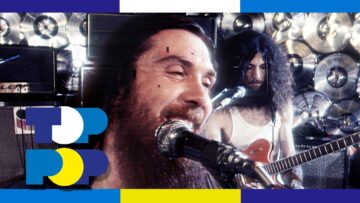
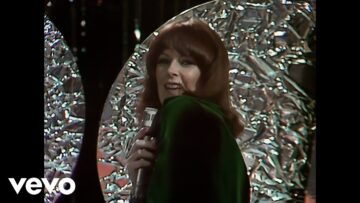
RAK released the single in July 1973 with Little Bitch Blue on the B-side. The chart climb was rapid. 48 Crash reached number three on the UK Singles Chart in late July 1973, blocked from the top two positions by Donny Osmond’s Young Love at number one and Slade’s Skweeze Me, Pleeze Me at number two. It was Quatro’s second consecutive UK Top 5 single. It reached number two in West Germany, number three in Belgium and the Netherlands, and the top ten in France, Ireland, Norway, Switzerland, and New Zealand. The single’s biggest success, however, came in Australia. 48 Crash entered the Kent Music Report singles chart on October 29, 1973, reached number one within weeks of charting, and became Suzi Quatro’s first Australian number-one single. The Australian chart connection — the geographical particularity of which would define the rest of her career — was now in place. The single sold over a million copies worldwide before the end of 1973, earning Quatro her second Gold disc within twelve months. The parent album, released on October 26, 1973 — titled Suzi Quatro in the UK and the United States and re-titled Can the Can for the Australian market — reached number twelve on the UK Albums Chart and number two on the Kent Music Report album chart, supported by both Can the Can and 48 Crash as singles. Quatro played the song on Top of the Pops, on the German programme Musikladen, on Dutch and Belgian and Australian television. The visual identity — black leather jumpsuit, bass guitar, four bandmates in unshaven rock-band uniformity behind her — became, within months of 48 Crash‘s release, the most-imitated stage configuration for any female rock performer of the decade.
The American story, however, was less successful. 48 Crash never charted on the US Billboard Hot 100. RAK Records’ artists had historically struggled to break American radio — the label was a UK independent operation without strong US distribution — and the leather-clad bass-playing female rock singer Mickie Most had built around Chinn and Chapman’s songs did not yet fit the format of American AM rock radio in 1973. Quatro toured the United States as a support act for Alice Cooper through 1973 and 1974 and played to enthusiastic concert audiences, but the records did not cross over to American radio. The four Chinnichap-era hits — Can the Can, 48 Crash, Daytona Demon (1973), and Devil Gate Drive (number one UK, 1974) — all sold over a million copies worldwide and all earned Gold discs without ever significantly impacting the American charts. Quatro would not break American radio until 1979, when her duet with Chris Norman of Smokie, Stumblin’ In, reached number four on the Billboard Hot 100 and became the only Top 40 American hit of her career.
The Half-Century Afterlife, the Acting Career, and the British Passport
What followed 48 Crash over the next five decades has been a working musical career almost unparalleled in its sustained productivity. Fifteen studio albums. Over fifty million records sold worldwide. A multi-year recurring television role as Leather Tuscadero on the American sitcom Happy Days between 1977 and 1979 — a role written specifically for her and based on her own stage persona, after the show’s producers had identified Quatro as the model the writers had been imagining for the character. A starring role in the 1986 London production of the musical Annie Get Your Gun as Annie Oakley. Voiceover work, hosting work, presenting on BBC Radio, an autobiography titled Unzipped published in 2007, and a 2019 documentary Suzi Q that won the Best Documentary award at the Manchester Film Festival. Quatro has been continuously based in England since 1971. In early 2026, after fifty-five years of residency, she took British citizenship at the age of seventy-five — completing, in administrative form, the geographical relocation that had defined her commercial career since Mickie Most flew her out of Detroit. Mike Chapman returned in 2011 to produce her album In the Spotlight, the closest thing to a true return-to-form Quatro record had ever been described as. Her most recent studio album, Face to Face, was released in 2023.
The song that turned her commercial career — the song the writers never explained to her, the song she decided on her own was about male menopause, the song that hit number one in Australia and number three in the United Kingdom and got nowhere in her country of birth — has now been a permanent feature of her live setlist for over fifty years. Every Suzi Quatro concert since 1973 has included 48 Crash. The official music video on her YouTube channel was uploaded in the streaming era and has now accumulated millions of views. The song that Chinn and Chapman wrote as a follow-up to Can the Can — written, by their own private account, as a deliberately nonsensical pop-rock lyric — has outlasted the duo’s entire songwriting partnership, the entire glam-rock movement it belonged to, the entire RAK Records label that released it, the entire era of British music television that promoted it, and is now part of the permanent live act of one of the longest-working solo bass-playing rock vocalists in the history of the form. Sometimes the lyrics nobody can fully explain are the lyrics that last the longest.
SONG INFORMATION
Related videos
 Watch LaterAdded
03:30
Watch LaterAdded
03:30  Watch LaterAdded
06:49
Watch LaterAdded
06:49  Watch LaterAdded
04:48
Watch LaterAdded
04:48