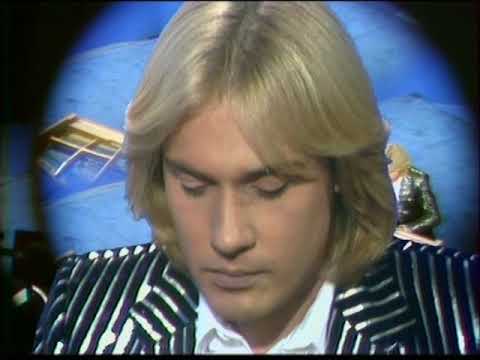
Twenty-two million copies is a wonderful problem to have and an almost impossible one to follow, so they doubled the orchestra and added a second composer
Twenty-two million copies. That was the number “Ballade pour Adeline” eventually reached across thirty-eight countries, and in 1978 the problem facing Delphine Records was what anybody does with a number like that. A pianist who had been a bank clerk two years earlier was now the best-selling instrumentalist alive. The follow-up could not be another lullaby, and it could not be a departure. What arrived was A Comme Amour, and the changes behind it are more interesting than the surface suggests.
The debut had been assembled around a single composition by a single man. Paul de Senneville wrote “Ballade pour Adeline” for his newborn daughter, Olivier Toussaint produced it, and Philippe Pagès — renamed Richard Clayderman by producers who thought his own name would not travel — played it. The whole thing had the character of an accident that worked.
Two names on the composition instead of one
The second album did not repeat that. A Comme Amour / Les Fleurs Sauvages was composed entirely by de Senneville and Toussaint together, the producer stepping across into the writing chair alongside his partner. Every piece on the record carries both names. The title track opens it, and it is the clearest statement of what the pair had worked out about their own formula: a melody simple enough to hum after one hearing, harmonised richly enough that it never sounds thin, and paced so that nothing hurries.
They also spent money. The record used a considerably larger orchestra than the debut, with different conductors handling different tracks rather than one hand across the whole album. Where “Ballade pour Adeline” had been a piano piece with orchestral support, A Comme Amour is closer to an orchestral piece with a piano at its centre. The album ran thirty-eight minutes and included a second, solo-piano rendering of the title track at the far end of the sequence — a habit the pair kept, giving listeners the arrangement and the bare version of the same idea.
It is also, for a small technical reason, an unusual record in the catalogue. It is one of only two Clayderman studio albums where two different arrangers each produced their own version of the same piece — in this case “Le Fragile Parfum Des Roses,” which appears twice in different hands. That is not the sort of decision a label makes when it is playing safe.
Where it ended up
The song outlived its moment in a way instrumental pieces occasionally manage and pop singles rarely do. It became a fixture on compilation albums worldwide, one of the handful of Clayderman recordings that turn up regardless of which market a collection is assembled for. It also found a second life on ice: A Comme Amour became a standard for figure skaters, where a piece needs a clear melodic line, a predictable structure and enough emotional weight to carry a programme. Very few 1978 instrumentals are still doing active work half a century later.
That durability is the actual story of Clayderman’s career, and it is consistently underrated by people who file him under easy listening and move on. He has been recording since 1976 and still tours. The compositions de Senneville and Toussaint built for him were designed for exactly this — melodies constructed to be learned, played and remembered by people who are not professional musicians. Whether that is a limitation or the entire point depends on what you think music is for.
SONG INFORMATION
Artist: Richard Clayderman
Born: Philippe Pagès, December 28, 1953, Paris
Song: “A Comme Amour”
Album:A Comme Amour / Les Fleurs Sauvages
Released: 1978
Label: Delphine Records
Composers: Paul de Senneville, Olivier Toussaint
Producers: Paul de Senneville, Olivier Toussaint
Arranger: Richard Clayderman
Album Length: 38:11
Versions: Orchestral (track 1); piano solo (track 11)