




The New Seekers – Beg, Steal or Borrow
For decades the BBC had sent a single performer to represent the United Kingdom at Eurovision. In 1972, for the first time, they sent a group — and the New Seekers came within fourteen points of winning.
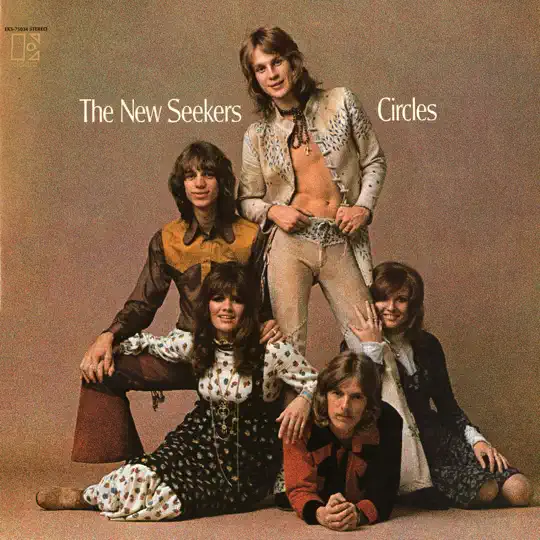
When the BBC chose the New Seekers to represent the United Kingdom at the Eurovision Song Contest in 1972, it was making a deliberate break with its own history. For every previous British entry, the broadcaster had sent a single performer to the contest — a solo singer carrying the country’s hopes alone. In 1972, for the first time, the BBC commissioned a group. It was not a difficult choice to defend. The New Seekers were, at that moment, one of the biggest pop acts in Britain: the five-piece harmony group had just scored an international million-seller with “I’d Like to Teach the World to Sing,” the song adapted from a Coca-Cola advertising jingle, and they had the polished, broadly appealing sound that the Eurovision stage rewarded. The song they would carry was “Beg, Steal or Borrow,” a bright, upbeat declaration of love written by Tony Cole, Steve Wolfe, and Graeme Hall.
The song was not handed to the group by a committee. It was chosen by the British public. The 1972 entry was selected through “A Song for Europe,” and on February 12, 1972, the New Seekers performed six candidate songs on the television program It’s Cliff Richard. Viewers then voted. “Beg, Steal or Borrow” won decisively, drawing 62,584 votes — more than twice the 27,314 cast for the runner-up, “One By One.” The margin made the public’s preference unmistakable. Within the group, “Beg, Steal or Borrow” put Lyn Paul and Peter Doyle out front on lead vocals, their voices carrying the song over the close five-part harmony that had become the New Seekers’ signature.
Fourteen points from a win
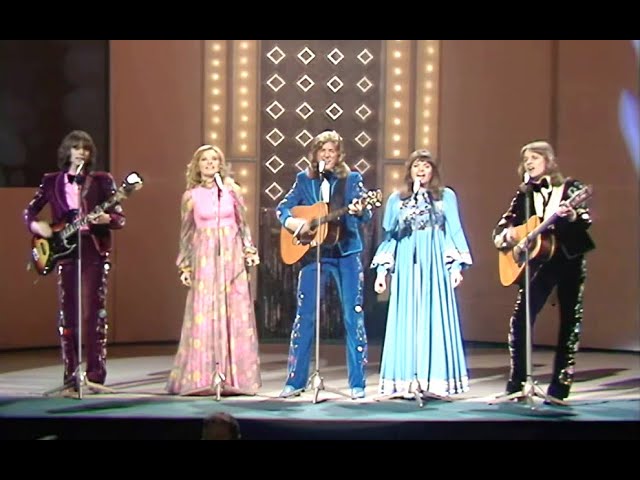
The Eurovision Song Contest 1972 was held at the Usher Hall in Edinburgh, Scotland, on March 25, 1972 — the contest staged in Britain because the United Kingdom had finished as runner-up the previous year and the winning nation, Monaco, had been unable to host. The New Seekers performed fifth on the night, slotted between the entries from Spain and Norway, in a field of eighteen countries. They delivered “Beg, Steal or Borrow” in front of the contest’s pan-European television audience and waited through the voting. When the points were counted, the New Seekers had 114 — and second place. They had been beaten by Luxembourg’s entry, “Après toi,” performed by the Greek singer Vicky Leandros, which finished with 128. Fourteen points separated the New Seekers from a Eurovision victory. It was, for the United Kingdom, a familiar kind of result — a strong, popular entry that came close and fell just short.
Coming second at Eurovision did nothing to slow the song commercially. “Beg, Steal or Borrow” reached No. 2 on the UK Singles Chart, and it traveled widely across Europe and beyond. It went all the way to No. 1 in Norway. It reached No. 3 in both Ireland and the Netherlands, No. 2 in New Zealand, and the top five in Germany and Switzerland. It charted in Belgium, South Africa, Canada, and even reached No. 81 in the United States. For a song built specifically for the Eurovision stage, it had a genuine, broad commercial life — the New Seekers’ harmony pop translating easily across the same European markets the contest itself was designed to reach.
The group built to follow the Seekers
The New Seekers had been built, from the start, as a successor act. The group was formed in London in 1969 by Keith Potger, who had been a member of the Australian folk-pop group the Seekers — the act behind “I’ll Never Find Another You” and “Georgy Girl” — after that group disbanded. Potger’s concept was straightforward: a group that would appeal to the same audience as the Seekers, but with a sound that leaned as much toward pop as toward folk. By 1972, the New Seekers had fully delivered on that idea. The lineup that took “Beg, Steal or Borrow” to Edinburgh — Eve Graham, Lyn Paul, Peter Doyle, Marty Kristian, and Paul Layton — was the group at its commercial peak.
The New Seekers would continue to chart strongly through the first half of the 1970s, scoring a UK No. 1 in 1973 with “You Won’t Find Another Fool Like Me” before a much-publicized split in 1974 and a reformation in 1976. “Beg, Steal or Borrow” has remained one of the songs most associated with them — and a notable entry in the long, often bittersweet history of British Eurovision near-misses. There is a small irony in the timeline, too: the New Seekers finished a close second at Eurovision in 1972, and just two years later, in 1974, the contest would be won by a Swedish group whose victory would change pop music permanently. ABBA’s arrival is part of why one Eurovision fan, looking back, described the New Seekers as “my favourite group before ABBA.” The New Seekers did not win in Edinburgh. But they were the act that proved the BBC right to send a group at all.
SONG INFORMATION