



![Led Zeppelin – In My Time of Dying (Live at Earls Court 1975) (Official Video) [HD]](https://musicvideosclub.com/wp-content/uploads/2026/03/led-zeppelin-in-my-time-of-dying-360x203.jpg)

![Eagles – Hotel California (Live 1977) (Official Video) [HD]](https://musicvideosclub.com/wp-content/uploads/2024/09/eagles-hotel-california-live-197-360x203.jpg)
Barry White – Just The Way You Are
At Least 15 Artists Covered the Same Song in 1978 — Barry White Was the One the Song Was Waiting For
When Billy Joel wrote “Just the Way You Are” in 1977, he almost never recorded it at all. The song had been performed privately — a gesture for his then-wife, Elizabeth Weber, at a Carnegie Hall concert — and Joel had no intention of putting it on tape. Producer Phil Ramone heard it and pressed him into the studio. By early 1978, it was climbing to number three on the Billboard Hot 100 and sitting at the top of the Easy Listening chart for the entire month of January. What followed was an avalanche of cover versions: at least fifteen in 1978 alone, from Johnny Mathis to Dionne Warwick, Grover Washington Jr. to Isaac Hayes, Engelbert Humperdinck to Ray Conniff. The song had become a standard while it was still a current hit. Into that crowded field walked Barry White, and he may have been the only person in it who genuinely understood what the song was asking him to do.
White’s version appeared on The Man, his eighth studio album, released in October 1978 on the revived 20th Century-Fox Records label. The album was produced and arranged by White himself through his Soul Unlimited Productions company — a level of creative control he had maintained from the beginning of his run of 1970s hits — and orchestrated by John Roberts and Ronald Coleman, who had been part of the sonic architecture White had built across much of the decade. The record marked his sixth number-one on the R&B albums chart. It was certified platinum by the RIAA. “Just the Way You Are”, released as a single, reached number 45 on the R&B chart. In Britain, where White had developed a devoted following, the picture was different.
The Second-Longest UK Run of His Career
The UK single entered the chart on December 16, 1978 — a cautious start at number 61 — and then climbed. Over the holiday and new year period, as the record settled into radio rotations and word spread, it rose steadily through the top 40, eventually peaking at number 12. It became Barry White’s 13th top 40 hit in the United Kingdom in just five and a half years, and the second-longest-running chart hit of his career there. That longevity was not accidental. The reason White’s version caught in Britain when so many others did not is inseparable from what he brought to the arrangement: the deep baritone, the lush orchestration, the sense that a man of his specific gravity was singing every word and meaning all of it. Where the original worked as a piano-ballad confession, White’s version functions as an immersive promise, something closer to late-night soul than pop songcraft.
The gamble was real. Covering a song that had been on the charts twelve months earlier — a song already considered by many to be an easy-listening classic, already associated indelibly with its composer — carried obvious risks. Critics at the time questioned the judgment. Joel’s version had won both Record of the Year and Song of the Year at the 1979 Grammy Awards, the first time the academy had double-recognised a single song in those categories. Taking it on required either confidence or instinct, and in White’s case it appears to have been both. He heard an R&B interpretation inside the melody that the original, for all its quality, had not yet explored. His reading of the song is slower, warmer, and more insistent — less about vulnerability than about devotion, the emotional register in which his entire career had operated.
The song eventually attracted a Sinatra interpretation, on his 1980 Trilogy album, which confirmed its place as a genuine standard of the songbook rather than simply a pop hit of its moment. But White had arrived there first, and arrived there from a specific direction — soul and orchestral R&B — that no other artist in the field had fully occupied. The engineers Frank Kehmar and Paul Elmore kept the production clean and warm, letting the arrangement breathe around White’s voice in a way that made the orchestration feel earned rather than decorative. It is, by most measures, the finest version of the song that has no other claim to the original.
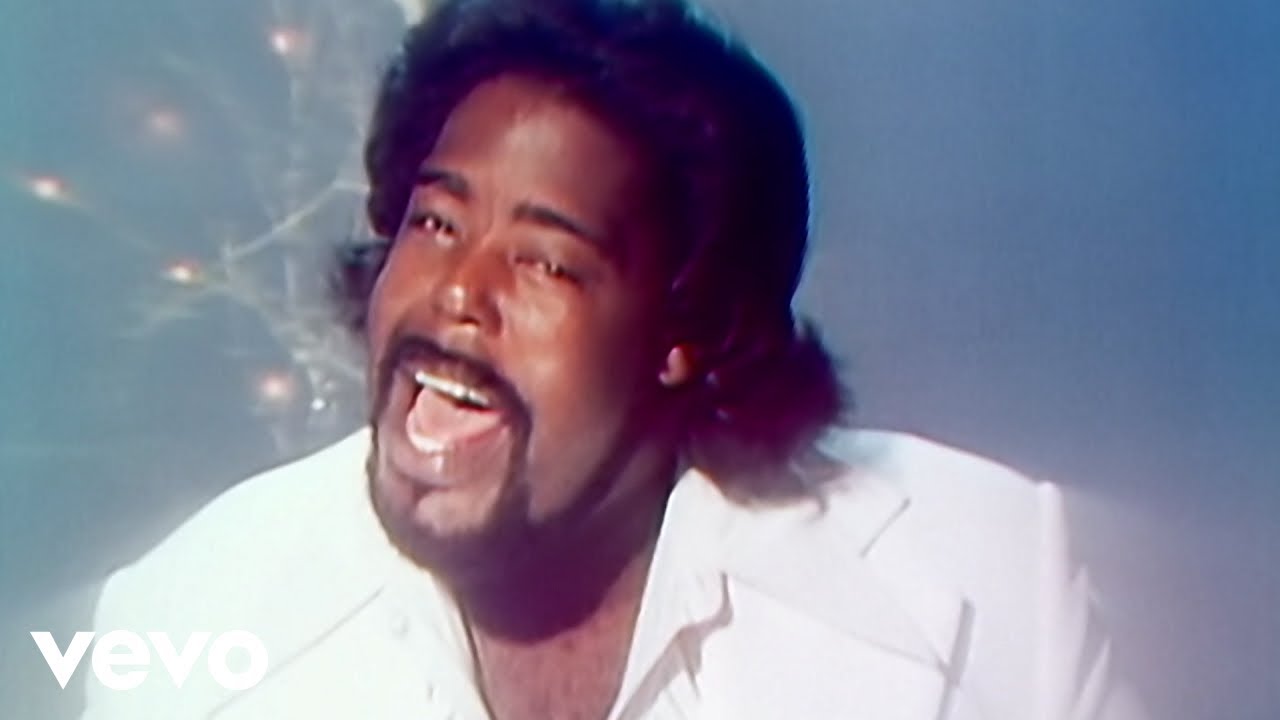
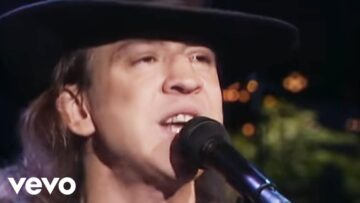
The YouTube video linked to this page appears to be the original 1978 promotional clip for the single — period footage presenting White in the visual idiom of late-Seventies soul television. It captures the moment before the song had fully crossed over into its UK chart run, before the long residency at number 12 had begun. As a document, it belongs to the period when Barry White was still routinely presumed to be reaching his commercial peak, without any indication that what he was making would outlast the decade, the genre, and a long stretch of what came after.
SONG INFORMATION
Related videos
 Watch LaterAdded
02:57
Watch LaterAdded
02:57  Watch LaterAdded
04:39
Watch LaterAdded
04:39 ![The Manhattan Transfer – Chanson DAmour [Restored]](https://musicvideosclub.com/wp-content/uploads/2025/03/the-manhattan-transfer-chanson-d-360x203.jpg) Watch LaterAdded
02:21
Watch LaterAdded
02:21