



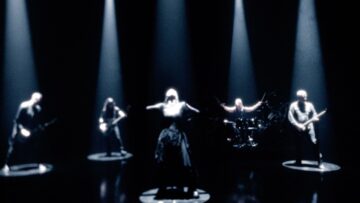
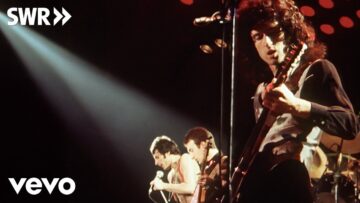
Nirvana – Smells Like Teen Spirit
Kurt Cobain chose the director whose reel he thought was the worst of the bunch. Twelve hours later the crowd wrecked the set, and that footage made the final cut.
The flyer went around the Roxy on Sunset Boulevard on August 15, 1991, while the band on stage was still mostly unknown outside the Pacific Northwest. It asked for volunteers for a video shoot that weekend, suggested they turn up dressed as a recognizable type, and closed with a line that reads differently now than it did then: be prepared to stay for several hours. The shoot ran roughly twelve. What came out of it, two days later on a soundstage in Culver City, became the most consequential four and a half minutes of film in American rock music.
Keep watching: Nirvana – The Man Who Sold the World (MTV Unplugged)
The song had been finished for months. Nirvana cut Smells Like Teen Spirit at Sound City in Van Nuys in May 1991, with Butch Vig producing alongside the band, during the sessions that produced Nevermind. Vig pushed for structural changes — a tighter chorus, a guitar figure moved — and the record that resulted set a pattern that alternative rock spent the next decade working through: hushed, chorused verses collapsing into something enormous. Kurt Cobain wrote the lyrics; the writing credit runs to Cobain, Krist Novoselic, and Dave Grohl. The title came from graffiti a friend left on Cobain’s wall, a joke about a deodorant brand that he took at face value and turned into something else entirely.
Geffen wanted a video. Nobody at the label expected the song to cross over; it was positioned as a track to build a base with, the kind of single that establishes a band with college radio and leaves the crossover hit for later. The budget reflected that expectation, reported at well under $50,000.
The reel Cobain liked because it was bad
Samuel Bayer had just come out of the School of Visual Arts in New York and had never directed a music video. His submission, by his own account, was the weakest in the pile. That is exactly why he got the job. Cobain, Bayer later suggested, saw picking the least polished option as the more interesting move. The concept was Cobain’s: a pep rally curdling into something else, drawn from two films he loved — Jonathan Kaplan’s 1979 study of suburban revolt Over the Edge, and the Ramones vehicle Rock ‘n’ Roll High School.
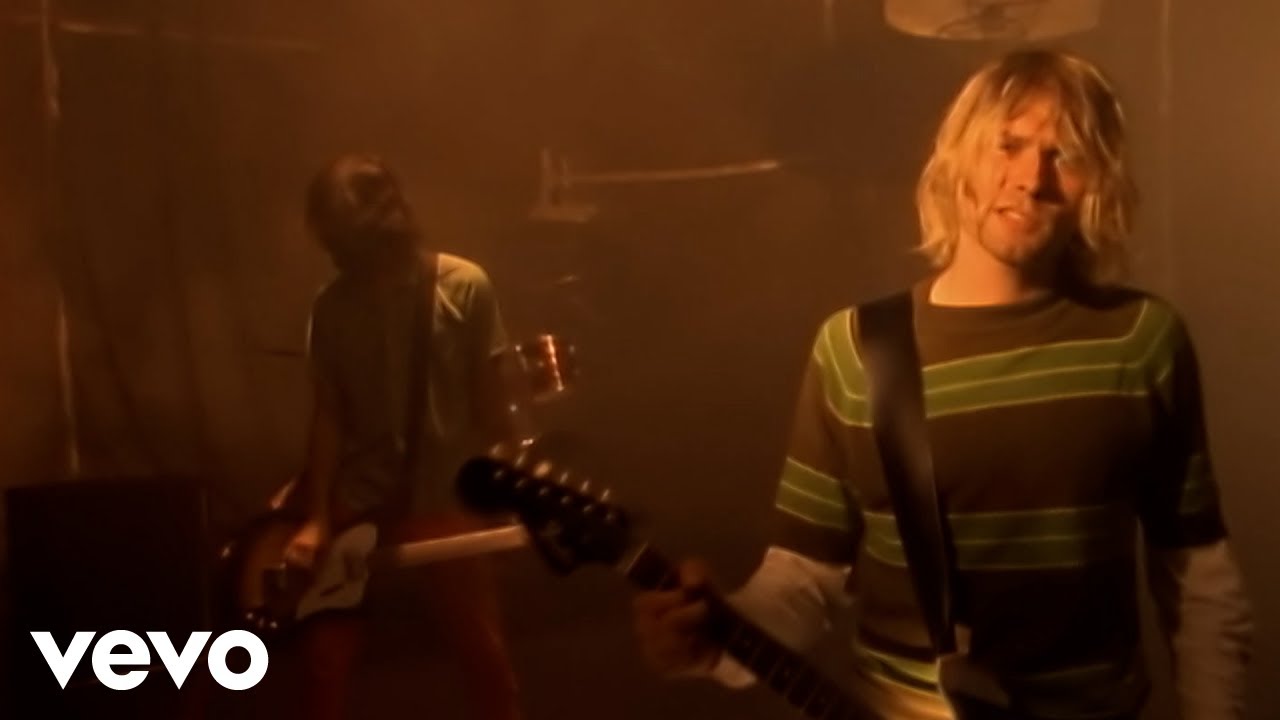
The location was Stage 6 at GMT Studios in Culver City, on Saturday, August 17, 1991. Not a school. A soundstage dressed as a gymnasium, lit yellow, filled with smoke. The crowd from the Roxy filed in that morning, took their places on the bleachers, and were instructed to look bored while the song played. Then to do it again. Then again. Bayer worked through take after take with a megaphone, and the mood on the floor curdled along with the concept. The boredom in the finished video did not require acting by the time it was captured.
The take nobody planned
By late in the day the crowd had been sitting for hours and the band had run out of patience with the direction. The set destruction was the last thing shot. Accounts differ on who suggested it first, but the release was total once it was permitted: the crowd came down off the bleachers, flooded the floor, and took the set apart. Equipment broke. Some of the band’s instruments left with the crowd. Bayer has been candid about how much of that was captured by design rather than luck, noting only that he happened to have film in the camera. Cobain, in the oral history Come as You Are, framed the whole surge as the crowd’s answer to a day of being ordered around.
Cobain then did something few artists at his career stage were permitted to do: he re-edited it. Bayer’s cut leaned on the faculty characters; Cobain stripped that material out and pushed closeups of his own face into the closing seconds, so the video ends on him rather than on the wreckage. Bayer did not understand the choice at the time. It is the reason the video reads as a document of one person’s discomfort rather than a staged riot.
Smells Like Teen Spirit went to radio on August 27, 1991, and to shops on September 10. The video premiered on 120 Minutes on September 29 and moved quickly into daytime rotation, which was not where anyone had expected it to land. The single reached No. 6 on the Billboard Hot 100 — Nirvana’s highest placing, and lower than its cultural footprint suggests — and topped the Modern Rock Tracks chart on November 23. Several Top 40 stations kept it to nighttime play, unsure what to do with it. Nevermind reached No. 1 on the album chart the same week the single peaked.
The video took Best Alternative Video and Best New Artist at the 1992 MTV Video Music Awards. In 2000 Guinness recorded it as the most-played video on MTV Europe. Weird Al Yankovic’s parody was shot on the same set with the same janitor, and Cobain said he found it funny. Thirty-five years on from the Culver City shoot, the thing that keeps the video alive is not its craft, which is rough, but its accident: a crowd hired to perform disaffection who stopped performing, on a day when the camera was still running.