



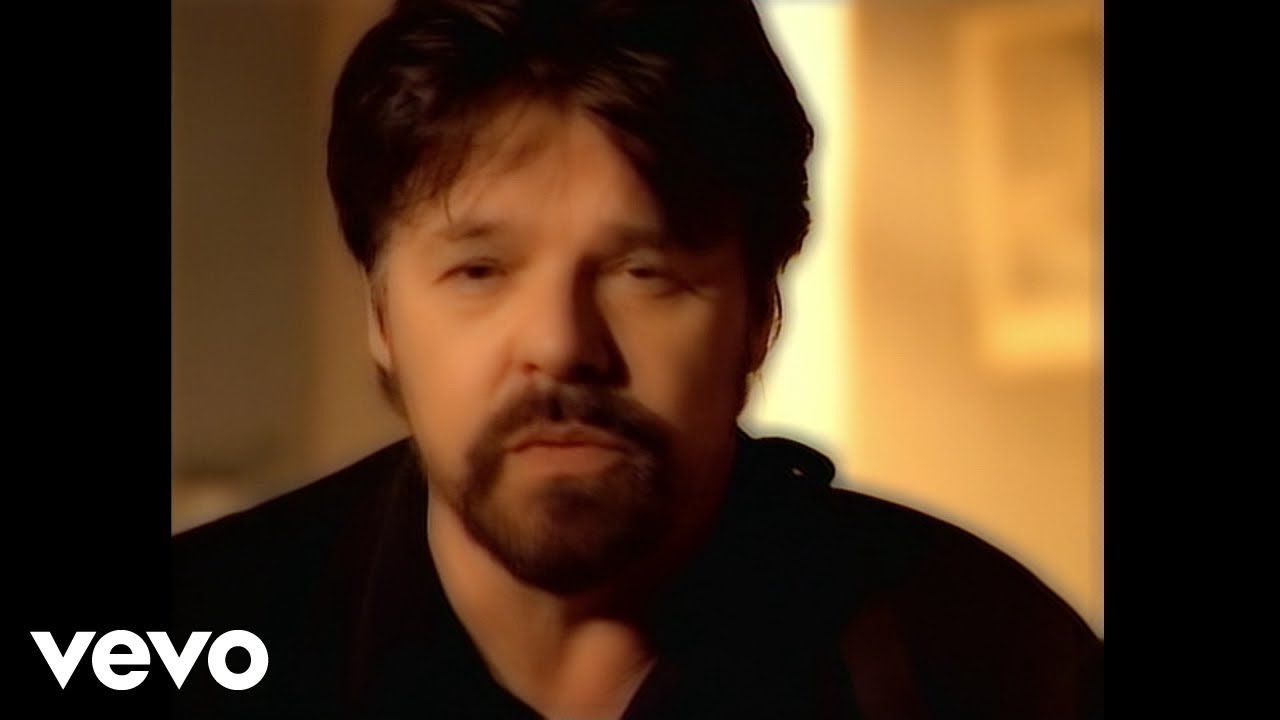




Bob Seger & The Silver Bullet Band – Night Moves
He Took Six Months to Write It, Saw American Graffiti and Realised He Had a Story Too, and Recorded It in Toronto on the Last Day of a Three-Day Session — With a Band That Was Mostly Strangers and a Producer Whose Manager Tried to Bury the Tape.
Bob Seger had been a working musician for sixteen years when he walked out of a Detroit cinema in 1973 having just watched American Graffiti and realised he had a story too. He was twenty-eight. He had been signed to Capitol Records since 1968. He had recorded eight studio albums, none of which had broken him out of the upper Midwest. He was an institution in Michigan — three of the four biggest-selling albums in Detroit history were his, with only Abbey Road keeping him out of a clean sweep — but for the rest of America he was the singer of Ramblin’ Gamblin’ Man, a 1969 single that had reached the Hot 100 once and then disappeared. American Graffiti — George Lucas’s 1973 film about teenagers cruising in Modesto, California in 1962 — set off something in him. “I came out of the theater thinking, ‘Hey, I’ve got a story to tell, too!'” he later told journalist Timothy White. “Nobody has ever told about how it was to grow up in my neck of the woods.” That neck of the woods was Ann Arbor, Michigan, in the early 1960s. The teenage love affair Seger had lived through there, the cars and the drive-ins and the awkward physical fumbling and the eventual separation, became the subject he started writing about. The writing took six months. The song he produced was Night Moves.
Seger had bought a house with the proceeds from his 1976 live album Live Bullet — the record that had finally turned the Silver Bullet Band into a national touring act. Its large basement became the band’s writing and rehearsal space. The ending lyrics of Night Moves were written first. The descriptive imagery — the points of cinematic detail Seger placed throughout the song — was inspired by Kris Kristofferson’s Me and Bobby McGee, a song Seger had been studying for years. He wrote portions of the song at an A&W drive-in restaurant in Ann Arbor, returning to the geography that had produced the experience he was writing about. The two-bridge structure — the song’s most distinctive formal feature, the abrupt drop into Seger’s solo vocal-and-guitar passage in the middle section — was modelled on Bruce Springsteen’s Jungleland, released the previous year on Born to Run. By the time Seger was ready to record the song, he had revised it for over half a year and was nervous that his band’s lead guitarist Drew Abbott and saxophonist Alto Reed would not be the right fit for the arrangement he heard in his head.
Three Days in Toronto, the Right Song Held Until the End
In early 1976, Seger’s manager Punch Andrews approached the Canadian producer Jack Richardson — best known for his work with The Guess Who on These Eyes and American Woman — about producing four sides for Seger. Andrews wanted what he called a more “commercial” sound. Richardson booked three days at Nimbus Nine Studios in Toronto. Seger and the Silver Bullet Band travelled north. They quickly recorded two Seger originals and a cover of the Motown hit My World Is Empty Without You. By the third day, most of the Silver Bullet Band had already returned to the United States. Only bassist Chris Campbell and drummer Charlie Allen Martin remained. With time running out, Seger composed and brought in the fourth song he had been holding back: Night Moves. Richardson, sensing the song needed players Seger had not been worried about disappointing, recruited Toronto session musicians on the spot — Joe Miquelon on electric guitar, Doug Riley on organ, and three Toronto vocalists, Sharon Lee Williams, Rhonda Silver, and Laurel Ward, to provide the song’s distinctive backing vocals. Paul Cotton of Poco was brought in to lay down a guitar solo. The team stayed in the studio until 2:30 in the morning. The recording was finished in fewer than ten takes. Cotton’s full guitar solo was eventually edited out of the released version, with only its last few notes audible just before the final verse.
What happened next nearly killed the record. After Richardson and engineer Brian Christian had mixed the four tracks from the Toronto sessions, Punch Andrews phoned Richardson to say he was unhappy with the mixes — and that Capitol Records had communicated similar dissatisfaction. Months passed. The tracks sat. When Richardson ran into a Capitol A&R executive named John Carter at a session in Toronto some weeks later, he asked how Carter felt about the Seger material. Carter said he thought “both tracks” were potential B-sides. Richardson — startled by the phrase “both tracks” — pointed out that the sessions had produced four songs, not two. He played Carter Night Moves. Carter heard it differently than Andrews had described it. Capitol made it the title track of Seger’s next album, the lead single, and the song that would carry the entire campaign. The single was edited down by Wally Traugott from its original five-minute length to the three-and-change radio mix. The album was released on October 22, 1976. The single followed in December.
Heartland Rock, Six Platinum Albums Later
Night Moves debuted on the Billboard Hot 100 the week of December 11, 1976 at number eighty-five. It climbed steadily through January and February, peaked at number four on March 12, 1977, and held that position for two weeks. It spent twenty-one weeks on the chart in total. It became Seger’s first top-ten single since Ramblin’ Gamblin’ Man in 1969. It charted at number five in Canada — Jack Richardson’s home — and number twenty-five in Australia. The album it titled went on to sell six million copies in the United States, achieving 6× Platinum certification and becoming Seger’s commercial breakthrough on a national scale that had eluded him for sixteen years. The two follow-up singles from the album, Mainstreet (about a real street in Ann Arbor) and Rock and Roll Never Forgets, both reached the Top 40. The album is still cited as the moment American rock found a viable third major figure for what was beginning to be called heartland rock — Springsteen and John Mellencamp on the East Coast and Indiana respectively, and now Seger as the Detroit voice in the same conversation.
The original Billboard credits for the single named only Punch Andrews as producer. When Richardson, on a break from a Brecker Brothers session in New York, opened a copy of Billboard and saw the credit, he called Capitol immediately. “I called John Carter and told him you’ve got 24 hours to get the credits right,” Richardson later recalled. The next issue of Billboard credited “Producers: Jack Richardson and Punch Andrews.” Punch Andrews, by Richardson’s own account, had not been at the sessions. The Toronto session musicians who had stepped in for the absent Silver Bullet Band on the song’s recording day — Miquelon, Riley, Williams, Silver, Ward — received union scale and went on to other Toronto sessions. Bob Seger continued to record most of his subsequent albums at Muscle Shoals in Alabama with the Muscle Shoals Rhythm Section. He was inducted into the Rock and Roll Hall of Fame in 2004. The song he had taken six months to write, that had nearly been buried as a B-side by his own management, that had been recorded with mostly Toronto session players because his own band had gone home — has remained one of the foundational records in American rock for nearly fifty years. The teenage love story he had finally found a way to tell, after watching American Graffiti and walking out of the cinema with the realisation that he had one too, became the song that turned a Detroit regional star into a national one at thirty-one years old.
SONG INFORMATION
Related videos
 Watch LaterAdded
04:13
Watch LaterAdded
04:13  Watch LaterAdded
03:46
Watch LaterAdded
03:46  Watch LaterAdded
03:13
Watch LaterAdded
03:13