



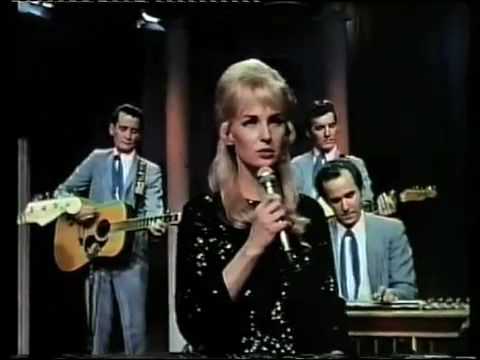





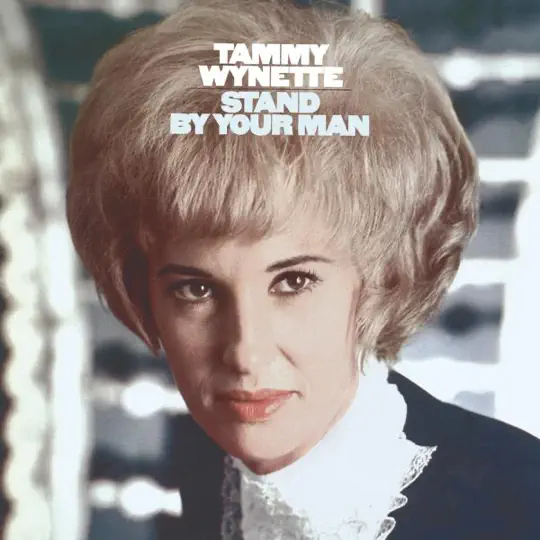
Tammy Wynette – Stand By Your Man
She Was Going Through Her Second Divorce. Her Producer Had a Working Title He Couldn’t Use Because Ben E. King Had Beaten Him to It. Together, in Twenty Minutes, They Wrote the Song She Would Spend the Rest of Her Life Defending.
The session at Columbia Studio B in Nashville was running short of material. It was August 1968. Producer Billy Sherrill had brought his Nashville A-Team into the studio for what was supposed to be a normal recording day — bassist Bob Moore, drummer Buddy Harman, guitarist Ray Edenton, Pete Drake on pedal steel, Hargus “Pig” Robbins on piano, and The Jordanaires waiting to add backing vocals. Tammy Wynette was on vocals. They had cut a couple of songs Sherrill thought were mediocre. They needed one more. With an hour left in the session, Sherrill remembered an old crumpled-up piece of paper in his pocket — a working title and the bones of a lyric he had been carrying around. He wanted to call the song “I’ll Stand By You, You Please Stand By Me.” Ben E. King’s Stand By Me had been a hit seven years earlier, and Sherrill knew immediately he could not use the title without inviting confusion. As Sherrill and Wynette climbed the stairs to his office above the studio to finish the song, one of the band members on break called out a suggestion: “How about ‘Stand By Your Man’?” The musicians went back to playing poker. Sherrill and Wynette went upstairs and finished the song in twenty minutes. They came back down to the studio. They cut it that day in three or four takes.
Wynette was twenty-six. She had been born Virginia Wynette Pugh in Itawamba County, Mississippi, in 1942, married at seventeen, a mother of two by twenty, and had picked cotton, waited tables, and worked at a shoe factory before going to beauty school to support her children. By 1965 she was making regular trips to Nashville. By 1966 she had auditioned for Sherrill at Epic Records, signed a contract, taken his suggestion that she change her stage name from Virginia to Tammy, and begun the recording career that would make her, within four years, the artist who would shortly be billed as the First Lady of Country Music. She was, at the time of the Stand By Your Man session, in the middle of divorcing her second husband. She would, within months, marry George Jones — a marriage that itself would end in divorce six years later. The song she co-wrote that August day was, for Wynette, neither autobiographical nor aspirational. It was a piece of professional work, completed under deadline pressure, finished while the studio musicians waited. “I have five girls,” she told Jay Leno in the early eighties, “and I would by no means write anything that would belittle my girls. I just thought it was a pretty love song when I wrote it, and I’d like for a man to say ‘stand by your woman.'”
The Saturday Overdub That Defined the Recording
The first cut had not satisfied Sherrill. He hated the song’s original steel guitar opening — too conventional, he thought, too country in a way that obscured the pop crossover ambitions he had for the record. The session guitarist Jerry Kennedy had been booked to play the date but had been stuck in Chicago and missed it. When Kennedy got back to Nashville the following Saturday, Sherrill called him in to overdub a new opening. Sherrill asked him for something similar to the riff Kennedy had played on Wynette’s earlier Your Good Girl’s Gonna Go Bad. Kennedy worked it out in a few minutes. The opening guitar phrase he laid down — clean, descending, immediately identifiable — became the most recognisable two seconds of any country recording of the late 1960s. Sherrill had also positioned the band and The Jordanaires next to Wynette in the studio rather than in the standard separated booths, looking for the intimate sound he heard in his head. The decision worked. Wynette’s voice sat front and centre in the final mix, the band breathing close behind her, the famous high note in the second chorus arriving with no dramatic build because the entire arrangement had refused to push her toward it. After the first take, she had said to Sherrill: “God, if this is a hit, I’m going to have to hit that God-awful high note the rest of my life.”
It was a hit. Epic released the single on September 20, 1968. By October it was on jukeboxes and on radio. It entered the Billboard charts on October 19 and reached number one on the Hot Country Singles chart on December 3, 1968 — three weeks at the top, becoming Wynette’s signature record almost instantly. It crossed over to the pop charts and peaked at number nineteen on the Billboard Hot 100, the highest pop position of her career. The album Stand by Your Man followed in January 1969 and reached number two on the country LP chart. The song would be reissued in the United Kingdom in 1975 and reach number one there. The Library of Congress would select it for the National Recording Registry in 2010, citing its cultural and historical significance. It would win Wynette her second Grammy in 1970 for Best Country Vocal Performance, Female. It would be inducted into the Grammy Hall of Fame in 1999. It would be ranked number one on CMT’s list of the Top 100 Country Music Songs.
The Twenty-Minute Song That Took Thirty Years to Explain
What no one in the studio that August day in 1968 anticipated was the second life the song would have in cultural argument. Epic Records’ marketing department compounded the issue immediately. By the time the single was released, the women’s liberation movement had become a major cultural presence in American public life. Someone at Epic took out a full-page advertisement in Billboard magazine reading TAMMY WYNETTE’S ANSWER TO WOMEN’S LIB: “STAND BY YOUR MAN,” NEW RELEASE. The framing was not Wynette’s. It was not Sherrill’s. It was a label promotional decision that pre-emptively assigned the song to a culture-war camp neither writer had intended. Newsweek soon followed, describing the record as a song “for the beleaguered housewife who grits her teeth as destiny dumps its slop on her head.” Jeannie C. Riley of Harper Valley PTA said the song “sounds like you should take anything he dishes out.” Wynette’s response, repeated patiently in interviews across the next thirty years, was that the song was about supportiveness rather than subservience — about being proud of one’s partner, willing to forgive their failings, and willing to hold a relationship together when holding it together was the right thing to do. She told Melody Maker in 1978 that she had not even had a lot of faith in the song when she wrote it, and that her then-husband George Jones had not liked it the first time she played it for him.
The argument continued without her permission. In January 1992, during Bill Clinton’s first presidential campaign, Hillary Clinton appeared on 60 Minutes alongside her husband responding to the Gennifer Flowers allegations. “I’m not sitting here, some little woman standing by my man like Tammy Wynette,” she said. Wynette publicly objected to the reference. Clinton later apologised. The exchange became, briefly, one of the most-discussed political-cultural moments of the 1992 campaign — and entered the long list of moments at which Wynette had to defend a record she had written in twenty minutes a quarter of a century earlier. Wynette died on April 6, 1998, aged fifty-five, of a blood clot in her lung following years of declining health. Among the songs played at her funeral was Stand By Your Man. She had once said she could no longer do a show without it. The song that the band had finished while the musicians played poker, that her producer had nearly not used, that the label had marketed against her own intentions — outlasted every marriage she had been part of, and every cultural argument that had ever been made about it. Library of Congress, Grammy Hall of Fame, CMT number one, national recording registry. A pretty love song, written in twenty minutes, as Wynette had described it for thirty years, before the historians began to agree with her.
SONG INFORMATION
Related videos
 Watch LaterAdded
04:03
Watch LaterAdded
04:03  Watch LaterAdded
03:29
Watch LaterAdded
03:29  Watch LaterAdded
03:04
Watch LaterAdded
03:04