



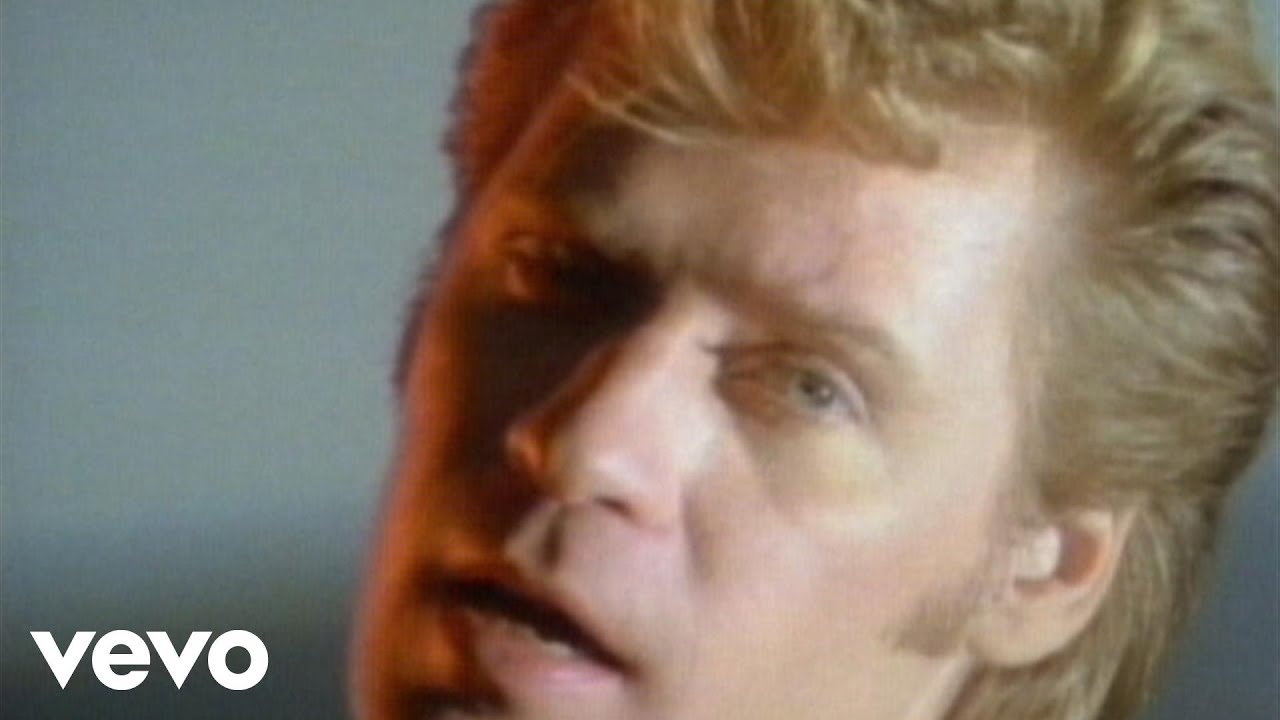





Daryl Hall & John Oates – Maneater
The Song Started as a Reggae Demo — and the Woman Was Never the Subject
John Oates had the skeleton of the song first, working on it with Edgar Winter in a demo format that was essentially a reggae track. When Daryl Hall heard it, he took the groove apart and rebuilt it — moving it toward the Motown feel he could hear inside the chord structure, the kind of mid-tempo pulse he associated with the Supremes records of the mid-1960s. What emerged was the opening track of H2O and the most commercially successful single of their career. But before any of that, Sara Allen needed to say something. Allen, Hall’s longtime girlfriend and a frequent creative collaborator on their material, heard Hall sing through the chorus and stopped him. He had more after the phrase “she’s a maneater” — a trailing line, a resolution. She told him to drop it and stop. Just: she’s a maneater. Hall said no, that was messed up. He tried it anyway. “It made all the difference in the song,” he later admitted. Allen never wrote another word on it, but the precision of that single editorial decision is embedded in every version of the track that has ever been played.
The subject of the song, meanwhile, was not a woman. John Oates has explained that neither he nor Hall wanted to write a song that was anti-women or negative toward women, so they transposed their initial idea and used New York City in the 1980s as the metaphor — the city that would chew you up and spit you out, the greed and excess and avarice that had become the defining atmosphere of Manhattan in the late 1970s and early 1980s. The woman in the lyric is that city, framed in terms that Hall and Oates felt would make the song more immediately legible to a mainstream audience. “Maneater” was recorded at Electric Lady Studios in New York — the studio built by Jimi Hendrix in Greenwich Village — and produced by Daryl Hall and John Oates. Producer Hugh Padgham handled the mix, and his fingerprints are particularly audible on the saxophone solo, performed by Charles “Mr. Casual” DeChant. Padgham wasn’t present when the solo was recorded and was frustrated by what he considered its insufficient energy. During mixing, he fed DeChant’s saxophone through an AMS digital delay unit, layering delayed repeats on top of the notes to fill in the spaces he felt the solo was leaving open. Hall and Oates hadn’t planned to change the saxophone treatment but heard what Padgham had done and approved it without hesitation. The result is the biggest hit of the decade to feature a saxophone solo as a central structural element — a distinction the record has held ever since.
The Chart Run
“Maneater” was released on September 28, 1982, as the opening single and opening track from H2O. It entered the Billboard Hot 100 at number 36 and climbed steadily through the autumn, reaching number one on December 18, 1982 — the final number one of 1982 and the first of 1983. It stayed at the top for four consecutive weeks, longer than any of the duo’s five other number-one hits, including “Kiss on My List,” which had held for three weeks. The H2O album peaked at number three on the Billboard 200 — the highest-charting album of their career — and was certified double platinum by the RIAA for shipments of two million copies, spending 68 weeks on the chart in total. Two further top-ten singles followed from the same album: “One on One” and “Family Man.” In the UK, “Maneater” reached the top ten, one of only two Hall & Oates singles ever to do so alongside “I Can’t Go for That (No Can Do).” The Grammy nomination for Best Pop Performance by a Duo or Group with Vocals in 1983 was for this record. They did not win. The record didn’t require it.
The RIAA recognised Daryl Hall and John Oates as the number-one selling duo in music history by 1987 — a standing they retain in the historical rankings ahead of the Carpenters, the Everly Brothers, and Simon & Garfunkel. In April 2014 they were inducted into the Rock and Roll Hall of Fame. The pair met for the first time at the Adelphi Ballroom in Philadelphia in 1967, during an incident where they both hid in a service elevator to escape a gang fight. They have been performing together in some form ever since, making “Maneater” the product not just of a songwriting partnership but of a friendship that began with two people hiding from the same trouble in the same elevator. In April 2024, Oates indicated publicly that the duo would no longer perform together, following a legal dispute. The songs remain.
The Life of the Recording
“Maneater” has appeared in films and television consistently since its release, from Runaway Bride to a piano ballad version in the 2023 film No Hard Feelings to the trailer for Despicable Me 4. Nelly Furtado cited it as an inspiration for her own 2006 hit of the same name. It appears in Rock Band 4 and in Grand Theft Auto. Hall & Oates have often opened their live sets with it — as close as anything in their catalogue to a statement of intent. Sara Allen, who never wrote another word of it after the one instruction that changed everything, is credited as a co-writer alongside Hall and Oates on every release. The credit is deserved. She heard where the song ended before either of them did.
SONG INFORMATION
Related videos
 Watch LaterAdded
06:35
Watch LaterAdded
06:35  Watch LaterAdded
 Watch LaterAdded