




Diana Ross – Dirty Looks
The Electro-Funk Outsider That Became Diana Ross’s Last Roll of the Dice at RCA
By the spring of 1987, Diana Ross had been at RCA Records for six years — six years of commercial ups and downs, creative experiments, and a pop landscape that was shifting faster than anyone had predicted. Her previous single, “Chain Reaction,” written by the Bee Gees, had gone to number one in the UK in early 1986. What came next needed to make a statement. The decision to lead her final RCA album with “Dirty Looks” was bold, even by her standards: an urbane, percussive funk number that had originally been recorded by a sci-fi electro hip-hop group from New York. It was not an obvious move. It was, in retrospect, one of the most interesting ones of her RCA era.
The single was released in April 1987 and became Ross’s 30th Top 20 solo hit on the Billboard R&B chart, peaking at number 12. In the UK, where “Chain Reaction” had made her newly relevant again, it barely scraped into the top 50, stalling at number 49. Pop radio in the US ignored it entirely, and it failed to chart on the Hot 100. Against the competition of the moment — Janet Jackson’s Control era, Anita Baker’s quiet storm dominance, the emergence of Jody Watley — the song found its audience on R&B radio but couldn’t break wider. The album it led, Red Hot Rhythm & Blues, peaked at a career-low number 73 on the Billboard 200.
The song’s DNA makes that R&B traction entirely logical. Lotti Golden and Richard Scher — the writer-producers behind Warp 9, one of the most forward-thinking electro hip-hop outfits of the early 1980s — had originally cut “Dirty Looks” for Warp 9’s 1986 Motown LP Fade In, Fade Out. Golden and Scher were New York experimenters who had helped define the sound of early electro using Roland TR-808 drum machines, layered synths, and an approach to urban pop that was genuinely ahead of its time. Their fingerprints on the track are unmistakable — there’s a percussive strut to it, a nervy energy, that no amount of polishing could sand away. The irony of a former Motown artist covering a Motown act for an RCA record is not lost on anyone who knows the story.
Producer Tom Dowd oversaw the transformation. Dowd was a legend of a different era — the man behind sessions for Aretha Franklin, Otis Redding, and Eric Clapton’s Derek and the Dominos — and his instinct here was to emphasize exactly what made the track unusual: that taut, driven groove, and Ross’s ability to project authority over a rhythm track that would have swallowed lesser singers. A different mix of the song appeared on European pressings, reflecting just how carefully the team was trying to pitch the record to different markets. The album cover, shot by Herb Ritts, showed Ross with a new look — hair pulled back in a dramatic afro-style — signalling a visual shift to match the sonic one.
Red Hot Rhythm & Blues was accompanied by an ABC television special that aired on May 20, 1987, which went on to win two Emmy Awards — for costume design and for lighting direction. The guest list for the broadcast reads like a fever dream: Etta James, Little Richard, LL Cool J, Billy Dee Williams, Leslie Nielsen, Bernadette Peters, and Wolfman Jack. The special was genuinely well-received. The album was not. When the dust settled, it was the lowest-charting studio record of Ross’s career to that point, and RCA — with which she had made some of her most genuinely adventurous music — let their relationship conclude quietly. By 1988 she was back at Motown, returning as both a signee and a stakeholder.
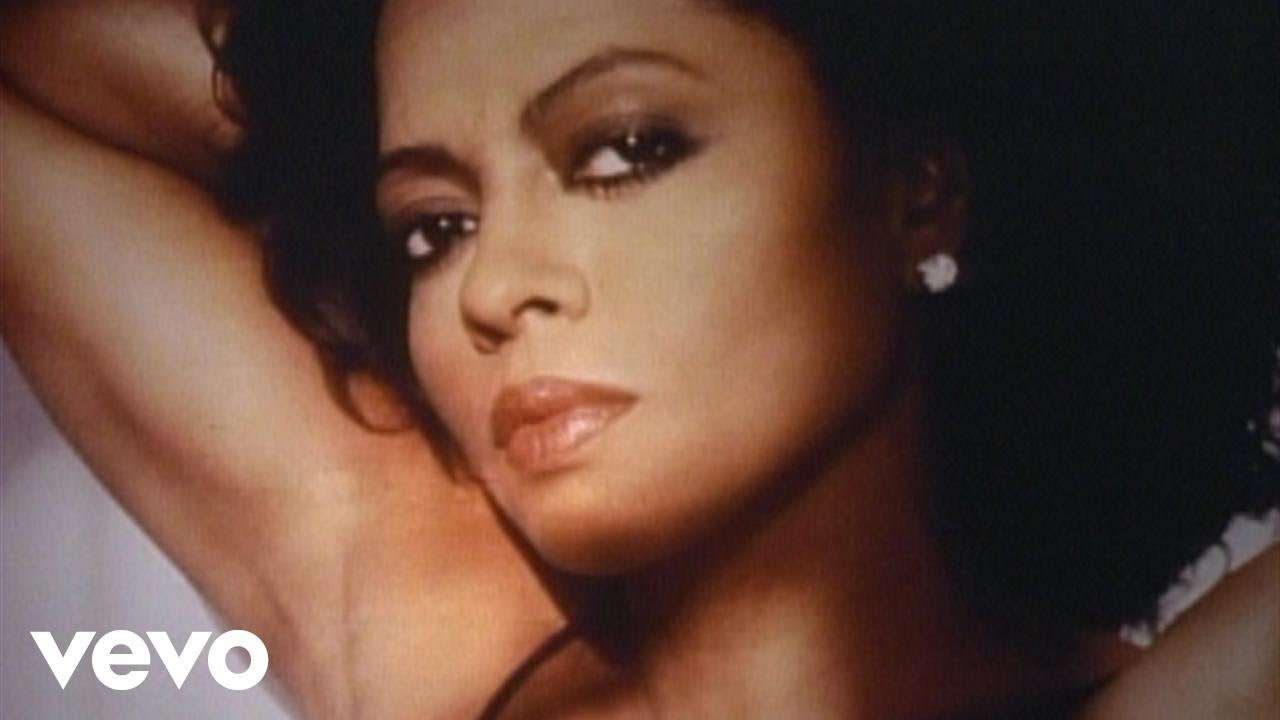
The promotional video — filmed in June 1987 — leaned fully into the drama the song asked for. Ross appears on a beach at night, at the top of a lighthouse, underwater, and in a confrontation scene with both a lover and a rival, all of it building to a moment at the lighthouse’s edge that stops just short of noir. It raised eyebrows at the time. Compared to what was already airing on MTV, it was relatively tame — but for a Diana Ross single, the melodrama was notably unguarded. Luther Vandross, who contributed both a song and a production to the album, would later speak warmly about that era’s willingness to take creative risks. Whether or not the record found its audience, no one could accuse it of playing it safe.
What stays with you about “Dirty Looks” — and what makes it worth revisiting now — is how genuinely it doesn’t sound like anything else in Diana Ross’s catalogue. It borrowed from the electro underground, pressed it into the service of one of the great voices in American pop, and dared RCA’s radio pluggers to sell it. They couldn’t quite manage it. But the song landed in the top tier of her RCA years regardless — a vivid reminder that risk and reward rarely keep pace with each other, and that some records deserve a longer look than the charts ever gave them.
SONG INFORMATION
Related videos
![Dead Or Alive – You Spin Me Round (Like a Record) [Live In Japan]](https://musicvideosclub.com/wp-content/uploads/2025/10/dead-or-alive-you-spin-me-round-360x203.jpg) Watch LaterAdded
Watch LaterAdded
 Watch LaterAdded
03:27
Watch LaterAdded
03:27  Watch LaterAdded