Elvis wanted it. His manager wanted half the publishing. She cried all night and said no anyway.
Colonel Tom Parker phoned the day before the session. Elvis Presley was booked into the studio to record I Will Always Love You, Parton had already agreed, and she had been invited down to watch. Then Parker explained the arrangement: the songwriter signed over half the publishing on anything Elvis recorded. That was standard, he said. Parton was twenty-eight, four years past her first solo No.1, and she said no. She has since described crying all night over it, with people around her telling her she was insane.
She had written it the previous year for a man, though not the kind people assume. Porter Wagoner had put her on his television show in 1967 and made her career, and by 1973 she needed to leave and he would not accept it. She wrote the song as a way of saying what she could not say in a room with him. In her memoir she was explicit that it was about Wagoner and the painful, complicated years they spent working together, not a lover. She played it to him. He cried, and told her she could go if he could produce the record.
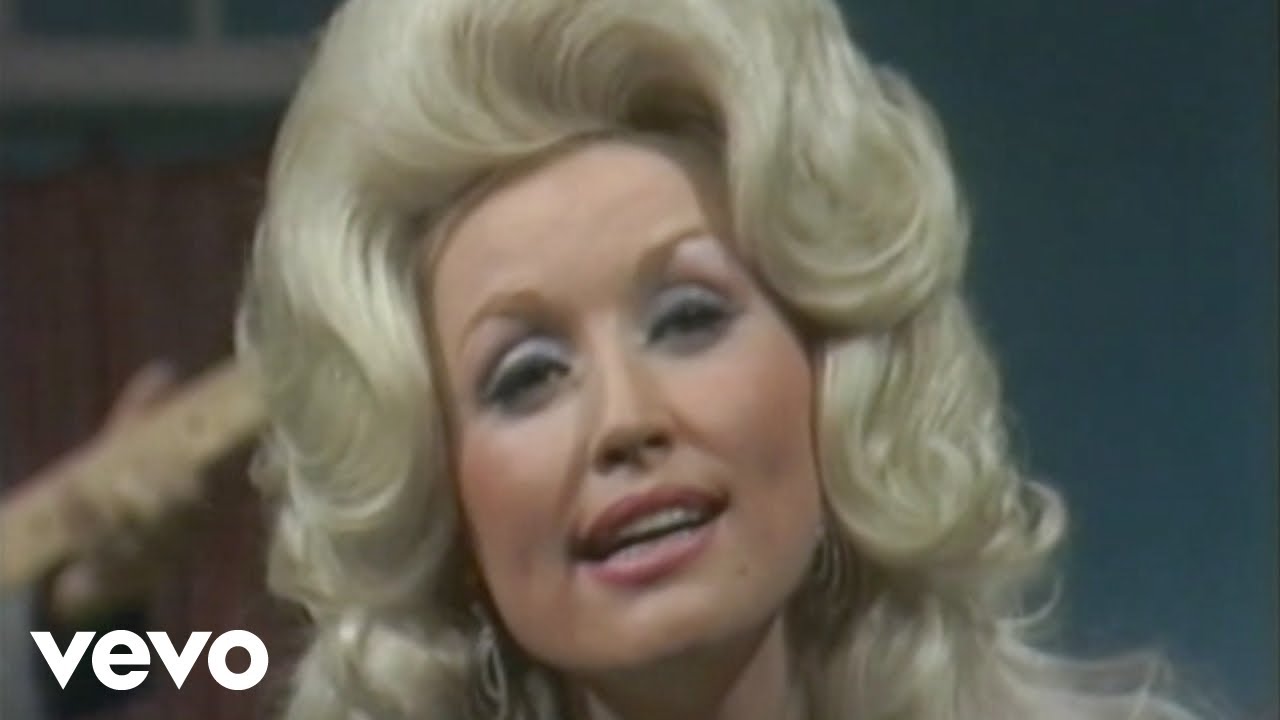
Parton recorded it at RCA Studio B in Nashville on June 12, 1973, with Bob Ferguson producing and a room full of Nashville regulars behind her — Hargus “Pig” Robbins on piano, Johnny Gimble and Mack Magaha on fiddles, Buck Trent and Bobby Thompson on banjos. RCA Victor released it on March 11, 1974, backed with “Lonely Comin’ Down,” and it reached No.1 on Hot Country Songs on June 8. The following year she took Female Vocalist of the Year at the CMA Awards. The performance on this page is a later live one, not that 1973 session — the same song, sung by a woman who had been living with it for decades by then.
The only song to do it twice
Eight years later she re-recorded it — a genuinely different performance, not a reissue — for the soundtrack of her 1982 film with Burt Reynolds. RCA put it out on July 12, 1982 as a double A-side with “Do I Ever Cross Your Mind,” and it went to No.1 on the country chart again that autumn. Parton became the first artist to top a chart twice with the same song. The new version did something the original never had, crossing to No.53 on the pop chart and No.17 on Adult Contemporary.
Linda Ronstadt had already cut a version in 1975. Parton spent years telling Patti LaBelle she should record it, convinced LaBelle would do something remarkable with it; LaBelle kept putting it off and later said she regretted it deeply. Then Kevin Costner suggested it to Whitney Houston for The Bodyguard, and in 1992 the song stopped being a country record altogether. Houston’s version held No.1 on the Hot 100 for fourteen weeks and became the best-selling single ever released by a woman.
Every cent of the songwriting went to the woman who had refused Colonel Parker. Asked about it later, Parton said that when Houston’s version came out she made enough money to buy Graceland. She presented Houston with the Grammy for Best Pop Vocal Performance, Female at the 1994 ceremony, the same night the record took Record of the Year.
What she kept
Dolly Parton died on August 25, 2026, at her home in Nashville, at eighty. She wrote more than three thousand songs across sixty years and owned nearly all of them, which is the least romantic fact about her and possibly the most important one. She had grown up in Sevier County, Tennessee, one of twelve children, and left for Nashville the day after she finished high school in 1964. Her husband of fifty-nine years, Carl Dean, died in March 2025.
The song she wrote to end a working relationship became a farewell that outgrew every situation anyone tried to attach it to — a resignation letter, a film ending, a funeral, a stadium. She was asked about the Elvis decision for the rest of her life and never once framed it as shrewdness. She said something in her heart told her not to do it. It was, by any measure available, the correct instinct.
SONG INFORMATION
Artist: Dolly Parton
Song: “I Will Always Love You”
Album:Jolene
B-side: “Lonely Comin’ Down”
Released: March 11, 1974
Recorded: June 12, 1973
Studio: RCA Studio B, Nashville
Label: RCA Victor
Songwriter(s): Dolly Parton
Producer(s): Bob Ferguson
Chart Performance: No.1 US Hot Country Songs, June 8, 1974; No.1 again October 1982 with the re-recording; No.4 Canada Country
Awards: CMA Female Vocalist of the Year, 1975
Lineup: Dolly Parton (vocals, guitar), Jimmy Colvard and Chip Young (guitar), Stu Basore (pedal steel), Bobby Dyson (bass), Larrie Londin (drums), Buck Trent and Bobby Thompson (banjo), Mack Magaha and Johnny Gimble (fiddle), Hargus “Pig” Robbins (piano)