It tops all-time polls, it filled a decade of concerts, and Deep Purple refuse to play it — because the men who wrote it at 24 won’t counterfeit it at 74.
Deep Purple’s most beloved song is one the band no longer allows itself to play. Child in Time was last performed in 2002, at the Opera Theatre in Kharkiv, and Ian Gillan drew the line there permanently: the vocal he recorded at 24 — that slow climb from a murmur to a full-throated scream — cannot honestly be sung at his age, and the band refused to fake it with samplers or hand the top notes to a guitar. Roger Glover put it plainly: they respect the song too much to counterfeit it. So the ten-minute epic that audiences begged for across five decades now exists only in recordings — which makes footage like the performance on this page something close to a preserved species.
The song began with Jon Lord’s hands on someone else’s tune. At a rehearsal in west London in 1969, Lord was toying with Bombay Calling, a psychedelic instrumental by the American band It’s a Beautiful Day, and the rest of the band liked what the figure suggested — so they slowed it, darkened it, and rebuilt it into something entirely theirs. Gillan, who had never heard the original, improvised words over it with the Cold War as his theme: a child watching the line drawn between good and bad, a blind man shooting at the world, the nuclear dread every person in 1969 carried around quietly. The original album pressing gave it a subtitle — “A story of a loser – it could be you.” As for the borrowed seed, the two bands settled it like gentlemen: It’s a Beautiful Day had quietly turned Deep Purple’s Wring That Neck into a track of their own, so when the groups met in London, they shook hands and agreed nobody would sue anybody.
Ten minutes with no chorus
Released on June 5, 1970, on Deep Purple in Rock — the self-produced album that stands as one of hard rock’s founding documents — Child in Time broke every rule of the radio single and became immortal anyway. It runs past ten minutes, has no conventional chorus, and is structured as a long double crescendo: Lord’s circling organ intro, Gillan rising step by step from hushed verses through wordless cries to the famous screams, then Ritchie Blackmore — playing a Gibson ES-335 rather than his usual Stratocaster — tearing through a galloping solo before the whole cycle rebuilds and detonates again. Gillan likened performing it to an Olympic event rather than a song. The band had been playing it live since late 1969, including at the Royal Albert Hall during the Concerto for Group and Orchestra — meaning hard rock’s first true epic was on stage months before the album existed, and more than a year before Stairway to Heaven. The song’s reach went places the band couldn’t: Gillan learned years later that Radio Free Europe had carried it behind the Iron Curtain, where listeners took real comfort in it. The accolades never stopped accumulating — voted the No. 1 song of all time by Holland’s Radio Veronica in 1989, a perennial top-five entry in the Dutch Top 2000, a fixture of greatest-solo polls, and, most recently, resurrected for a new generation in the teaser for the final season of Stranger Things.
Remembering Jon Lord
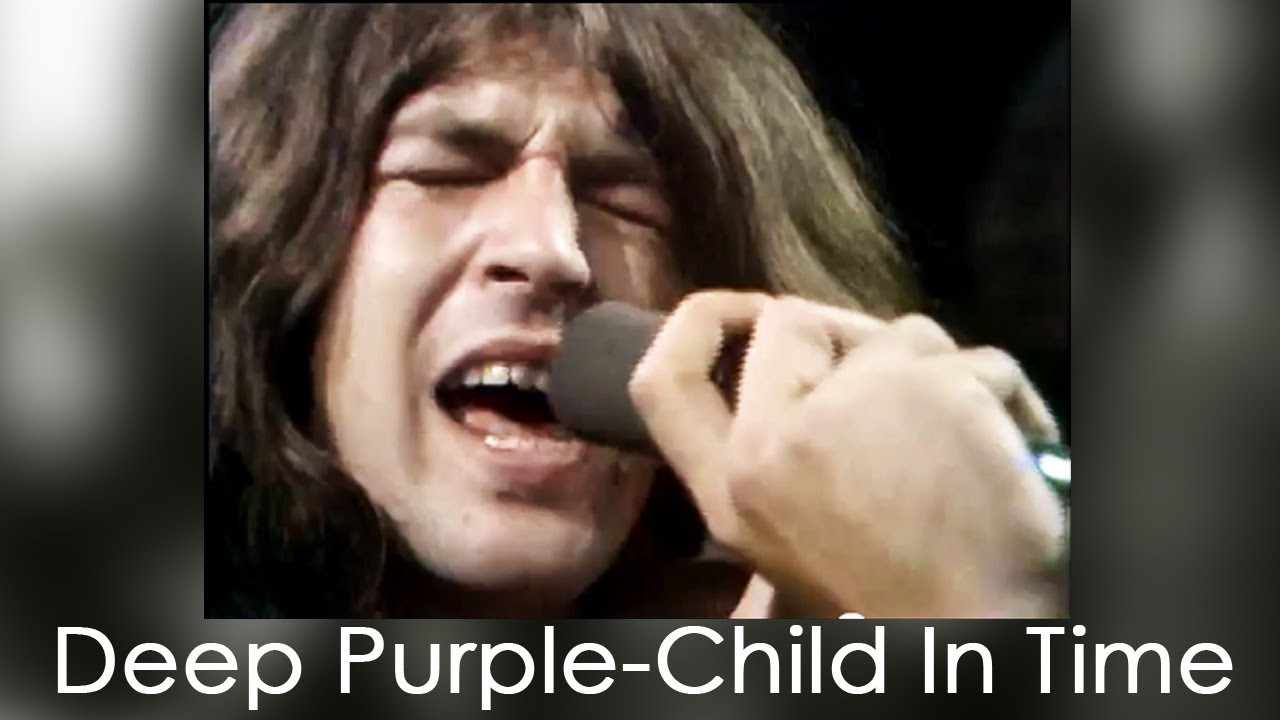
The man whose idle rehearsal-room moment seeded all of it was the most improbable figure in hard rock: a classically trained pianist from Leicester who ran his Hammond organ through distortion until it could stand toe to toe with Blackmore’s guitar — and in doing so gave heavy music one of its foundation stones. Jon Lord co-founded Deep Purple with Ian Paice in 1968 and was, with Paice, the only member present for every day of the band’s life from then until his retirement in 2002 — the same year, fittingly, that Child in Time played its last. Diagnosed with pancreatic cancer in July 2011, he died on July 16, 2012, at the London Clinic, of a pulmonary embolism, at 71 — fourteen years ago today. The statement on his website said simply: “Jon passed from Darkness to Light.” The performance on this page, from the band’s own archive — Deep Purple tearing through the song on the British television show Doing Their Thing in 1970, weeks into the album’s life — catches Lord exactly where he belongs: at the center of the storm he started, one hand on Bach and the other on the loudest band in the world.
SONG INFORMATION
Artist: Deep Purple
Song: “Child in Time”
Album:Deep Purple in Rock
Released: June 5, 1970
Recorded: October 1969 – March 1970
Label: Harvest (UK); Warner Bros. (US)
Songwriter(s): Ritchie Blackmore, Ian Gillan, Roger Glover, Jon Lord, Ian Paice
Producer(s): Deep Purple
Performance: Doing Their Thing (British TV), 1970
Lineup: Ian Gillan (vocals), Ritchie Blackmore (guitar), Jon Lord (Hammond organ), Roger Glover (bass), Ian Paice (drums)