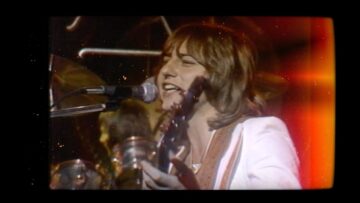
It went Top 10 across most of the world. In America, MGM never released it as a single at all.
By the band’s own account, Tobacco Road reached the Top 10 in nearly every market it was released in. There was one exception, and it was the country they lived in. MGM never issued it as a single in America, so the track that established Eric Burdon and War internationally was one their own audience could only get by buying the album. It runs past thirteen minutes on that record, which is presumably part of the explanation, though it did not stop anyone in Europe.
The song had already traveled further than most before they got hold of it. John D. Loudermilk, a country songwriter from Durham, North Carolina, wrote it and cut it himself in 1960 — a piece of Southern poverty writing about a place you cannot wash off you. Four years later the Nashville Teens made it a hit, and they were an English beat group from Surrey with no connection to Nashville whatsoever. By 1970 it had passed through folk, country, British beat and soul, and it was about to be handed to a combination nobody would have predicted.
Eric Burdon had left the Animals and was in California looking for musicians. What he found was a Long Beach band then called Nightshift, backing the football player Deacon Jones in local clubs, and a Danish harmonica player named Lee Oskar he had met separately. Producer Jerry Goldstein put them together, renamed the group War, and took the whole thing into Wally Heider Studios in San Francisco between January 2 and 4, 1970. The album that came out of those three days is credited to Eric Burdon and War, and the declaration printed on its back cover — an inversion of the band’s own name, framing the record as a war fought for the right to love — set the terms.
What the length is actually for
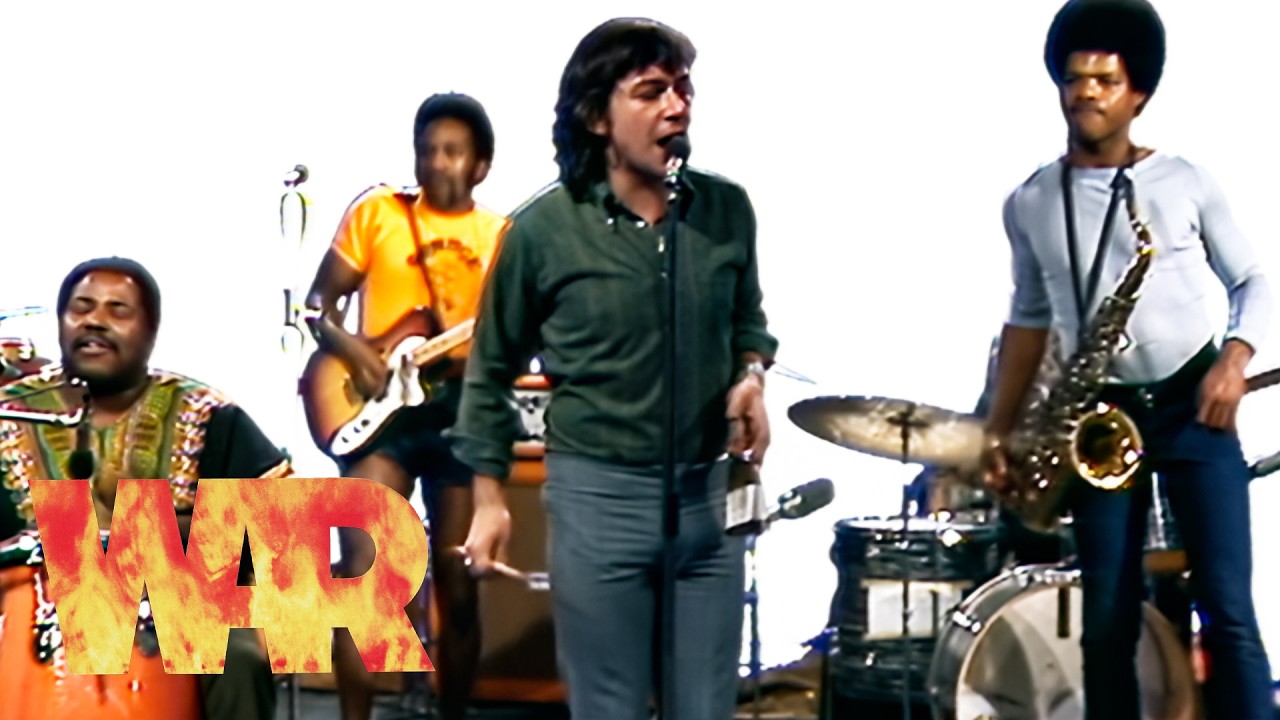
Three of the album’s five tracks are extended jams, and critics at the time were divided about whether that was ambition or self-indulgence. AllMusic’s later verdict was that the long pieces lack focus. The counterargument is audible on this one: the arrangement is not a song with a solo bolted on, it is a band discovering what it can do while the tape rolls. Lonnie Jordan’s organ, Charles Miller’s saxophone and Oskar’s harmonica trade the space between them, Harold Brown and B.B. Dickerson hold a groove that barely changes for minutes at a stretch, and Burdon delivers Loudermilk’s lyric like a man who has decided the song is a text rather than a tune.
What they were building became one of the most successful American bands of the 1970s. War without Burdon produced Low Rider, The Cisco Kid, Why Can’t We Be Friends? and Spill the Wine‘s several sequels. The partnership itself lasted two albums. The Black-Man’s Burdon arrived in December 1970 and Burdon left shortly afterward; the band signed to United Artists, dropped his name, and got considerably bigger without him.
Bremen, September 1970
The footage on this page comes from Beat-Club, the German television program broadcast from Radio Bremen that ran from 1965 to 1972 and captured an extraordinary amount of music that would otherwise have gone unrecorded. This performance was taped on September 26, 1970, a few months after the album and a few months before the group split.
It is worth watching for the geography alone. An English singer, an American funk band from Long Beach, a Danish harmonica player, and a song written in North Carolina about the rural South, performed for a German audience by a group that had existed for less than a year. Nothing about that combination should have worked, and the record it produced went Top 10 in most of the world without its own country ever getting the chance to buy it.
SONG INFORMATION
Artist: Eric Burdon and War
Song: “Tobacco Road”
Album:Eric Burdon Declares “War”
Released: April 1970 (album); single release 1970 outside the United States
Recorded: January 2–4, 1970
Studio: Wally Heider Studios, San Francisco
Label: MGM
Songwriter(s): John D. Loudermilk
Producer(s): Jerry Goldstein
Original Release: John D. Loudermilk, 1960
Chart Performance: Album No.18 US, No.50 UK, No.7 Australia; single not issued in the United States
Performance: Beat-Club, Radio Bremen, West Germany, September 26, 1970
Lineup: Eric Burdon (vocals), Lonnie Jordan (keyboards), Howard E. Scott (guitar), B.B. Dickerson (bass), Charles Miller (saxophone), Lee Oskar (harmonica), Harold Brown (drums), Thomas “Papa Dee” Allen (percussion)