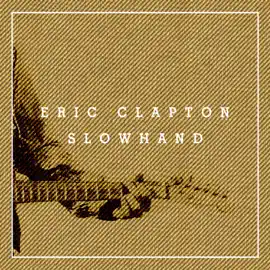
J.J. Cale wrote “Cocaine” as a jazz number. His producer talked him out of it, pushed him toward something harder, and the result — a locked-in, hypnotic rocker with a riff built from three single-string overdubs — appeared on Cale’s 1976 album Troubadour and quietly vanished. Then Eric Clapton heard it, and everything changed. When Clapton’s version arrived on Slowhand in November 1977, it opened the album like a slow-burning fuse — and radio stations played it into the ground despite the fact it was never officially released as an A-side single in most of the world.
“Cocaine” rode the coattails of Slowhand‘s commercial muscle rather than its own single campaign. The album peaked at number two on the Billboard 200 and went platinum in the US, with “Lay Down Sally” and “Wonderful Tonight” doing the promotional heavy lifting. In most territories, “Cocaine” was the B-side to “Lay Down Sally” — only Japan received it as an A-side. A live version recorded at the Budokan eventually charted at number 30 in the US in 1980, bundled as the B-side to “Tulsa Time.” The song found its audience regardless — on its own terms, through sheer force of riff.
The relationship between Clapton and Cale was one of rock’s most generous creative friendships, and it ran in one direction for years. Clapton had covered Cale’s “After Midnight” as his very first solo single in 1970 — a move that earned Cale a record deal and enough financial breathing room to make music entirely on his own terms. When Clapton was assembling Slowhand, he went back to Cale’s catalogue and pulled “Cocaine.” During the sessions, the two men actually went to a Cale concert together, and Cale dragged Clapton onstage to perform the song as a duet — the same song they were about to record. By 2006, the friendship had deepened into a full collaborative album, The Road to Escondido, which won the Grammy for Best Contemporary Blues Album.
The recording was made in May 1977 at Olympic Studios in London, with Glyn Johns producing and a deliberate brief to keep it raw and live-sounding. Clapton — who by his own admission had traded a heroin addiction for heavy cocaine and alcohol use during this period — brought a coiled, barely-restrained energy to the track that Cale’s more detached original never had. Johns kept the arrangement clean and the band tight, letting Clapton’s guitar line do the swagger. The result was markedly different from Cale’s original: more muscular, more urgent, and with vocals pushed forward in the mix until the riff felt almost physical.
Slowhand was Clapton’s best-selling album of the 1970s, and “Cocaine” anchored it in a way the chart numbers alone don’t capture. The album also contained “Wonderful Tonight” and “Lay Down Sally” — a run of tracks that secured Clapton’s commercial footing after the turbulent years of addiction and recovery that had preceded it.
The song’s ambiguity became its most debated quality. Clapton was unequivocal about the intent — “She don’t lie, she don’t lie, she don’t lie: cocaine” was always meant as a warning — but the groove was so seductive that most listeners took it as a celebration. Over the years, Clapton addressed this by adding the words “that dirty cocaine” in live performances, an attempt to tilt the interpretation. It rarely worked. When J.J. Cale died in 2013, Clapton was on a plane to the funeral before it was properly announced, already writing a tribute album setlist on a napkin.
Cale once said his ideal was music so subtle it felt like it was already there when you arrived. “Cocaine” might be the finest proof of that philosophy — a song built on three overdubbed guitar notes that somehow convinced the entire world it was their idea to like it. Clapton made it louder, harder, and more personal. But the genius of the thing was always Cale’s. The guitar may belong to Clapton — but the trap was always set by the quiet man from Tulsa.
SONG INFORMATION
Artist: Eric Clapton
Song: “Cocaine”
Album:Slowhand
B-side: B-side to “Lay Down Sally” (most territories); A-side in Japan only
Released: November 25, 1977
Recorded: May 1977, Olympic Studios, London
Studio: Olympic Studios, London
Label: RSO Records
Songwriter(s): J.J. Cale
Producer(s): Glyn Johns
Chart Performance: No.2 US Billboard 200 (album), live B-side version No.30 US Billboard Hot 100 (1980), No.45 Australia
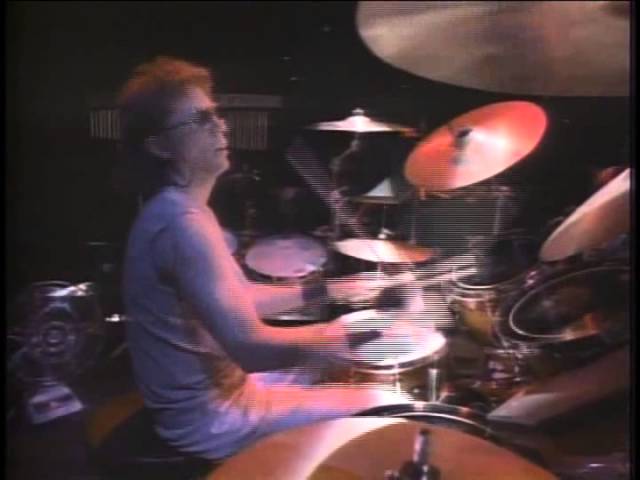
Eric Clapton, playing live at the Hartford CT Civic Center, on May 1st, 1985. It’s from Behind The Sun tour.
Lineup:
“Duck” Dunn – bass
Jamie Oldaker – drums
Tim Renwick – guitar
Eric Clapton – guitar
Chris Stainton – keyboards
Marcy Levy & Shaun Murphy – backing vocals