



Ratt – Dance
The Album Had No Ballads, No Female on the Cover, and a Lead Single That Stalled at Number 59 — and Still Went Platinum
By 1986, Ratt had already done the hard part. Out of the Cellar had sold three million copies and sent “Round and Round” to number 12 on the Hot 100. Invasion of Your Privacy had gone platinum and drawn congressional attention when the Parents Music Resource Center used it as exhibit material at hearings on parental advisory labels. When it came time for a third album, the band made a deliberate set of decisions that cut against the commercial grain of where glam metal was heading. No power ballad. No woman on the cover — just black-and-white portraits of five men who looked like they had something to prove. A heavier sonic direction that had critics wondering whether they were pivoting toward thrash. And an album-opening track called “Dance” that would be the first thing anyone heard from the new record.
The writing credit on “Dance” is shared between Stephen Pearcy, guitarist Robbin Crosby, guitarist Warren DeMartini, and producer Beau Hill — which reflects exactly how Dancing Undercover was built. Hill, who had been working with Ratt since Out of the Cellar and would go on to produce Winger, Kix, and Warrant, was not merely a technical presence. He was a creative collaborator who shaped the songs as much as the sound. The recording took place at the Record Plant and Can-Am Recorders in Los Angeles — two studios that had been part of the city’s rock infrastructure since the early 1970s. The result was a track that opened the album at pace and without negotiation: DeMartini and Crosby’s guitars locking into the riff together, Pearcy’s gravelly vocal slotting in over the top, the whole thing running at a momentum that didn’t invite you in so much as pull you forward.
Whisky a Go Go, Dick Shawn, and the Video That Ran While “Dance” Was Still in Heavy Rotation
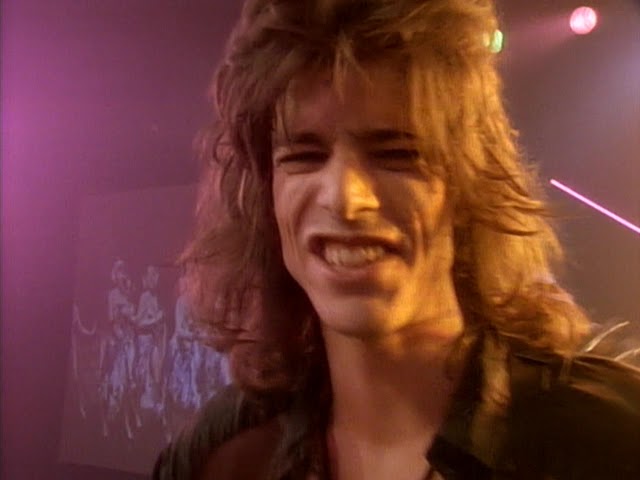
The music video was directed by Ralph Ziman and filmed at the Whisky a Go Go on the Sunset Strip — the club that had served as the heartbeat of the Los Angeles rock scene since the 1960s and that, by 1986, was the unofficial home of every band Ratt had come up alongside. The conceit of the clip is built around Dick Shawn, the comedian and character actor whose career stretched back to Broadway and film comedy in the 1960s, here cast as a flamboyant master of ceremonies hyping a rock show and urging an initially reluctant Ratt onto the stage. The band eventually relents, launches into the track, and the video settles into a kinetic performance document of the band in full flight — Pearcy at the mic, DeMartini and Crosby trading leads, Juan Croucier and Bobby Blotzer holding down the rhythm section behind them. The crowd at the Whisky responds accordingly. It is not a complicated video, but it is a very precise one: a specific band, in a specific club, at the specific moment when that club and that band were exactly what Los Angeles rock looked like.
“Dance” was released as the lead single from Dancing Undercover in September 1986. The album entered the Billboard 200 at number 26 and went platinum. The single, however, peaked at number 59 on the Hot 100 — a relative commercial underperformance for a band that had been in the top 15 two years earlier. The song was also featured in the third season of Miami Vice, in the episode “Down for the Count,” which gave it additional exposure on a show that was, in 1986 and 1987, one of the most watched programmes in American television. The video was in heavy MTV rotation in the autumn of 1986, running alongside “Body Talk” — the second single, which appeared on the Eddie Murphy film The Golden Child soundtrack — for a promotional period that kept the album visible well into 1987. Ratt’s opening acts on the supporting tour included Poison, Cinderella, Cheap Trick, and Queensrÿche.
The video has now been officially uploaded to YouTube by Rhino Records, making a clean, authorised version available for the first time on the platform. Ratt would release two more studio albums — Reach for the Sky in 1988 and Detonator in 1990 — before the collapse of the glam metal market in the early 1990s brought the original run to a close. Robbin Crosby, who plays on this video and on every record the classic lineup made, died in 2002. Jerome DeMartini remains the musical anchor of whatever version of the band has toured under the name since. But the footage at the Whisky in 1986 is the document of the unit that mattered — the five people who made the sound and put it on tape before anyone knew what the decade was about to do to all of them.
SONG INFORMATION
Related videos
 Watch LaterAdded
 Watch LaterAdded
03:57
Watch LaterAdded
03:57  Watch LaterAdded