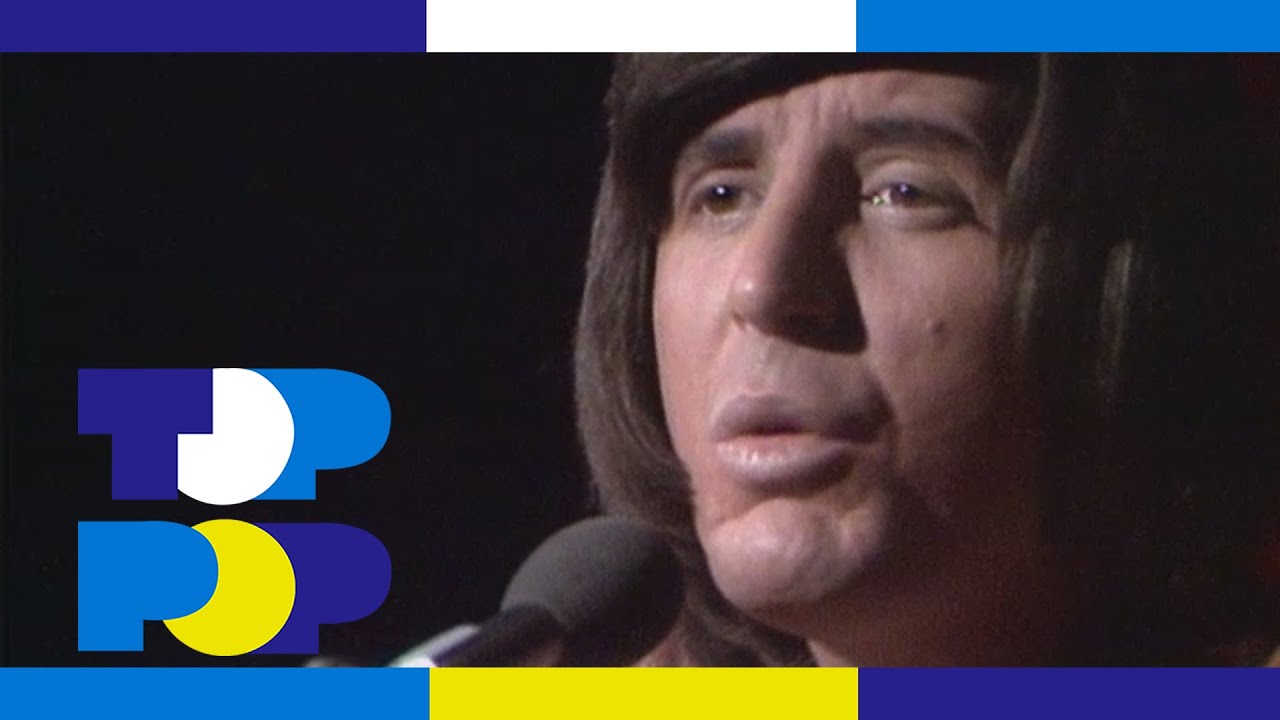
It topped the charts in at least seven countries and became the biggest hit of Lobo’s career — but in America it spent two weeks stuck at No. 2, and never got past it.?
“I’d Love You to Want Me” was the peak of Lobo’s career, and in the United States it came agonizingly close to the very top. In November 1972 it settled in at No. 2 on the Billboard Hot 100 and stayed there for two weeks — his highest chart placing ever, and as high as he would ever go. Both weeks, the record sitting immovably above it was Johnny Nash’s “I Can See Clearly Now.” Everywhere else, the song simply won: it reached No. 1 in at least seven countries. At home, it remains one of the great almost-chart-toppers of the era, the biggest hit by a singer most Americans could hum but few could name.
“Lobo” was not a name so much as a disguise. Roland Kent LaVoie, born in Tallahassee, Florida, in 1943, had spent the 1960s cycling through bands — one of them, an early outfit called the Rumours, briefly included the future country-rock pioneer Gram Parsons and the comic musician Jim Stafford — before producer Phil Gernhard signed him and suggested he release records under a single anonymous alias. LaVoie chose Lobo, Spanish for wolf. The point was partial invisibility: he could have hits without becoming a face, and that is more or less exactly what happened. He wrote “I’d Love You to Want Me” for his second album, Of a Simple Man, and it became the record that defined a career built almost entirely on songs warmer and more familiar than the man who made them.
The one that couldn’t reach the top
The song’s inspiration reached back years before he wrote it, to a fleeting, impossible attraction he remembered from a high-school classroom — a feeling of connection that could never go anywhere, which he later folded into the ballad’s ache of wanting someone just out of reach. Released in September 1972 and produced by Gernhard, it was pure early-’70s soft rock: an unhurried acoustic build, a swelling string arrangement, and a melody engineered to lodge in the memory on first hearing. It went gold, topped Billboard’s Easy Listening chart that December, and became a fixture of American radio for decades — the kind of record that turns up in shopping malls, elevators, and, much later, a 2012 episode of CSI, without most listeners ever attaching a name to it.
Bigger abroad, and slow to arrive in Britain
Outside America, the song’s reach was extraordinary for so gentle a record. It hit No. 1 in Germany, where it lodged near the top of the chart for months across 1973 and 1974, and topped the charts in Australia, Canada, and a string of other territories. Britain was the odd exception: released there in 1972, it failed to chart at all. Only when the single was reissued in 1974 did the UK finally catch up, sending it to No. 5. Lobo would score a handful of further hits — “Don’t Expect Me to Be Your Friend,” “How Can I Tell Her” — but never again matched this one. He eventually stepped back from performing, his catalog quietly enduring in Asia and on soft-rock radio worldwide. The wolf’s disguise held to the end: the song stayed famous long after its singer slipped out of view.
Listen to the studio recording of “I’d Love You to Want Me.”
SONG INFORMATION
Artist: Lobo (Roland Kent LaVoie)
Song: “I’d Love You to Want Me”
Album:Of a Simple Man
B-side: “Am I True to Myself”
Released: September 1972
Label: Big Tree (US); UK Records (UK)
Songwriter(s): Roland Kent LaVoie
Producer(s): Phil Gernhard
Length: 4:04
Chart Performance: US Billboard Hot 100 No. 2; US Easy Listening No. 1; UK No. 5 (1974 re-release); No. 1 Germany, Australia, Canada