






Stevie Wonder – Part Time Lover
Twenty-two years and three months after “Fingertips” took him to number one as a thirteen-year-old, Stevie Wonder did it again — and made history Motown couldn’t have scripted, becoming the first artist ever to top four Billboard charts at once.
When the Hot 100 dated November 2, 1985 came out, Stevie Wonder did something no recording artist had ever done. Part-Time Lover sat at number one on the Billboard Hot 100, the Hot Black Singles chart, the Hot Dance Club Play chart, and the Adult Contemporary chart, all at the same time. No one had managed all four before. And the gap between his first chart-topper, Fingertips – Pt. 2 in the summer of 1963, and this one stretched twenty-two years and three months — the longest span any artist had then put between a first and a most-recent number one. The Beach Boys would eventually break the record with Kokomo in 1988, but for three years it belonged to a man who had once been billed as Little Stevie Wonder.
Wonder built the track at his own Wonderland Studios in Los Angeles, the digital recording complex he had been using since the late seventies. He produced it alone, played the drums and synthesizers himself, and wrote the lyric around the small mechanics of an affair — a phone that rings once and hangs up, lights blinked from a window, the agreement to walk past each other in public without speaking. The hook nodded openly to the Supremes. Wonder told friends the music came to him as “a combination of You Can’t Hurry Love and My World Is Empty Without You,” the 1960s Motown sides that had given the Holland-Dozier-Holland team their template. He drove the new song with a LinnDrum, the era’s defining drum machine, and gave it a sixties bounce dressed in 1985 polish.
The voices behind the lead
The credit list reads like a small summit. Luther Vandross — by then a star in his own right — sings the ad-libs and most of the backing vocals, the wordless hums and yeahs that ride underneath Wonder’s lead. Philip Bailey of Earth, Wind & Fire is on backing vocals too, as is Wonder’s first wife Syreeta Wright, his songwriting partner from the early seventies. Keith John, son of the R&B singer Little Willie John, takes another line. Peter Byrne of Naked Eyes, Melody McCully, Billy Durham, Renee Hardaway, and Darryl Phinnessee fill out a backing chorus so layered that the chart-running mid-song drop reveals just how many voices Wonder had stacked into one record.
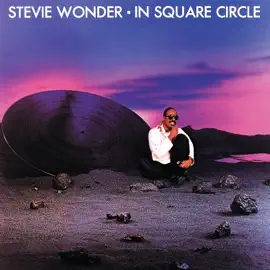
Tamla released the single on August 24, 1985, three weeks ahead of the album In Square Circle, which followed on September 13. It was Wonder’s first full studio album in five years — there had been the soundtrack work for The Woman in Red in 1984, which produced I Just Called to Say I Love You, but no proper album-length statement since Hotter Than July in 1980. Motown founder Berry Gordy was reportedly losing patience with the pace. Wonder had been spending much of his time on a non-musical campaign: lobbying Congress to make Martin Luther King Jr.’s birthday a federal holiday, a fight that was won the same year In Square Circle was released.
What four number ones meant in 1985
The four-chart sweep was unprecedented. Only three previous Motown singles had topped the pop, Black, and dance charts together — Thelma Houston’s Don’t Leave Me This Way, Marvin Gaye’s Got to Give It Up, and Diana Ross’s Upside Down. None of them had crossed into adult contemporary. Part-Time Lover did. The single also reached number three on the UK Singles Chart, helped by Wonder’s appearance on Top of the Pops in late 1985, and went to number one in Ireland, Belgium, New Zealand, Spain, Portugal, and on every major Canadian chart. The BPI certified it Silver in Britain, the SNEP awarded Gold in France, and the Recording Industry Association of New Zealand certified Gold as well. The Recording Academy nominated Wonder for Best Male Pop Vocal Performance at the 28th Grammy Awards.
The lyric is funnier than the gloss suggests. The narrator spends three verses explaining the protocols of his affair, and only in the closing verse does he discover his wife has the same arrangement going on her end — that the male friend whose voice he doesn’t quite recognise on the phone is hers, not just a cover for him. Wonder later said in interviews that the situation was less invented than people assumed: a man had once called his home and tried to disguise his voice when Wonder picked up. Whatever the source, the twist gives the song a moral architecture rarer in cheating songs than the bounce of the track lets on. The husband isn’t the wronged party — he’s caught in the same mirror he set up.
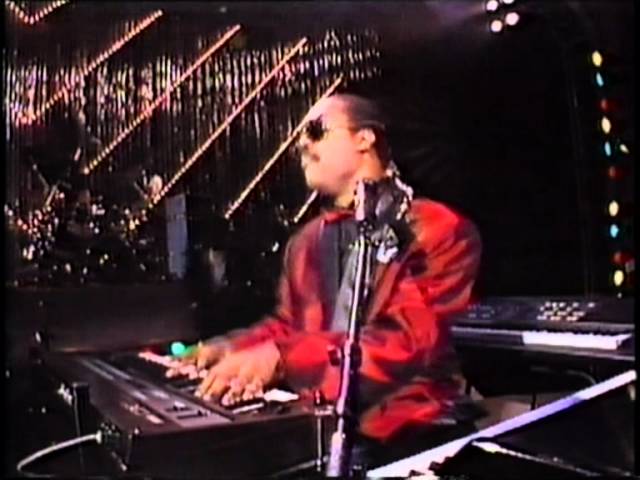
Bill Parker directed the video, released in September 1985 alongside the single. It shows a Black couple parallel-cheating through a single Los Angeles night, intercut with Wonder at a Kurzweil keyboard in a dance club, the film’s denouement landing when the two affairs converge on the same stage. The video got heavy MTV rotation through autumn 1985. Forty years later, Part-Time Lover remains Wonder’s most recent Hot 100 number one — a record he hasn’t been back to top since, though the catalogue around it has only grown in stature.
SONG INFORMATION