




![Kid Rock – All Summer Long [Official Music Video]](https://musicvideosclub.com/wp-content/uploads/2025/12/kid-rock-all-summer-long-officia-360x203.jpg)
The Cars – Drive
The Song Ocasek Wrote, the Voice He Gave It Away To, and the Famine Footage That Changed Everything
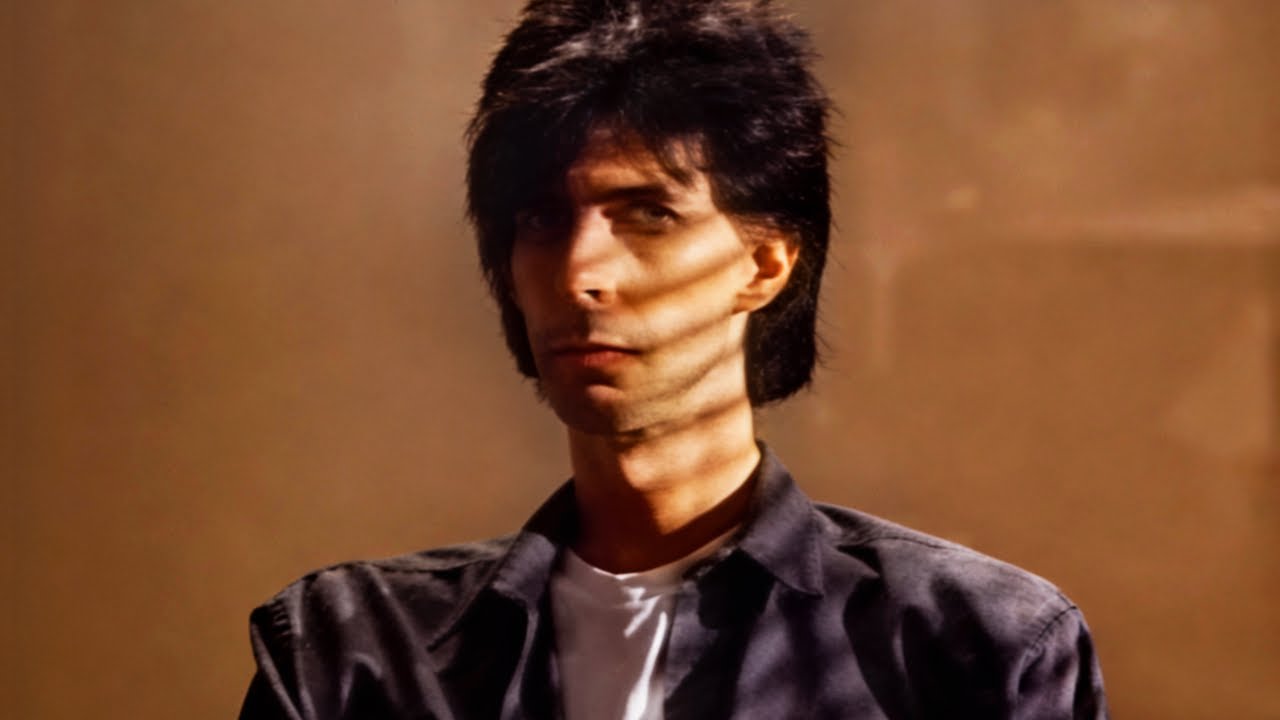
Ric Ocasek wrote “Drive” and then handed it to someone else. That was not unusual — he had done it before with “Just What I Needed” and “Let’s Go” — but with “Drive” the decision carried a particular weight. The lyric he had written was quietly devastating: a narrator watching someone he loves lose their footing, asking the questions that have no good answers — who’s going to tell you when it’s too late, who’s going to drive you home. Ocasek’s voice was capable of many things, but the vulnerability the song required belonged to Benjamin Orr. The two men had been playing music together since 1965, when Ocasek had seen a teenager named Benjamin Orzechowski performing on a Cleveland local television show called The Big 5 Show and had not been able to stop thinking about the voice. Twenty years on, that voice gave “Drive” the one quality no amount of production could manufacture: the sound of someone who actually means it.
Released on July 23, 1984 as the third single from Heartbeat City, “Drive” reached Number Three on the Billboard Hot 100 and Number One on the Adult Contemporary chart — the band’s highest-charting single in the United States. In the UK it peaked at Number Five on initial release. The Heartbeat City sessions had been produced by Mutt Lange — the same producer who had just finished Pyromania for Def Leppard and would soon move on to No Jacket Required for Phil Collins — and the resulting album had taken nearly a year to complete, a timeline that left Ocasek visibly drained. Greg Hawkes later described the sessions as the point at which the machinery of the Cars’ success began to wear on Ocasek in ways that were not going to repair themselves. The album went platinum four times over. Ocasek was not particularly comforted by the numbers.
The music video was directed by Timothy Hutton — the actor, then twenty-four years old and recently an Academy Award winner for Ordinary People — and featured a nineteen-year-old Czech model named Paulina Porizkova as Orr’s love interest. Ocasek had met Porizkova at the concept stage and, as she later recalled to Rolling Stone, “Thanks Ben, because it left us the time to woo each other.” Hutton’s concept was deliberately intimate and restrained — a hotel room, a car journey, two people whose connection the camera observed rather than dramatized. The video received heavy MTV rotation and introduced the song to an audience that would hear it differently a year later. Ocasek and Porizkova married in 1989 and had two sons together. Ocasek died in September 2019. The circumstances of his will — in which he excluded Porizkova, citing an estrangement — produced years of legal and public dispute that Porizkova discussed with considerable directness in interviews throughout the 2020s. The video set that had generated a marriage generated its own complicated aftermath.
The second life of “Drive” arrived at Live Aid on July 13, 1985. David Bowie closed his Wembley set by telling the audience they were about to see something important. The BBC and CBC then broadcast footage compiled from news reports on the Ethiopian famine — images of severe malnutrition, of children too weak to move, of a scale of suffering that Wembley Stadium’s audience of 72,000 had understood abstractly and was now seeing directly. The music running underneath was “Drive.” The song had not been licensed for the purpose in advance — it was a broadcast decision, made in the moment, by producers who needed music and reached for the most emotionally apposite thing available. The effect was immediate and overwhelming. The Cars re-released the single in the UK with proceeds going to the Band Aid Trust. It re-entered the chart and peaked at Number Four in August 1985. Ocasek personally presented a cheque for £160,000 to Midge Ure of Ultravox — the Band Aid trustee — in London in November 1986. The song that had been about watching someone you love spiral had become, without anyone planning it, the sound of a world watching a continent suffer.
Heartbeat City was the peak of the Cars’ commercial arc — the album that had also produced “You Might Think,” which won Video of the Year at the inaugural MTV Video Music Awards, and “Magic,” which reached Number Five on the Hot 100. The band made one more studio album, Door to Door in 1987, by which point the relationship between Ocasek and Orr had deteriorated to the point where Greg Hawkes later said they should have had an outside mediator in the room. They disbanded in 1988. Orr’s solo career produced modest returns. His last performance was with his band Big People on September 27, 2000 — six days before he died of pancreatic cancer at his home in Atlanta, aged fifty-three, having performed to the end exactly as he had always said he would. Paul McCartney had cited “Drive” as an influence on Press to Play in 1986. At Orr’s memorial service at the Rock and Roll Hall of Fame in Cleveland, they played “Drive” in the room where it had always belonged.
The Cars were inducted into the Rock and Roll Hall of Fame in April 2018, performing together for the last time at the ceremony. Ocasek died seventeen months later, found at his New York townhouse on September 15, 2019. The MTV Moonman the band had won in 1984 had spent thirty-five years propping open the door to his home recording studio — not displayed, not framed, but useful. His engineer Chris Shaw noted that the award clearly meant something to him, even if he never said so. The song the award came for was “You Might Think.” The song the world remembered was the one he had given to someone else. Ocasek wrote “Drive” and handed it to Benjamin Orr because he knew Orr’s voice was the right one for it. He was correct. He almost always was.
SONG INFORMATION
Related videos
 Watch LaterAdded
 Watch LaterAdded
 Watch LaterAdded