The high note at the start of the record is a kitchen kettle, recorded through an open studio door.
Somebody in the kitchen at Lansdowne Studios was making tea. The door to the control room was open, the band were listening back to the semi-acoustic introduction they had just recorded, and the kettle went off. Mick Box’s account of what happened next is straightforward enough: they went in, recorded the whistle two or three times, and re-tuned it to a high C. “That’s the note you hear at the beginning of the song.”
The whole thing was made in a hurry. Bronze wanted a single out before the band went back to America for a second time, so Uriah Heep were pushed into the Holland Park studio and cut The Wizard and its B-side inside a matter of hours. Gerry Bron produced. Ken Hensley had written it with the bass player, and what came out was a gentle folk-leaning ballad about a wanderer meeting a wizard — not obviously the work of a band whose reputation at that point rested on volume.
The bass player is the reason this song sits oddly in the catalog. Mark Clarke had come over from Colosseum and lasted a few months. He plays on The Wizard, he plays on the B-side, he sings the middle section, and he shares the writing credit. That is the complete list of what he did with Uriah Heep. By the time the record was being readied for international release, the band were in Los Angeles breaking in his replacement, Gary Thain, over a five-night run at the Whisky a Go Go. Clarke went on to work with Rainbow, Mountain and Billy Squier. He never made another Heep record.
The first one they ever filmed
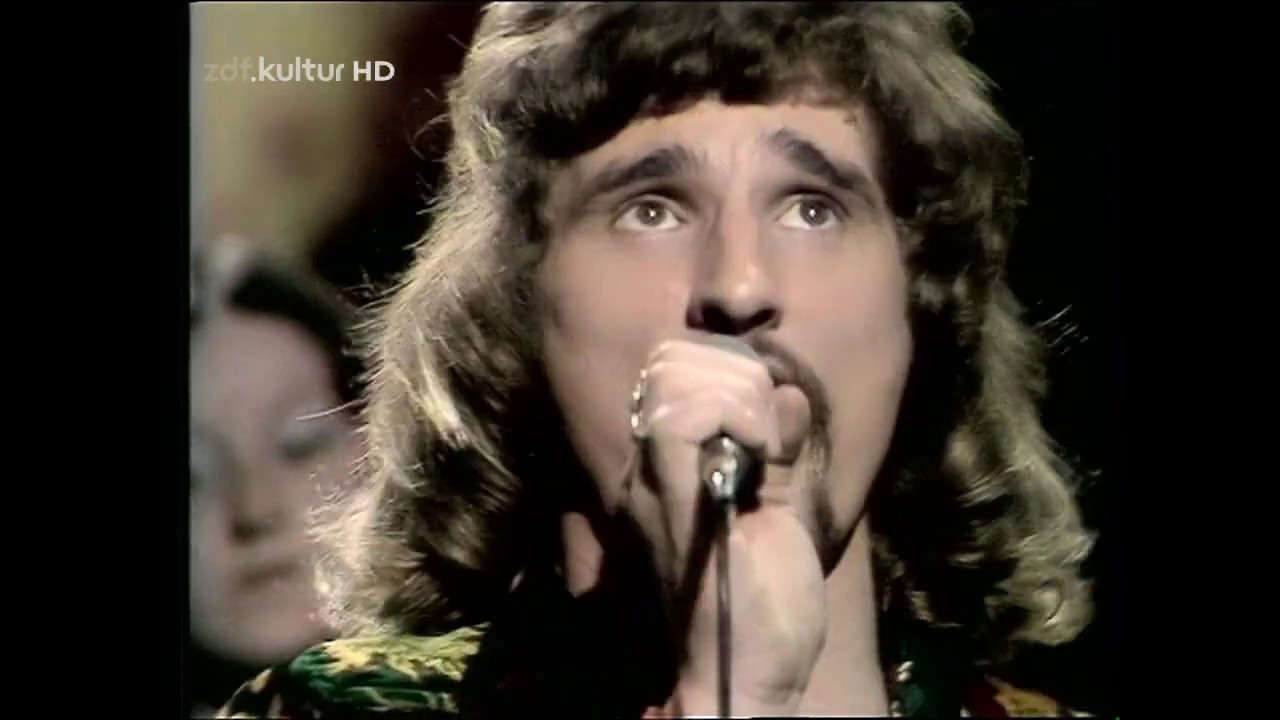
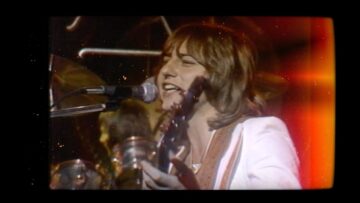
This was also the first Uriah Heep single to get a music video, which in early 1972 meant something different from what it means now. The footage on this page comes from ZDF’s Disco, broadcast on May 27, 1972, and the band are miming to the studio recording — standard practice on German television at the time and worth saying plainly rather than letting anyone assume otherwise. What you are watching is a performance of a record rather than a performance of a song.
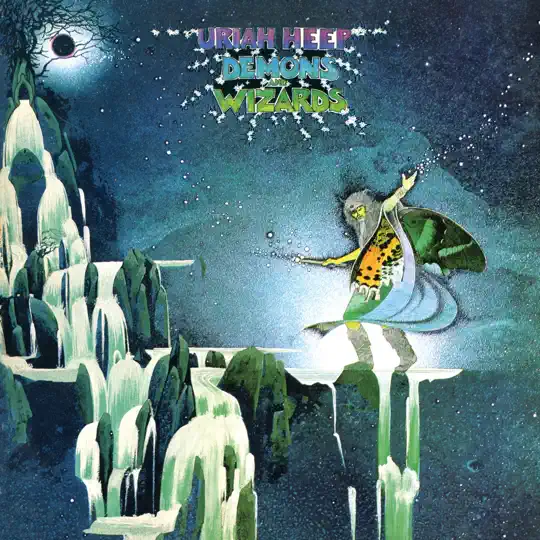
The lineup on screen is the one that made Demons and Wizards and, by most reckonings, the definitive Uriah Heep: David Byron singing, Mick Box on guitar, Ken Hensley running the Hammond, Lee Kerslake on drums. The album followed on May 19, 1972 with a Roger Dean cover, reached No.20 in Britain, and went all the way to No.1 in Finland. Rolling Stone, which had not been kind to the band before, called it the party record of the year so far.
What is left
It was the follow-up that broke them internationally. Easy Livin’ came out that summer and did what this one had not, and the album turned into a global success on the back of it. But The Wizard is the one that opens the record, and opening a hard rock album with an acoustic ballad and a kettle was a strange decision that turned out to be the right one.
Of the five musicians who played on that album, only Mick Box is still alive. David Byron died in 1985 and Gary Thain a decade earlier, in 1975. Lee Kerslake died in September 2020 and Ken Hensley two months after him. Box still has the Roger Dean artwork hanging in the front room of his house in London. He has said that of everything on every Uriah Heep record, that album was the band at its height.
SONG INFORMATION
Artist: Uriah Heep
Song: “The Wizard”
Album:Demons and Wizards
B-side: “Why” (Europe/US); “Gypsy” (UK/Japan)
Released: March 10, 1972
Studio: Lansdowne Studios, London
Label: Bronze (UK); Mercury (US)
Songwriter(s): Ken Hensley, Mark Clarke
Producer(s): Gerry Bron
Length: 2:59
Chart Performance: No.8 Switzerland, No.34 West Germany, No.86 Canada; album No.20 UK, No.1 Finland
Performance: ZDF Disco Nr.16, West Germany, broadcast May 27, 1972 — mimed to the studio recording
Lineup: David Byron (vocals), Mick Box (guitar), Ken Hensley (keyboards, guitar), Mark Clarke (bass, co-lead vocals), Lee Kerslake (drums)
When “The Wizard” aired on ZDF Disco, Uriah Heep’s lineup was:
David Byron (lead vocals)
Mick Box (guitar, backing vocals)
Ken Hensley (keyboards, guitar, backing vocals)
Mark Clarke (bass, backing vocals)
Lee Kerslake (drums, percussion)