The most political song the outlaw of country music ever cut wasn’t really political at all — and he told his label flat out that he didn’t care whether it became a hit.
Waylon Jennings spent a career refusing to be told what to do, so it fits that the one openly patriotic song in his catalog arrived on his own terms — and almost in spite of the music business. When he brought America to RCA in 1984, he was blunt with the label: he didn’t want to hear whether it would be a hit or not. He just wanted it out. For a man who had built the outlaw-country movement on exactly that kind of stubbornness, it was the only way the song could have happened.
The song was written by Sammy Johns, the North Carolina songwriter best known for his own 1975 hit Chevy Van. By the mid-1980s Johns had become a writer-for-hire whose songs found homes with other artists, and America found its way to Jennings at a moment when he was looking for exactly this kind of material. With the 1984 Summer Olympics about to land in Los Angeles, Jennings wanted something that spoke to the swell of national feeling he saw around him. Johns had the song. Jennings recorded it as a new track for the compilation Waylon’s Greatest Hits, Vol. 2, and RCA pushed it out as the first single on September 20, 1984.
Patriotism with its eyes open
What makes America unusual in the Jennings songbook is how little it sounds like flag-waving. Jennings rarely sang about politics — he left that to friends like Kris Kristofferson — and this isn’t a political song so much as a wide-armed one. The lyric reaches deliberately across every line of the country: black and white, “yellow too,” the red man “right to expect a little from you.” It even makes room for the men who couldn’t fight in a war that didn’t seem right, and welcomes them home. For a 1984 country single, that was a notably inclusive sweep, and Jennings delivered it in that familiar weathered baritone, lifting into the chorus with real conviction.
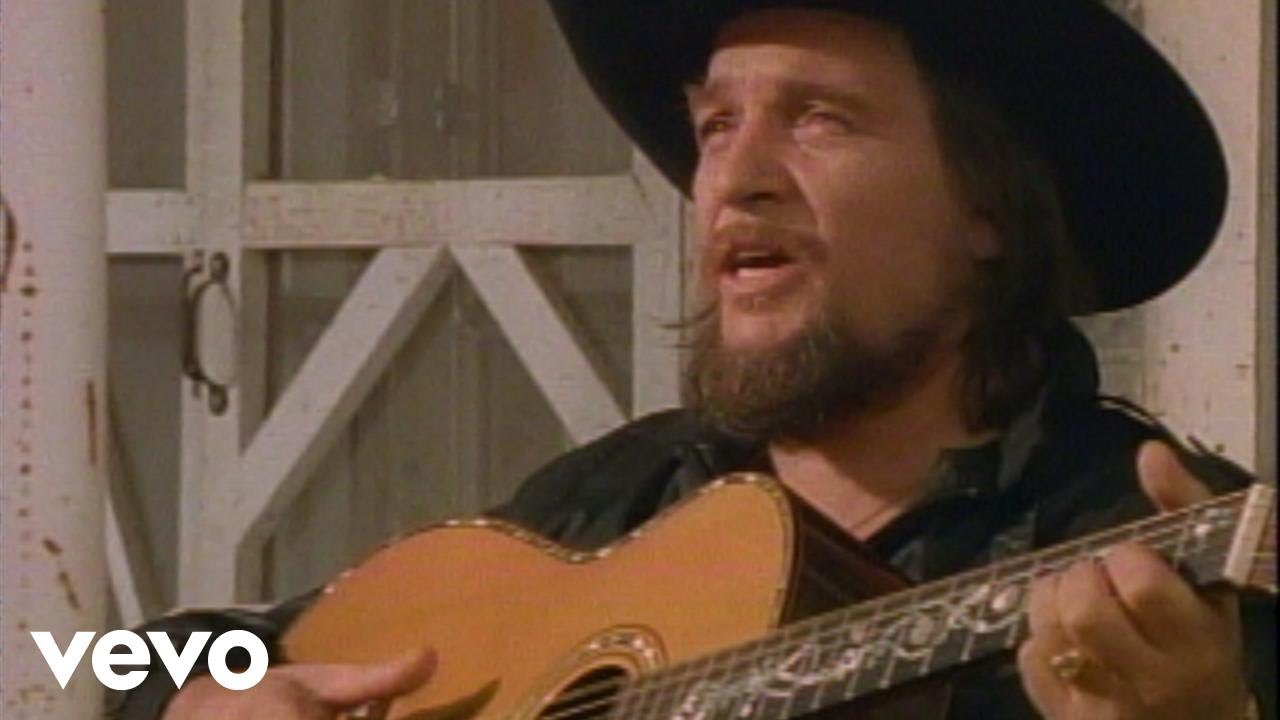
Audiences responded. America debuted on Billboard’s country singles chart on September 29, 1984, and climbed to No.6 — the 37th solo Top 10 country hit of Jennings’s career. The music video, directed by David Hogan and premiered on CMT in September 1984, leaned into the song’s open-road, open-country spirit: footage of farming and sport and landscape from across the United States, the Statue of Liberty, and Jennings himself singing outside a gas-station convenience store with the Stars and Stripes flying. It was as plainspoken as the song.
A song for a statue and a country
The timing turned out to be bigger than the Olympics. The mid-1980s were the years the Statue of Liberty itself went under a massive restoration, leading to the Liberty Weekend celebrations that marked the monument’s centennial. America became attached to that moment in the public imagination — a song about the country’s people arriving exactly as the country was refurbishing its oldest symbol of welcome. Jennings, a friend of Muhammad Ali and a man whose own story ran from a small Texas town to the night he gave up his seat on the plane that killed Buddy Holly, understood something about American luck and American distance, and you can hear it in the record.
Jennings died in 2002, a Country Music Hall of Fame inductee and one of the genre’s true originals. America endures as the gentlest kind of outlier in his catalog — the outlaw setting down his guard for three and a half minutes to sing, without irony and without a sales pitch, about the place he came from. He told the label he didn’t care if it charted. It charted anyway, and it outlasted the chart.
SONG INFORMATION
Artist: Waylon Jennings
Song: “America”
Album:Waylon’s Greatest Hits, Vol. 2
B-side: “People Up in Texas”
Released: September 20, 1984
Genre: Country
Label: RCA Nashville
Songwriter(s): Sammy Johns
Producer(s): Jerry Bridges, Gary Scruggs
Length: 3:27
Chart Performance: No.6 Billboard Hot Country Singles & Tracks (debuted September 29, 1984)
Director: David Hogan
Filmed: Various U.S. locations; premiered on CMT, September 1984