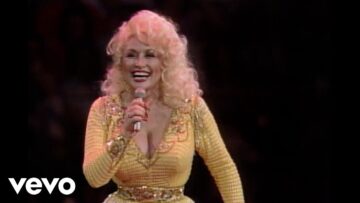
They were sold to the world as a German disco group, but the three women singing “River Blue” were British — assembled in Germany by a producer couple who kept swapping the lineup.
For decades, A La Carte have been filed under “German disco,” and it is easy to see why: the group was built in Germany, recorded for a German label, and became famous on German television. But the three women harmonizing through “River Blue” were British singers from London, performing in English, assembled and directed by a German production couple who treated the lineup as something closer to a cast than a band. The result was one of Europe’s most successful dance-pop acts of the era — and one of its most misunderstood.
A La Carte was the creation of Tony Hendrik and Karin Hartmann, a married production team working under the Coconut banner for Hansa in Germany. They had watched female Euro-disco groups like Baccara, Arabesque, Luv’, and Maywood conquer the continent’s dancefloors in the late 1970s, and they built A La Carte to compete. The first single, “When the Boys Come Home,” arrived in March 1979 and took off after a performance on the German TV show Musikladen. From there the group’s fortunes rose quickly — and its personnel changed almost as fast, with new faces arriving single by single. Only Jenny Renshaw stayed the course, becoming the one constant around whom the group was continually rebuilt.
Three singers, one revolving door
By 1981, the lineup had settled, at least for a while, around Renshaw alongside Linda Daniels and Joy Martin. This was the trio behind “River Blue”, written by Hendrik with Karin van Haaren and produced by Hendrik and Hartmann. It appeared on the album Viva, recorded across a string of studios in Germany and London — a smooth, melodic slice of the group’s signature sound, sitting somewhere between disco’s fading pulse and the polished continental pop that would define the early 1980s. The song leaned on the group’s real strength: clean, layered female harmonies over a bright, danceable production, sung by voices that betrayed no trace of the German industry that manufactured them.
That manufactured quality was never a secret, but it was often misread as a weakness. In truth the model — a fixed production team writing and shaping the records while the on-camera lineup rotated — was exactly how many of the era’s Euro-disco hits were made. A La Carte simply ran the system more openly than most, cycling through at least half a dozen singers across a handful of years while the sound stayed recognizably theirs.
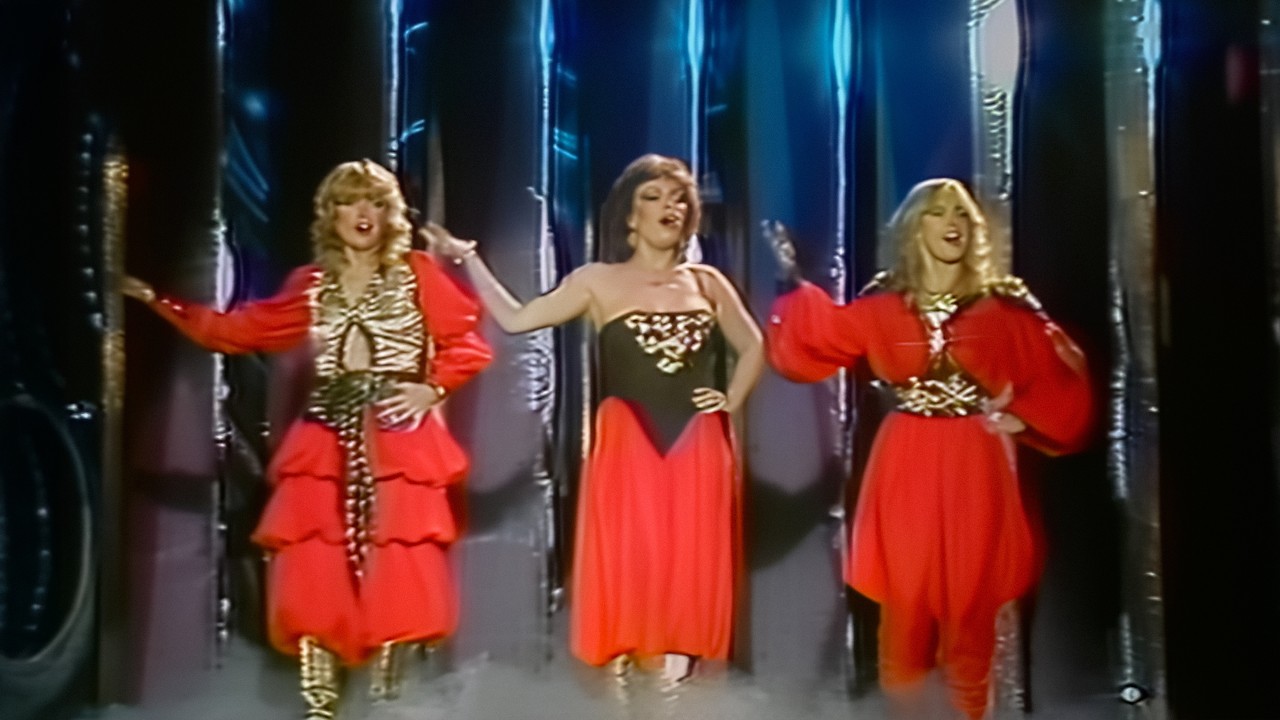
Live on East German television, 1981
The performance of “River Blue” preserved here comes from Ein Kessel Buntes, the lavish East German variety show, captured in 1981 and drawn from the archives of the Deutsches Rundfunkarchiv. It is a small time capsule: a West-facing pop group, fronted by British women, performing on one of the biggest entertainment stages behind the Iron Curtain, at a moment when that divide still felt permanent. A La Carte would keep going until 1984 before the constant turnover finally wound the project down, with later lineups revisiting the catalog and, in 1982, recording an album of 1960s covers. The group has reunited in the years since, but the early-’80s recordings remain the ones people return to — precise, bright, and far more durable than their disposable image ever suggested.
SONG INFORMATION
Artist: A La Carte
Song: “River Blue”
Album:Viva
Released: 1981
Recorded: 1981
Studio: Europasound, Friedrichsdorf; Marcus Studio, London; and others
Label: Coconut / Hansa
Songwriter(s): Tony Hendrik, Karin van Haaren
Producer(s): Tony Hendrik, Karin Hartmann
Lineup: Jenny Renshaw, Linda Daniels, Joy Martin (vocals)
Performance: Ein Kessel Buntes, East German television, 1981 (footage from Deutsches Rundfunkarchiv)