





Peter Gabriel – Sledgehammer
The Drummer Had Already Called His Taxi Back To Paris
“Sledgehammer” was released on April 21, 1986 as the lead single from Peter Gabriel’s fifth studio album So, hitting No.1 on the US Billboard Hot 100 on July 26, 1986—knocking his former band Genesis’ “Invisible Touch” out of the top spot. The song peaked at No.4 in the UK, tying with “Games Without Frontiers” as his highest-charting British single. What most fans don’t know: the musicians on the album were literally packing up their gear to leave Ashcombe House when Gabriel presented the song to them, and drummer Manu Katché had just ordered a taxi for his return journey to Paris when Gabriel coaxed him back into the studio—where he nailed his drum part in one take.
The chart dominance was unprecedented for Gabriel as a solo artist. “Sledgehammer” became his first and only No.1 hit in America, spending 21 weeks on the Hot 100 and also topping the charts in Canada for four weeks. The parent album So, released May 19, 1986, hit No.1 in the UK and peaked at No.2 in the US, where it remained on the Billboard 200 for an astounding 93 weeks. The album eventually sold over five million copies in America alone, earning quintuple platinum certification, and went triple platinum in Britain. Phil Collins later joked about being knocked off the No.1 spot by his former bandmate, telling interviewers: “If we had been aware of that at the time, we’d probably have sent him a telegram saying: ‘Congratulations – bastard.'”
The song originated from Gabriel’s lifelong obsession with Otis Redding. In 1967, when Gabriel was just 17 years old, he attended Redding’s show at the Ram Jam Club in Brixton, London, and later called it “the best gig of my life…that hasn’t ever been surpassed for me, it was an amazing night.” Nearly 20 years later, Gabriel contacted Wayne Jackson—Redding’s trumpet player from that very show and a member of the legendary Memphis Horns—and asked him to assemble a horn section for “Sledgehammer.” Jackson recruited Mark Rivera on saxophone and Don Mikkelsen on trombone. Gabriel told Sound On Sound he specifically wanted real horns to capture the intricacies of brass playing that synthesizers couldn’t achieve, citing the slow brass swells in the second verse as exactly the kind of expressiveness he desired. The lyrics were pure sexual innuendo—steam trains, aeroplanes, big dippers, bumper cars—drawing from the hokum tradition of blues music, with Gabriel later explaining: “Sometimes sex can break through barriers when other forms of communication are not working too well.”
Recording took place at Ashcombe House, Gabriel’s converted farmhouse studio near Bath, Somerset, between early 1985 and September 1985. The facility was housed in what had been a cow shed, with a control room overlooking the valley. Producer Daniel Lanois thought the locale was “functional” but not particularly impressive—though he’d later admit the new recording complex Gabriel built afterward, called The Box, was “totally amazing.” Engineer Kevin Killen faced multiple technical challenges, including sync drift between master and slave tape reels because the Studer machines had different sync cards installed. The basic track ran close to 10 minutes before being edited down to the final 5 minutes 16 seconds. Tony Levin recorded his fretless bass part with a pick, while guitarist David Rhodes and Lanois layered groove parts. Gabriel used a Yamaha CP-70 piano, a Fairlight CMI Series II, and a Prophet-5 synthesizer for what he described as a “cheap organ sound.” The synthesized shakuhachi flute came from an E-mu Emulator II sampler. Backing vocals were provided by P.P. Arnold, Coral Gordon, and Dee Lewis, who also sang on “Big Time.” The Memphis Horns overdubs happened in September 1985 at Power Station Studios in New York City.
“Sledgehammer” appeared as the second track on So, Gabriel’s first album with an actual title after four self-titled releases. The album spawned five singles: “Sledgehammer,” “Don’t Give Up” (a duet with Kate Bush that reached No.9 in the UK), “Big Time” (No.8 in the US), “In Your Eyes” (No.26 in the US), and “Red Rain” (No.46 in the UK). The B-side “Don’t Break This Rhythm” offered what one critic called “a further and funkier exploration of the futuristic primitivism” Gabriel had developed. Various extended mixes were released on 12-inch formats, including a 5:37 extended version and a limited edition dance mix that emphasized the drums and horns. The album received Grammy nominations for Album of the Year (losing to Paul Simon’s Graceland) and Best Male Rock Vocal Performance, Record of the Year, and Song of the Year for “Sledgehammer.”
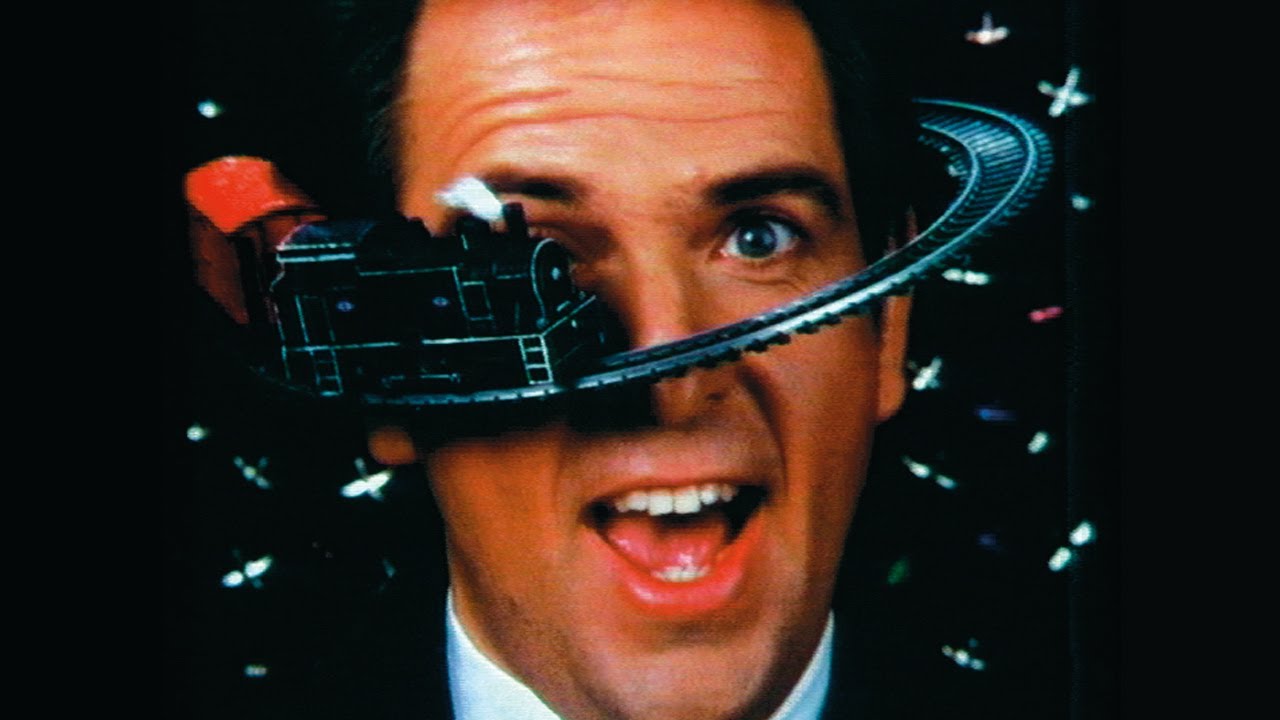
The music video changed everything. Directed by Stephen R. Johnson and featuring stop-motion animation from Aardman Animations and the Brothers Quay, the video required Gabriel to lie under a sheet of glass for 16 hours while being filmed one frame at a time. Johnson matched lyrics to images with literal precision—when Gabriel sang about “a bumper car bumping,” that’s exactly what happened on screen. The video won a record nine MTV Video Music Awards in 1987, including Video of the Year, and Best British Video at the 1987 Brit Awards—a record that still stands unsurpassed. In 1998, MTV named it the number one animated video of all time. A 2011 Time report declared “Sledgehammer” the most played music video in MTV history. The video’s ubiquity helped transform Gabriel from a cult artist known for cerebral, experimental work into a mainstream international star. Gabriel himself acknowledged in Rolling Stone that the video exposed So‘s songs to a wider audience and bolstered the album’s commercial success.
Producer Daniel Lanois later revealed the title came from their work ethic during the So sessions. “We decided we would establish a regime, like a work ethic,” he told Songfacts. “We’d wear these yellow hardhats! We’d show up for work wearing the hardhats, and I’d always say, ‘Let’s hit with a sledgehammer!’ There were a lot of references to the sledgehammer. I think that’s where Peter got the title.” Gabriel reflected years later: “As a teenager, soul music was one of the things that made me want to be a musician. It was really passionate and exciting.” That passion—channeled through Memphis horns, a one-take drum part, and 16 hours lying under glass—gave the world not just Gabriel’s biggest hit, but one of the most innovative and enduring music videos ever created. The song remains a testament to what happens when a 17-year-old kid at an Otis Redding show grows up and honors that inspiration on his own exacting terms.
SONG INFORMATION
Related videos
 Watch LaterAdded
 Watch LaterAdded
 Watch LaterAdded