



![Neil Young – Heart of Gold (Live) [Harvest 50th Anniversary Edition] (Official Music Video)](https://musicvideosclub.com/wp-content/uploads/2024/10/neil-young-heart-of-gold-live-ha-360x203.jpg)
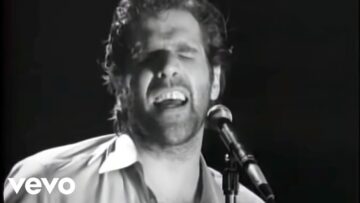
Garth Brooks – If Tomorrow Never Comes (live 1989)
The First Verse Written In Fifteen Seconds
Released in August 1989, “If Tomorrow Never Comes” entered the Billboard Hot Country Singles chart on September 9 and climbed steadily through the fall. On December 9, it reached number one, giving Brooks his first chart-topper and staying there for one week. The single spent 20 weeks on the chart and was named Favorite Country Single at the 1991 American Music Awards. Brooks had pitched the song idea to what seemed like a thousand writers and nobody understood what he was looking for until his co-manager introduced him to Kent Blazy, who had the first verse down within fifteen seconds.
The track transformed Brooks from a promising newcomer into a genuine star, pushing his self-titled debut album to number two on the Top Country Albums chart and number 13 on the Billboard 200. The album eventually sold over ten million copies in the United States and was certified diamond by the RIAA in November 2006. Brooks’s debut had shipped fewer than 20,000 copies initially, then spent a staggering 65 weeks climbing the charts before finally peaking at number two. The only album that kept it from the top spot was his own second release, No Fences. The song helped Brooks win Top Male Vocalist and Entertainer of the Year at the ACM Awards and the CMA Awards Horizon Award, launching a career that would see him become the best-selling solo artist in American music history.
Brooks had been pitching the concept around Nashville for over a year with no success. He and Blazy had even planned to rewrite it together to see if they could improve it, but about a week before that scheduled session, Brooks got a call to fill in for a sick performer at the Bluebird Cafe. They let him do one song, and he chose “If Tomorrow Never Comes”. Linda Schultz from Capitol Records was in the audience that night, having already passed on Brooks three times that week. She heard something in the song that changed her mind. Impressed with the performance, she convinced Capitol to sign Brooks, who’d been turned down by multiple labels during his second stint in Nashville. Brooks later explained in liner notes that Blazy was a wonderful man full of love and energy, and thanked Ireland for making the song such a success there.
Producer Allen Reynolds recorded the track for Brooks’s self-titled debut album in 1989. The arrangement featured Brooks on vocals and acoustic guitar, with Curtis Young, Wendy Suits-Johnson, Hurshel Wiginton, and Jennifer O’Brien handling background vocals. The production was deliberately simple and intimate, with Brooks singing about a man lying awake at night wondering if his loved one truly knows the depth of his feelings. George Jones had actually put the song on hold at one point, but never recorded it. Blazy recalled to Country Weekly that he and Brooks were really pumped about the song from the start, but after pitching it around town for about a year, nobody was interested. The song’s coda broke the fourth wall, with Brooks making his message explicit to listeners by urging them to tell their loved ones what they’re thinking of, if tomorrow never comes.
“If Tomorrow Never Comes” was the second single from Brooks’s debut album, released on April 12, 1989, which also spawned hits including “Much Too Young (To Feel This Damn Old)” at number eight and “The Dance” at number one. The album marked Brooks’s arrival as a major force in country music, with USA Today calling it core country with heartfelt vocals and country timelessness. Born in Tulsa, Oklahoma, on February 7, 1962, Brooks had been a boot salesman before signing with Capitol Records in June 1988. He joined the Grand Ole Opry on October 6, 1990, the same date that “Friends in Low Places” became his third number one, and that night he performed all three of his chart-toppers to that point. The success of his debut paved the way for No Fences in 1990, which spent 23 weeks at number one on the Top Country Albums chart.
The song has been covered extensively across genres and languages, becoming one of the most-performed Brooks compositions. Ronan Keating’s 2002 version reached number one in the United Kingdom, Austria, the Czech Republic, Denmark, and Norway, introducing the song to a massive international pop audience. Barry Manilow included it in his concert repertoire and recorded it for his 1992 box set The Complete Collection and Then Some, then again for his 2004 live album 2 Nights Live!. Engelbert Humperdinck, Foster & Allen, and salsa singer Ismael Miranda also recorded versions. R&B group Joose took it to number one in New Zealand in 1997, staying there for two weeks. The song became a popular choice on reality television singing competitions in the 2000s, with Elliott Yamin performing it on American Idol season five, Shayne Ward on The X Factor season two, and Damien Leith on Australian Idol season four.
“If Tomorrow Never Comes” remains Garth Brooks’s signature song and the track that launched the most successful country music career of all time. Brooks later revealed at Belmont University that the song was actually about the love of a father for his daughter, despite most people assuming it was a romantic ballad.
Garth Brooks entered the Country Music Hall of Fame in 2012 and has accumulated 19 number one hits among 36 top ten singles over his career. When he performs the song now, he still gets that same scared feeling he had back in 1988 and 1989, the innocence of not knowing that this one moment, this one Bluebird Cafe performance, would change everything.
SONG INFORMATION
Related videos
 Watch LaterAdded
 Watch LaterAdded
 Watch LaterAdded