







Alabama – Song Of The South
Three singers recorded Bob McDill’s Depression ballad as a lament; Alabama sped it up, cut a verse, and took it to No.1.
No.57, then No.72. That is how Billboard’s country chart received Song of the South the first two times it was released as a single, in 1981 and 1982. Bob McDill’s song about a cotton-farming family riding out the Great Depression had been recorded three times as a slow lament before Alabama touched it, and none of those versions came near the top. RCA Nashville released Alabama’s version on November 7, 1988, and on February 11, 1989, Billboard ranked it No.1 on Hot Country Singles. The story in the lyric barely changed. What changed was which half of the story the song chose to celebrate.
Keep watching: Alabama – Tennessee River · explore more →
McDill was one of Nashville’s most dependable writers, with hits for Don Williams, Dan Seals and Keith Whitley, and Bobby Bare had cut so many of his songs that in 1977 he devoted a whole album to them, Me and McDill. Bare put Song of the South on his 1980 album Drunk & Crazy and left it there as an album track. Johnny Russell took it to No.57 in 1981, and Tom T. Hall and Earl Scruggs, recording it for Storyteller and the Banjo Man, reached No.72 a year later. All three sang it as a ballad, and the earlier versions kept a verse about the family’s hardship that Alabama would later drop.
Alabama’s history with Bare ran longer than its history with the song. In the early 1970s, when the group still called itself Wildcountry, it took a job at Canyon Land, a theme park near its hometown of Fort Payne, Alabama, backing visiting stars before playing its own dance set. Bare was one of the names the park brought in. By 1988 the old backing band was one of the biggest-selling acts in country music, coming off a relatively long gap between studio albums and working with new co-producers, Josh Leo and Larry Michael Lee, on the record that became Southern Star.
Same story, different tempo
Leo, Lee and the band rebuilt McDill’s lament as an uptempo record driven by fiddle and banjo, and they trimmed the lyric on the way. What remains is still a Depression story told plainly. The lyric names the Wall Street crash as news too distant to matter to a family already broke, holds up Franklin Roosevelt as the hope of the moment, and follows the family off the land when the county takes the farm. It ends in town, with the father working for the Tennessee Valley Authority and the household buying a washing machine and a Chevrolet. Sung slowly, that is a record of loss. Sung at Alabama’s pace, with Randy Owen out front, it becomes a record of getting out.
The band had the standing to sing it that way. Alabama’s official biography traces the group’s beginnings to picking cotton, and Owen has spoken often about that work. The song arrived as the lead single from Southern Star, which RCA Nashville released on January 31, 1989, and it opened a run of four No.1 country singles from the album, followed by If I Had You, High Cotton and the title track. Song of the South also topped Canada’s RPM Country Tracks chart, and the RIAA later certified it double platinum.
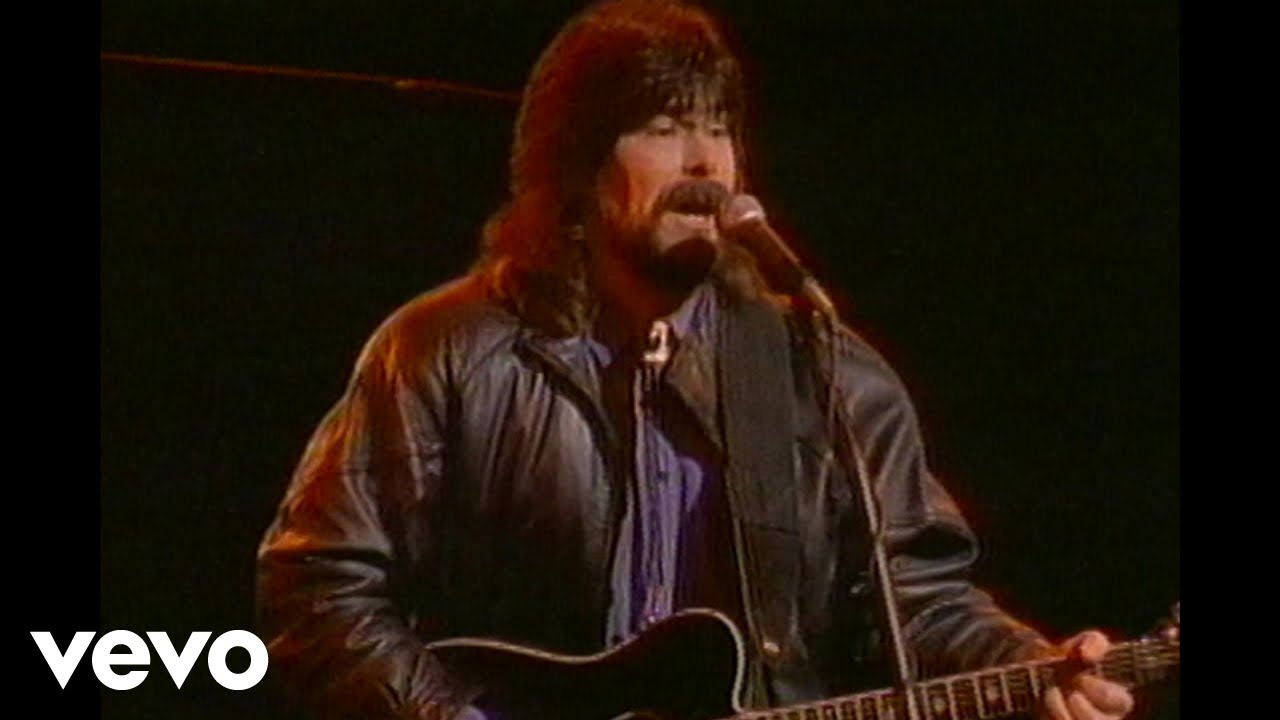
The video carries the same turn from hard times to release. Black-and-white archival footage of the 1930s South runs under the verses, with Roosevelt on screen when the lyric reaches him and Clark Gable appearing when the chorus borrows the title of Gone with the Wind. The band and a cast of extras are shot in black and white to match. Then the chorus breaks into color, with Alabama leading a crowd down the main street of a small town, and the clip closes in color on the band in concert.
The edit has its critics. Writing in 2024, Country Universe argued that dropping the harshest verse made the Depression too easy to sing along to, and that is a fair reading of what was cut. But the chart record of the three earlier versions shows what the lament was worth to country radio, and Alabama’s shows what the song could become. McDill wrote about a family that loses the farm and comes out the other side. Bare, Russell, Hall and Scruggs sang the losing. Alabama sang the getting out, and that is the version that reached No.1 and the one Sam Hunt chose to perform when CMT’s Giants special honored the band.
SONG INFORMATION
Enjoyed this one? New forgotten gems every day — tap Music Videos Club below to visit and follow us on Facebook: