




![Fleetwood Mac – Gypsy (Official Music Video) [HD]](https://musicvideosclub.com/wp-content/uploads/2025/10/fleetwood-mac-gypsy-official-mus-360x203.jpg)


ABBA – My Love, My Life
It Started as a Different Song Entirely — More Upbeat, in French, About a Stranger — Before Becoming the Ballad Björn Would Later Call the Finest Example of Agnetha’s Vocal Purity
The working title was “Monsieur, Monsieur.” The original idea was a more upbeat number, French-inflected in its feel, shaped by Stig Anderson’s lyrical instincts, and closer in energy to the dance-oriented material on Arrival‘s upper half than to what the finished song became. Somewhere in the transition — one of the last songs completed for the album, recorded at Metronome Studio in Stockholm on August 20, 1976, with string overdubs added ten days later — the temperature dropped. The harmonies deepened. The arrangement opened up. And Agnetha Fältskog stepped into the centre of a song that Björn Ulvaeus, decades later, would describe as the finest example of her vocal purity he had ever heard the band record.
“My Love, My Life” sits at track three on Arrival — between “Dancing Queen” and “Dum Dum Diddle,” two songs that could not be more different from it or from each other — and it functions as the album’s emotional counterweight. While “Dancing Queen” holds the feeling of the night before, “My Love, My Life” is the morning after: the reckoning with what cannot be sustained, the voice of someone who still loves the person they are separating from. The backing harmonies, layered beneath Agnetha’s lead by Anni-Frid Lyngstad, Ulvaeus, and Andersson, were shaped consciously by the influence of 10cc’s “I’m Not in Love” — the 1975 recording in which voices were stacked into something atmospheric rather than melodic, less a chorus and more a texture. Rutger Gunnarsson, who played bass across the album, also wrote the string arrangements for this track specifically, adding another layer of depth to a production that Benny Andersson himself later felt had become perhaps too ornate. Whether or not that self-assessment was fair, the record has never sounded cluttered. It sounds full of feeling carefully controlled.
The Clip That Required Chroma Key and a Director Without a Plan
By June 1976, Swedish Television had begun production on what would become the first documentary special dedicated to ABBA — a 57-minute programme produced by Leonard Eek and reported by Per Falkman for SVT. The project unfolded across several months. Core interview segments were filmed on the island of Viggsö, where Björn and Benny had a cottage they used for writing — a location that appears briefly to show the compositional origins of the Arrival material, the two men working over a piano in the place where much of ABBA’s most celebrated music took shape. Studio performances and specially created clips were filmed on 29 September 1976. The programme aired on SVT Channel 2 on 5 November 1976 and reached audiences across Sweden, the Netherlands, Australia, and Norway in the months that followed. It remains, by most accounts, one of the most candid documents of the band at the height of their powers — Agnetha described Falkman’s approach as unusually open, saying he had “an ability to attract things from you more than you would like to say.” Falkman himself later reflected that the conversations alone, without a note of music, could have filled an hour.
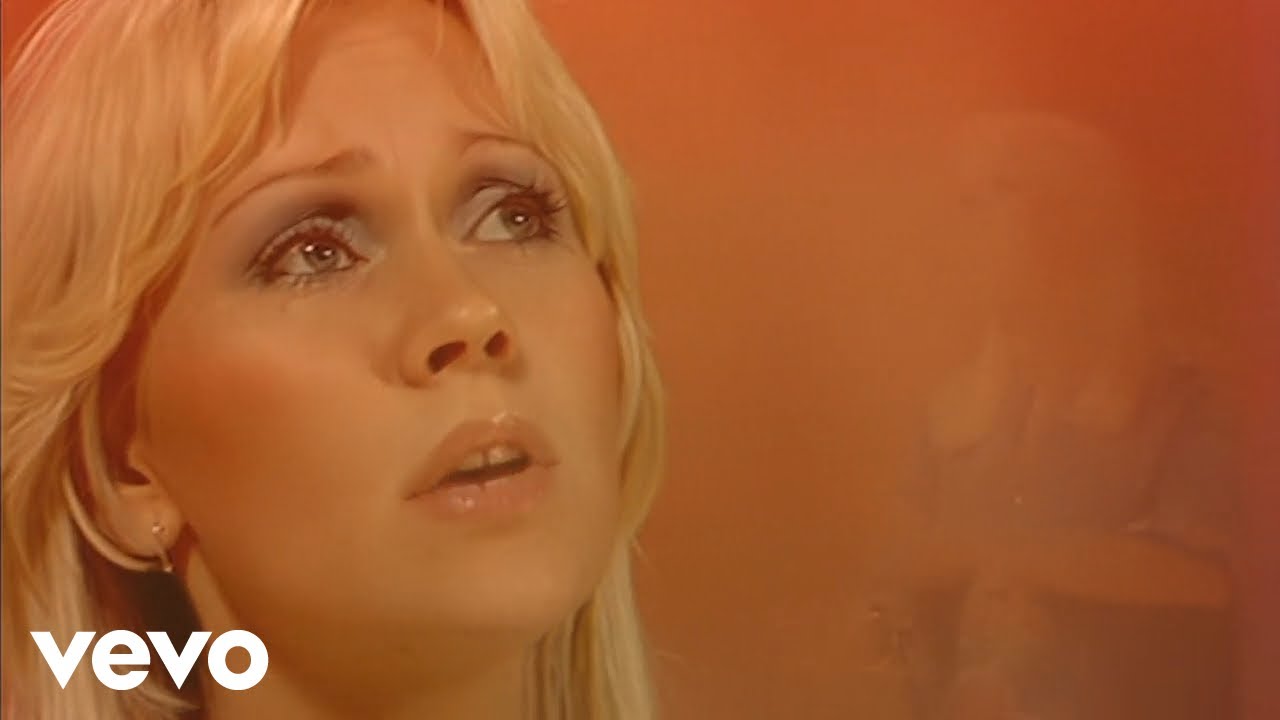
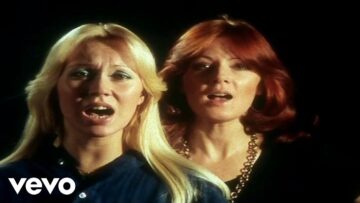
The clip for “My Love, My Life” within the special was created with chroma key technology and careful lighting work — at the time an experimental approach for Swedish pop television. Eek later acknowledged that it was the clip he entered with the least certainty about what he was making. “I didn’t have a clear vision of what I wanted or the limits on how far I could go,” he said, “which means that it took time, but it was also fun and exciting.” The result features Agnetha alone — a decision that mirrors the song’s isolation, its sense of someone speaking directly and privately to the person they are losing, without the consolation of the group. ABBA rarely separated their visual presentations along solo lines; this clip is one of the exceptions, and the emotional focus it creates is inseparable from the song’s effect.
The special was included in its entirety on the 2006 deluxe edition of Arrival, released to mark the album’s thirtieth anniversary, where biographer Carl Magnus Palm noted it as the most obvious inclusion for the set — essential, he wrote, for expanding what the album could convey and for giving a genuine sense of ABBA in 1976. That assessment holds. Arrival was selected in 2024 for preservation in the United States National Recording Registry by the Library of Congress as culturally, historically, and aesthetically significant. “My Love, My Life” — the song that started somewhere else, changed its temperature in the final weeks of recording, and found its form in a studio outside Stockholm in late August — is part of why that judgement makes complete sense.
SONG INFORMATION
Related videos
 Watch LaterAdded
04:31
Watch LaterAdded
04:31  Watch LaterAdded
 Watch LaterAdded
02:49
Watch LaterAdded
02:49