






ABBA – SOS
They Chose a Different Song as the Lead Single — and Released the One That Defined Them Months Later
When Benny Andersson and Björn Ulvaeus brought the backing tracks for “SOS” into Glenstudio in Stocksund, a suburb of Stockholm, on August 22 and 23, 1974, the song had a working title: “Turn Me On.” The title was Stig Anderson’s — he was ABBA’s manager and a third credited writer on the song — though the lyrics Stig provided were subsequently rewritten by Ulvaeus. When the album sessions were done and the label had to choose a lead single, the band and Polar Music passed over “SOS” entirely. They released a track called “So Long” instead, primarily because it had the same uptempo feel as “Waterloo” and that seemed like the safer bet. “SOS” was held back, came out as the fifth single from the album, and was released on June 3, 1975. It went to number one in Australia, Belgium, West Germany, New Zealand, and South Africa. It reached number six in the United Kingdom — their first UK top ten since “Waterloo.” It reached number fifteen in the United States. And Björn Ulvaeus later said that after three years of trying to figure out what style would define them as a pop group, this was the song. Not “Waterloo.” Not “Ring Ring.” This one. The single the label had ranked behind “So Long.”
The recording opened with something that had no precedent in ABBA’s catalogue and very little in the pop music of 1974 more broadly: an unaccompanied classical piano passage in a subdued D-minor key, played by Benny Andersson, before any other instrument entered and before Agnetha Fältskog had sung a single word. It was a structurally unusual choice for a group still operating in the commercial pop idiom — the kind of beginning that risked losing a radio audience before the song had started. It didn’t lose anyone. Biographer Carl Magnus Palm later described it as Agnetha’s first heartbreak classic, the moment where her tear-filled vocal delivery — already her trademark — found its most natural setting. The arrangement drew heavily on Phil Spector’s Wall of Sound techniques, using extensive multitracking of guitars and synthesizers to build an orchestral density without a live orchestra, and wove in melodic influences from the Beach Boys. It was pop music that sounded expensive without spending a single note on show.
What Pete Townshend Heard
The impact of “SOS” on people who knew music from the inside was immediate and severe. Pete Townshend of the Who heard the record in 1975 and called it “the best pop song ever written.” Ray Davies of the Kinks watched ABBA perform it on the BBC television programme Seaside Special and said the performance stayed with him. John Grant, the American singer-songwriter, has called it “one of the greatest pieces of music ever made,” and cited Agnetha Fältskog’s vocal interpretation as “perfect.” These are not casual compliments. Townshend was at the height of his own creative powers in 1975; his endorsement of another band’s work was unusual enough that it was noted at the time. The reason the song generated these responses is embedded in the structure: it is two minutes and forty-nine seconds of precisely managed emotional escalation, from the piano introduction through Agnetha’s opening solo verse to the harmonic explosion of the chorus, with no padding, no wasted bars, and nothing that could be removed without the whole thing collapsing. It is a song that does exactly what it sets out to do and nothing else.
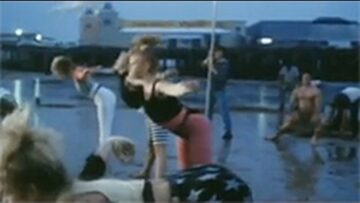
On November 15, 1975, ABBA performed “SOS” on the fifth episode of the inaugural season of Saturday Night Live. The band had made their first visit to the United States and had also appeared on American Bandstand that same day. SNL head writer Michael O’Donoghue staged the performance on a set representing the deck of the Titanic, and continued a running skit throughout the band’s performance — crew members abandoning ship in lifejackets, chaos unfolding around the four Swedes singing their hit. Bandleader Paul Shaffer later recalled: “They kept on singing like the pros that they are.” The clip is one of the more surreal documents in the history of American television, and ABBA’s composure through the entire spectacle tells you something about the degree to which they had learned to perform in any context and under any circumstances.
The Palindrome and the Video
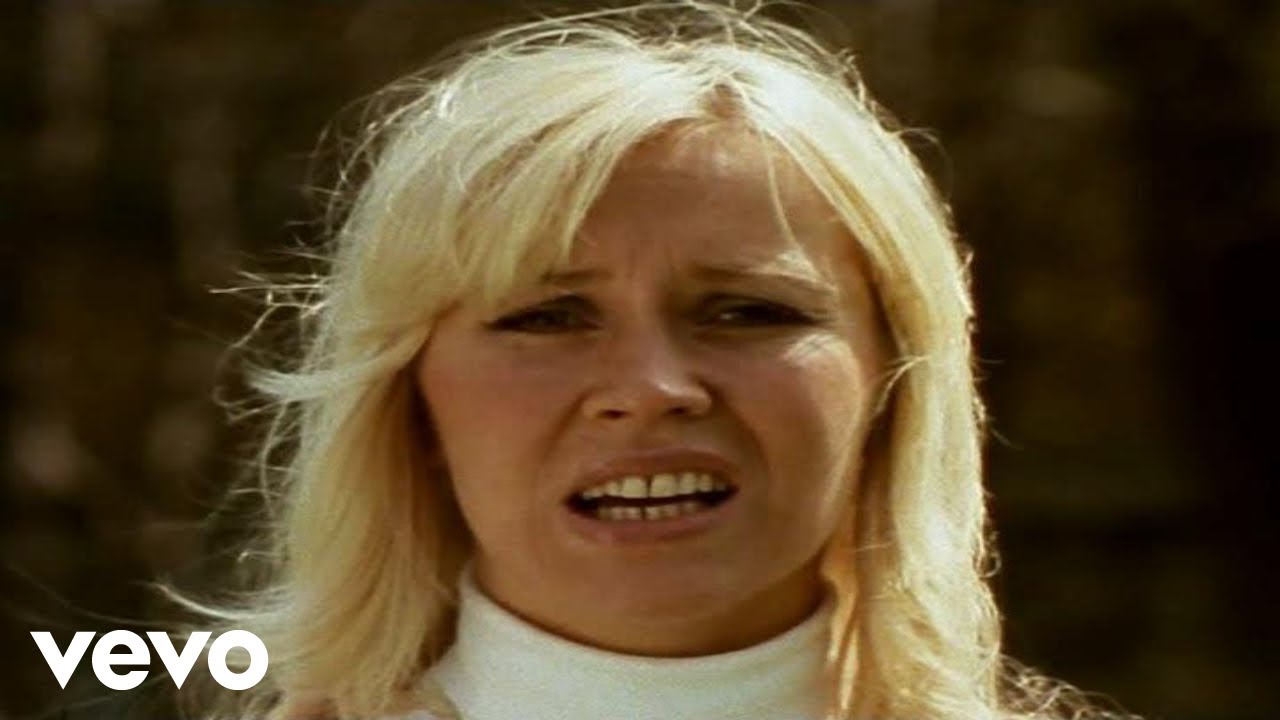
The official music video for “SOS” was directed by Lasse Hallström — one of the first pioneering clips he made for the group, well before the form had established itself as a standard promotional tool. Much of the footage is shot from an overhead camera, as if from a tower or lighthouse looking down, with the band members’ faces occasionally distorted as if viewed through a prism or a lens. The visual disorientation mirrors the lyric’s emotional disorientation: a person inside a relationship that has become unreadable, unable to reach the person who was once unreservedly present. Hallström understood from this point forward that ABBA’s material demanded visual ideas rather than simple performance footage, and the collaboration between the group and their director produced some of the most formally inventive pop promotional clips of the decade.
“SOS” holds a unique distinction in pop history: it is the only single to chart on the US Billboard Hot 100 in which both the title and the credited artist are palindromes. ABBA read the same forwards and backwards. So does SOS. The probability of this alignment occurring in a commercially successful pop single — rather than in some obscure novelty record — is close to zero. It happened anyway, which is perhaps the most characteristic thing about the group: the unlikely thing kept happening, and it kept sounding better than it had any right to. The song was covered by Erasure in 1992 on their Abba-esque EP, which reached number one in the UK. Portishead recorded a version that gave the chord structure a completely different emotional temperature. Agnetha Fältskog recorded a Swedish-language adaptation for her 1975 solo album Elva kvinnor i ett hus. The song that was passed over for “So Long” has been covered in more than 150 recorded versions. Björn Ulvaeus was right about which one defined them.
SONG INFORMATION
Related videos
 Watch LaterAdded
 Watch LaterAdded
04:01
Watch LaterAdded
04:01  Watch LaterAdded
03:32
Watch LaterAdded
03:32