



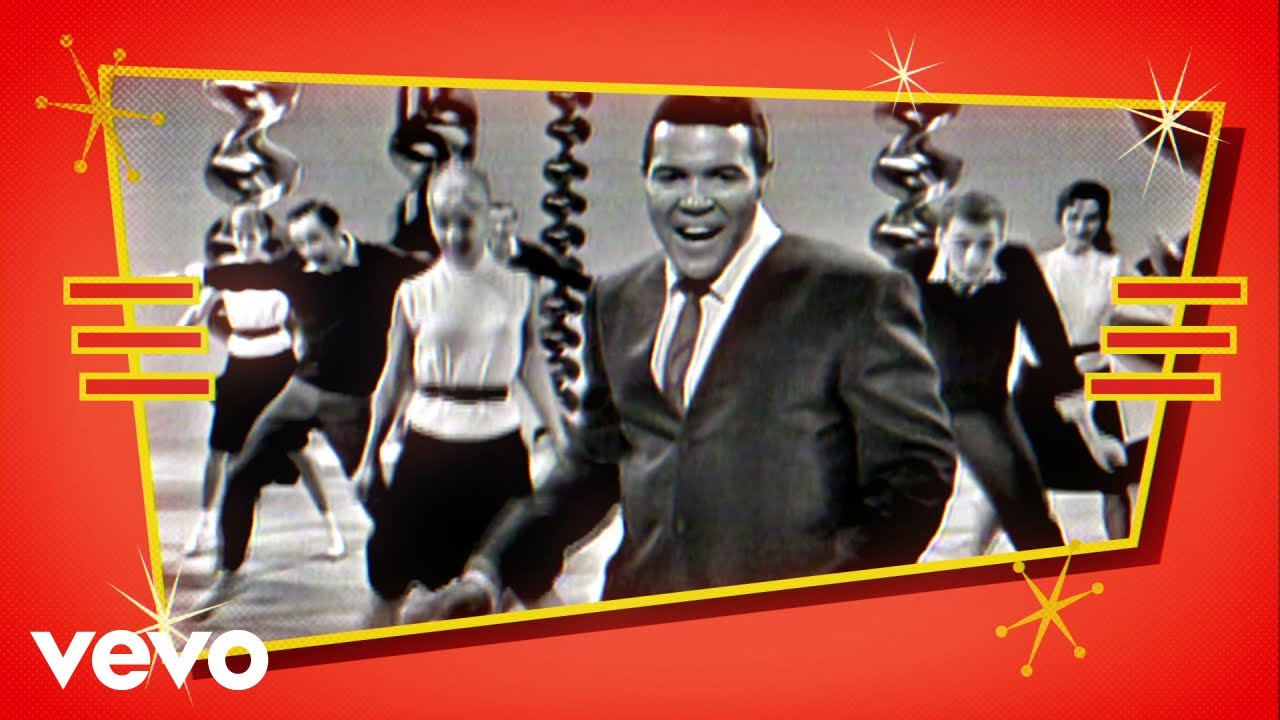



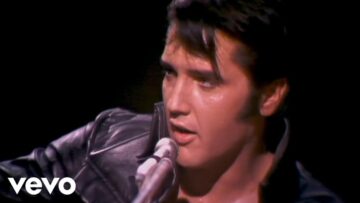
Chubby Checker – The Twist (Official Music Video)
Hank Ballard heard his own song on a Florida radio and assumed it was his record. It was a teenager from Philadelphia, copying him on purpose.
Hank Ballard was floating in a swimming pool in Florida when a radio nearby played The Twist. He had written the song. He had recorded it with the Midnighters. Listening from the water, he assumed he was hearing his own record. “I thought it was me,” he said later. He was hearing a note-for-note imitation by a singer from South Philadelphia, made deliberately, at a record label’s instruction, to be indistinguishable from his.
Keep watching: More 60s music videos · explore more Chubby Checker →
Ballard had built the song out of something he saw on the road. Watching teenagers dance in Tampa, he took the movement, put words to it, and cut the record with his band. His version went out as a B-side, on the back of a ballad called Teardrops on Your Letter, and eventually climbed to No.28. Dick Clark spotted its potential for television and tried to book Ballard onto American Bandstand. Ballard was not available. Clark went instead to Bernie Lowe at Philadelphia’s Cameo-Parkway Records with a proposal: find somebody who could sing it exactly like Ballard, and clean it up for a television audience.
The somebody was Ernest Evans, born in South Carolina in 1941 and raised in the projects of South Philadelphia, where he sang on street corners and picked up the nickname Chubby. His trick was impersonation. He could do Fats Domino, he could do Elvis Presley, and he had already made a novelty record built entirely on the gift. Clark’s wife Barbara gave him his stage name as a play on Fats Domino: Chubby Checker. Dave Appell produced the session in the summer of 1960, with the Dreamlovers standing in for the Midnighters behind him. The finished record sounds like Ballard’s because it was supposed to.
Evans was 18 when it reached No.1 on the Billboard Hot 100, on September 19, 1960. It held the top for a single week. What happened next has never happened the same way since.
The record that came back
The dance outlived the chart run. It spread out of the high schools and into adult nightclubs, to the Peppermint Lounge in midtown Manhattan and Smalls Paradise in Harlem, which Wilt Chamberlain owned and which advertised itself as the best twist spot in town. Checker described the step as putting out a cigarette with your toe while drying your back with a towel. There were no steps to learn and no partner required, which is the part that changed social dancing: before it, couples held each other and followed a structure, and after it, they didn’t have to.
The demand pulled the same single back up the chart. In January 1962, The Twist returned to No.1 for two weeks, making it the only single to top the Hot 100 in two separate chart runs, a feat nothing else managed until Mariah Carey’s Christmas record decades later. The two runs together kept it on the chart for 39 weeks, 18 the first time and 21 the second, which at the time was the longest any No.1 single had ever lasted there. In an era when records moved through the Hot 100 in a matter of weeks, nothing stayed that long. When Billboard compiled its all-time Hot 100 ranking in 2008, this record sat at the top, and it stayed there until the Weeknd’s Blinding Lights passed it in September 2020.
Recognition for the singer took considerably longer. The Library of Congress added the recording to the National Recording Registry in 2013, and the song itself entered the Rock and Roll Hall of Fame’s singles category in 2018, but Checker had been eligible as a performer since the Hall’s first class in 1986 and kept being passed over. In 2001 he bought a full-page advertisement in Billboard making his case, writing that he wanted his flowers while he was alive. In 2002 he protested outside the ceremony. The Hall finally inducted him with the class of 2025, at the ceremony in Los Angeles on November 8.
He did not go. He had a show booked before the induction was announced, and he played it instead. That is the whole career in one decision: the most successful single in the history of the American chart was a copy so exact its own author couldn’t identify it, made by a performer the industry spent thirty-nine years declining to honor, who was working on the night it finally did.
SONG INFORMATION
Related videos
 Watch LaterAdded
03:04
Watch LaterAdded
03:04  Watch LaterAdded
04:06
Watch LaterAdded
04:06  Watch LaterAdded
03:03
Watch LaterAdded
03:03