









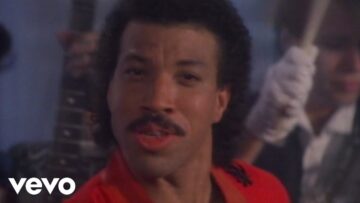
Los Bravos – Black Is Black
The first international smash by a Spanish rock band was sung by a German who barely spoke English, reading the words off a phonetic sheet — and sounding so much like Gene Pitney that radio listeners were convinced they were hearing a Pitney single.
When Black Is Black swept across the airwaves in the summer of 1966, listeners on both sides of the Atlantic made the same wrong guess: this had to be the new Gene Pitney single. The dramatic, soaring vocal sounded unmistakably like the American hitmaker. It wasn’t Pitney. It wasn’t even American. The voice belonged to a German singer fronting a Spanish band, reading English lyrics he barely understood off a sheet spelled out phonetically — and the record he was making would become a genuine piece of pop history.
Keep watching: explore more 60s → · Janis Joplin – Piece of My Heart
Los Bravos came together in Madrid in 1965, an amalgamation of two Spanish beat groups — four musicians from Los Sonor and The Runaways — fronted by a singer who was neither Spanish nor a stranger to reinvention. Michael Kogel, born in Berlin in 1944 and later known as Mike Kennedy, had grown up rough: raised largely by his grandmother, he taught himself English by listening to the American Forces Network radio station and learned to perform by imitating Elvis Presley in Cologne nightclubs. The band’s ambition was unusual for a Spanish act under Franco’s culturally isolated regime — they wanted to break out of Spain entirely and make English-language pop for the whole European market.
Their French manager, Alain Milhaud, flew to London to find them an international deal, and the British producer Ivor Raymonde — fresh off number-one UK hits with Dusty Springfield and The Walker Brothers — took them on. Black Is Black was written by the British team of Tony Hayes, Steve Wadey, and Michelle Grainger, a dramatic slice of Motown-influenced heartbreak built around a relentless, driving rhythm and a melody made for a big voice.
The voice everyone mistook for someone else
The trouble — and the magic — was Kogel’s English. He wasn’t fluent, so for the recording sessions his lyrics had to be written out phonetically, sound by sound, so he could sing words he couldn’t fully read. The result was a vocal with slightly unusual intonations that, by sheer coincidence, landed almost exactly in Gene Pitney’s wheelhouse: the same theatrical catch, the same emotional swell. The resemblance was so strong that radio DJs announcing “Los Bravos” left American listeners genuinely puzzled, wondering why Pitney’s new record was being credited to some band they’d never heard of. Kogel himself was never even fond of the song — in a 2024 interview he admitted he followed along without liking it, finding the melody easy and the lyrics thin. The public disagreed emphatically.
Released in the UK in June 1966, Black Is Black shot to No.2, kept off the top only by Chris Farlowe’s “Out of Time.” That August it crossed to America, where it climbed to No.4 on the Billboard Hot 100 and spent twelve weeks on the chart, and it went all the way to No.1 in Canada and Spain. It sold more than a million copies worldwide and made Los Bravos the first Spanish rock band ever to land an international hit single — a genuine breakthrough for a country whose pop culture had been walled off from the wider world. So beloved was the song that Johnny Hallyday’s French-language version, “Noir c’est noir,” topped the French chart for seven straight weeks that same autumn.
Who actually played on it?
For all its fame, the record carries a lingering mystery about who actually made it. Following standard practice for orchestral pop of the era — and citing British musicians’ union rules and simple studio efficiency — producer Ivor Raymonde used session players for much of the instrumentation, requiring mainly Kogel’s vocal from the band itself. That decision spawned one of the more durable urban legends in 1960s rock: a persistent rumor that a young session guitarist named Jimmy Page, not yet of Led Zeppelin, played on the track. The claim has never been definitively confirmed or denied, and the true identities of some of the players remain debated to this day, though session names like guitarist Vic Flick have been attached to the recording. What’s certain is that the band did sneak some of their own playing onto tape, and that the question of exactly whose hands are on the most famous Spanish pop record of the decade has never been fully settled.
Los Bravos never matched the song’s heights again internationally, though they remained stars in Spain and scored a later cult favorite with 1968’s “Bring a Little Lovin’,” which found a whole new audience when Quentin Tarantino used it in Once Upon a Time in Hollywood. Tragedy shadowed the band — organist Manuel Fernández died in 1968, guitarist Antonio Martínez in a 1990 motorcycle accident, bassist Miguel Vicens in 2022 — but Black Is Black endures, covered endlessly, streamed by hundreds of thousands monthly, and still capable of fooling a first-time listener into thinking they’re hearing someone else entirely. It remains the sound of a German voice, a Spanish band, and a British studio briefly conquering the world together.
SONG INFORMATION
Related videos
 Watch LaterAdded
04:05
Watch LaterAdded
04:05  Watch LaterAdded
02:57
Watch LaterAdded
02:57  Watch LaterAdded
03:04
Watch LaterAdded
03:04