





David Cassidy – How Can I Be Sure?
He Posed Naked in Rolling Stone to Escape the Teen Idol Trap — Then Chose a Song About Romantic Doubt and Took It to Number One
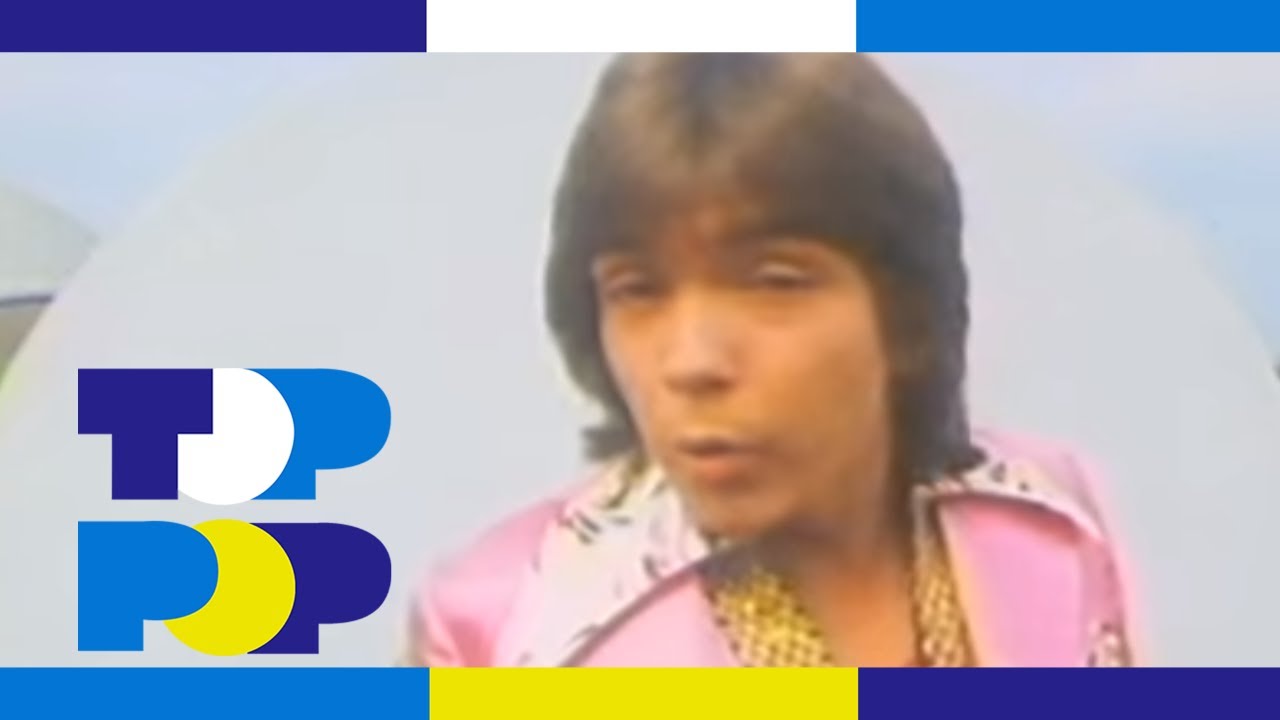
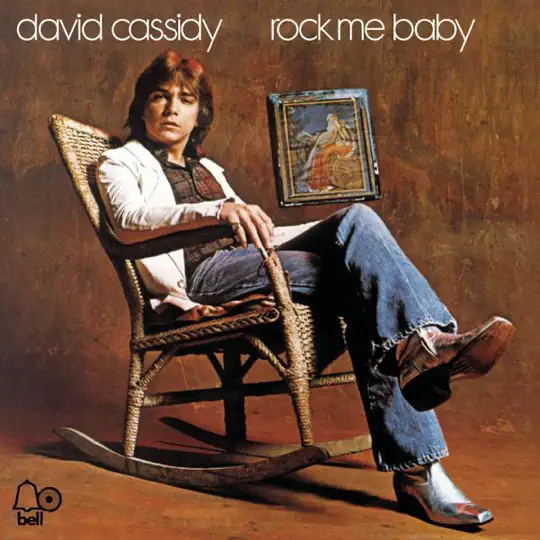
By May 1972, David Cassidy had already decided he needed out. The Partridge Family was the most successful musical sitcom on American television, and as Keith Partridge he had become the most visible teen idol on the planet — his fan club, at its peak, larger than those of The Beatles and Elvis Presley combined. He was also, at twenty-two, thoroughly miserable about it. That month, in an extraordinary act of image demolition, he posed nude for the cover of Rolling Stone and gave an interview in which he described himself as “stoned and drunk” in the back of a car and spoke longingly of a fantasy future on a sun-bleached island with nobody asking him for anything. What came with the feature was a calculated musical pivot: a solo album, Rock Me Baby, produced by Wes Farrell for Bell Records, loaded with soul and R&B influences that the Partridge Family universe would never accommodate. Its opening track and first single was a cover of a five-year-old Young Rascals ballad that had haunted him since he first heard it as a teenager. He called it one of the most significant songs of his adolescence. It went to number one in the United Kingdom for two weeks in September 1972.
Felix Cavaliere had written “How Can I Be Sure” in 1966, during the sessions that produced the Rascals’ third album Groovin’. His muse was Adrienne Becchuri, his girlfriend at the time — younger than him, the relationship intensifying to a pitch he later described as “totally crazy.” The song was the culmination of a series of songs the Becchuri affair produced, following “Groovin'” and “I’ve Been Lonely Too Long” in the same creative burst. “I woke up one day and said, ‘What the hell am I doing?'” Cavaliere recalled to Music Connection in 2022. “And it was over.” The Rascals released it as a single in August 1967, backed by the Beatle-influenced harmonic sophistication Cavaliere had absorbed from touring Europe as a member of Joey Dee and the Starliters, and from opening for the Beatles at Shea Stadium in 1965. It reached number four on the Billboard Hot 100 and gave the band their fourth consecutive Top Ten hit.
Cassidy’s connection to the song was personal. He had grown up listening to the Rascals and said in his 2007 memoir Could It Be Forever? that Brigati and Cavaliere were “two of the great musical influences of my teenage years” and that he thought the Rascals were “just about the best American pop band.” The recording for Rock Me Baby produced a version arranged with strings and horns — credited to arranger Mike Melvoin — that leaned into the melancholy of the original without replicating it. It was a more orchestrated, more emotionally direct treatment than the Rascals’ own recording, designed to carry through a radio format that had shifted significantly in five years. Dusty Springfield had recorded her version in 1970 after performing it on the Des O’Connor Show, but hers had managed only one week in the UK Top 40. Cassidy’s timing, sound, and circumstance produced something different: a record that captured the specific vulnerability of the lyric — the uncertainty, the need, the fear of being wrong about love — in a way that resonated differently from his bubblegum Partridge Family persona.
The Cover That Couldn’t Escape What It Was Trying to Escape
The Rolling Stone nude cover was published the same month “How Can I Be Sure” was climbing the chart. The contradiction was not lost on observers, or on Cassidy himself. Despite the adult posture — the explicit interview, the album of soul covers, the attempt to claim a music that predated the teen idol machinery he was trapped inside — the record’s audience was the same one that had screamed at Keith Partridge. His first solo single, the double A-side of “Could It Be Forever” and “Cherish,” had peaked at number two in the UK in August 1972. “How Can I Be Sure” followed it to the top a month later. By the end of the year, in the UK at least, Cassidy was the dominant pop figure of the moment — a distinction his American chart performance, where the song peaked at number 25, never quite replicated. The UK was where Cassidymania was most acute: sold-out shows at Wembley Arena in 1973, crowds at the Houston Astrodome in the tens of thousands, and a concert at Madison Square Garden that sold out in a day and ended in riots. The song that was supposed to signal a serious, adult artistic direction instead became the first of two UK number ones in what would prove to be Cassidy’s commercial peak.
One additional piece of the Rock Me Baby story worth noting: Wes Farrell, Cassidy’s producer, acquired ownership of the entire Young Rascals song catalogue around the time of the recording. “I’ve Been Lonely Too Long” also appeared on the album — another Cavaliere-Brigati composition, another piece of the teenage musical education Cassidy was trying to honour. Whether this added a proprietary dimension to the choice of repertoire is impossible to say for certain, but the professional and personal motivations around the recording were unusually tangled even by the standards of the early 1970s pop industry. Cassidy died on November 21, 2017, at sixty-seven, after disclosing the onset of dementia the previous year. His final public words, reported by his daughter, were: “So much wasted time.” The song he chose in 1972 to prove he was more than a teen idol had asked the same question from the other direction: not what was wasted, but what, amid all the uncertainty, could actually be trusted.
SONG INFORMATION
Related videos
 Watch LaterAdded
04:05
Watch LaterAdded
04:05  Watch LaterAdded
04:48
Watch LaterAdded
04:48  Watch LaterAdded
05:28
Watch LaterAdded
05:28