








![Led Zeppelin – Stairway To Heaven (Live at Earls Court 1975) [Official Video]](https://musicvideosclub.com/wp-content/uploads/2025/01/led-zeppelin-stairway-to-heaven-360x203.jpg)

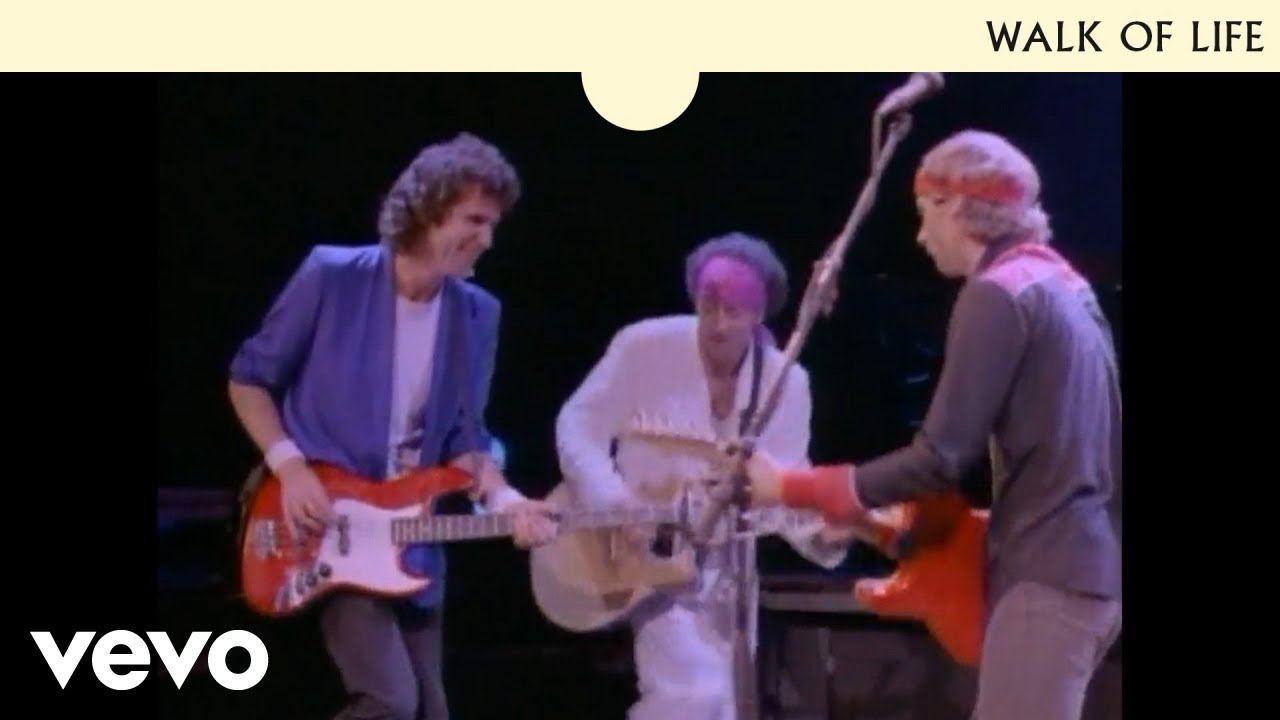
Dire Straits – Walk Of Life
The Producer Voted Against Putting It on the Album — the Band Outvoted Him, and It Became Their Biggest UK Hit
Neil Dorfsman had co-produced Brothers in Arms alongside Mark Knopfler from the sessions at AIR Studios in Montserrat through to the mixing at Power Station in New York, and he knew the album’s material as well as anyone in the room. When it came to deciding whether “Walk of Life” belonged on the record, Dorfsman voted no. He thought it was too slight, too breezy — a good-time shuffle that didn’t sit comfortably with the emotional weight of “Brothers in Arms,” the cinematic sweep of “Why Worry,” or the commercial brutality of “Money for Nothing.” The rest of the band disagreed. They outvoted him. The song went on the album, was eventually released as the third single in late 1985 and early 1986, reached number two in the UK, and became Dire Straits’ most commercially successful single in the British chart. Dorfsman’s ears were not wrong about what the song was. His judgment about whether it belonged was.
The path to the record was itself unlikely. Knopfler had originally written and recorded “Walk of Life” not as an album track but as a potential B-side for “So Far Away,” the lead single from Brothers in Arms. It was the band’s manager Ed Bicknell who changed that calculation. When he heard the song being mixed, Bicknell went to Knopfler and made the case for it: the album needed it, the contrast was the point, and burying something this accessible on the reverse of a single no one would keep was a waste of a perfectly good song. Knopfler listened and at the last minute added it to Brothers in Arms. The album was recorded in full digital format at AIR Studios in Montserrat — one of the first major rock albums to use the DDD process at a time when most popular music was still being committed to analogue tape. That technical ambition, combined with the sheer range of emotional territory the album covered, made “Walk of Life”‘s rockabilly bounce feel like a necessary exhale. Seven tracks of considerable weight, then this — a song about a busker in a subway tunnel, playing his guitar against the wall for natural reverb, and making people happy for nothing.
The Character in the Tunnel
Knopfler described the song’s lyric coming from a specific image: a kid in a subway tunnel, putting the head of his guitar against the wall to amplify the sound without a proper amplifier. He said it reminded him of himself — playing without an amp as a teenager, pressing his guitar against furniture to get any kind of resonance out of it. The character in the song is called Johnny, performing “down in the tunnels, trying to make it pay,” playing songs that people in the crowd recognise — “the song about the knife,” which most careful listeners have taken as a reference to “Six Blade Knife,” Dire Straits’ own second track from their 1978 debut album. Knopfler has said the song is semi-autobiographical in the manner of “Sultans of Swing” — using a street performer as a proxy for the musician’s own relationship with the audience, the performance, and the particular clarity of playing music for people who didn’t ask for it and don’t have to stay.
The arrangement is deliberately stripped back: I, IV, and V chords, a rock and roll shuffle rhythm, and the long synthesizer keyboard introduction that became the song’s most recognisable element — instantly identifiable, slightly cheesy in the most intentional possible way, and stuck in the head of anyone who heard it. Rolling Stone’s original review of Brothers in Arms called it a “bouncy” celebration of cool fifties rock and roll songs and specifically noted Knopfler’s organ solo as a playful element that gave the track its retro warmth. The UK music press in 1985, which largely savaged the album on arrival, found the song harder to dismiss than most of the surrounding material — it didn’t pretend to be anything other than what it was, which was its greatest advantage. Released in the US in October 1985 and in the UK in January 1986, it peaked at number seven on the Billboard Hot 100 and number two on the UK Singles Chart, spending twenty-one weeks on the American chart. It also topped the Irish Singles Chart and reached the top ten in Canada, New Zealand, and South Africa.
The Song That Outlived the Album
Brothers in Arms did things to the music industry’s infrastructure that very few albums have managed. It was the first album in history to sell a million copies in the CD format, at a moment when the entire worldwide manufacturing capacity for CD pressing was already overwhelmed. The Guardian ranked it number 38 in their list of fifty key events in rock history. It won a Grammy for Best Engineered Album, Non-Classical in 1986 and Best British Album at the 1987 Brit Awards. It has sold over thirty million copies worldwide and remains the eighth-best-selling album in UK chart history. Against that backdrop, “Walk of Life” has managed its own separate cultural life at a distance from the album’s prestige. It has been used to close the pilot and finale of the American television series Young Sheldon. It appeared in a 2025 British Gas commercial. By late 2025, it had accumulated over 920 million streams on Spotify — a figure that reflects not nostalgia for a specific decade but something more durable: the usefulness of a song that makes people feel better about whatever is happening.
The official music video, in its UK version, intercuts footage of a busker performing in the street — wearing the same shirt as Knopfler — with the band playing on a stage. It is an economical visual argument for what the song is about: the figure in the street and the figure on the stage are the same person, separated only by luck and timing and the question of who happened to be in the room when Ed Bicknell heard the playback. The producer voted no. The band said yes. The busker in the subway is still playing.
SONG INFORMATION
Related videos
 Watch LaterAdded
 Watch LaterAdded
 Watch LaterAdded
03:09
Watch LaterAdded
03:09