









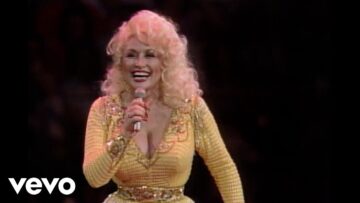

Don Williams – Sing Me Back Home
Merle Haggard wrote “Sing Me Back Home” about a man he had watched walk to his execution in San Quentin. Nearly fifty years later, Don Williams — country music’s “Gentle Giant” — made it one of the last recordings of his career.
“Sing Me Back Home” began in a prison. Before Merle Haggard was one of the most important songwriters in the history of country music, he was an inmate at San Quentin State Prison in California, serving time for burglary. Among the men he knew there was a fellow prisoner — identified in most accounts as Jimmy “Rabbit” Kendrick — who was on Death Row, bound for execution. Haggard drew on that memory to write “Sing Me Back Home,” a song told from the point of view of a condemned man whose final request, on the walk toward his death, is simply to hear a song that will carry him back, one last time, to the home and the life he is leaving. It is one of the bleakest premises in American popular song, and Haggard delivered it with a plainness that made it almost unbearable. When Rolling Stone assembled a list of the 40 saddest country songs ever recorded in 2019, “Sing Me Back Home” was on it.
Merle Haggard and the Strangers released “Sing Me Back Home” in November 1967, as the title track and first single from the album of the same name. It became Haggard’s third No. 1 country single, spending two weeks at the top of the chart and seventeen weeks on it overall — and it confirmed, alongside the records around it, that Haggard had matured into a songwriter of the very first rank. In the decades since, the song has been recorded many times over, by artists working in country and well beyond it: Marianne Faithfull cut a version with Keith Richards for her 2008 album; the Grateful Dead performed it for years. It is one of those country compositions durable enough to invite reinterpretation by almost anyone willing to step inside its story.
The Gentle Giant takes the song
Don Williams recorded his version of “Sing Me Back Home” for Reflections, an album released on March 11, 2014. Williams was, by then, one of the most beloved figures in country music — a Texas-born singer-songwriter whose warm, unhurried bass-baritone and calm, unshowy presence had earned him the nickname “the Gentle Giant” and seventeen No. 1 country hits across the 1970s and 1980s. Reflections came late in that long story: Williams had retired once, returned, and was moving toward the end of his recording life. The choice to cover Haggard was a natural one for him. Williams’s whole style was built on restraint — on letting a song’s emotion arrive without being pushed — and a song as quietly devastating as “Sing Me Back Home” needed exactly that kind of singer. He did not dramatize it. He simply told it, in the gentle, grounded voice that had defined his entire catalog.
The recording carried a notable detail in its harmonies. The backing vocals on Don Williams’s version of “Sing Me Back Home” were sung by Chris Stapleton and his wife, Morgane Stapleton. In 2014, Chris Stapleton was still best known within the industry as a songwriter and as the former frontman of the bluegrass group the SteelDrivers; his own breakthrough as a solo star, with the album Traveller, was still a year away. The presence of the Stapletons on the track is a quiet passing of a torch — one of country music’s enduring elder voices being supported, on one of his final albums, by a singer about to become one of the genre’s defining new ones.
One of the last recordings of a quiet giant
The music video for Don Williams’s “Sing Me Back Home,” released through his official channel in 2014, went on to become the most-viewed video of his entire career — a striking fact for an artist whose peak commercial years had come decades before the video era reached its current scale. It spoke to the enduring reach of Williams’s voice: his music had always traveled far beyond the United States, deeply loved across the United Kingdom, Africa, and South Asia, and the late-career recording found audiences everywhere.
Don Williams retired from touring in 2016 and died on September 8, 2017, in Mobile, Alabama, at the age of 78. He had been inducted into the Country Music Hall of Fame in 2010. Reflections stands as one of the final statements of his recording career, and his reading of “Sing Me Back Home” sits at its center — a meeting of two of country music’s most distinct voices. Merle Haggard, the ex-convict who became the genre’s great poet of hard lives, wrote it out of something he had witnessed firsthand. Don Williams, the Gentle Giant, sang it near the end of his own road, with the calm of a man who understood exactly what the song was asking for. Haggard himself died in 2016. Williams followed in 2017. The song they shared — a man asking only to be sung home — outlived them both.
SONG INFORMATION
Related videos
 Watch LaterAdded
03:29
Watch LaterAdded
03:29  Watch LaterAdded
03:15
Watch LaterAdded
03:15  Watch LaterAdded
03:45
Watch LaterAdded
03:45