



![David Lee Roth – California Girls (Official Video) [HD]](https://musicvideosclub.com/wp-content/uploads/2026/10/david-lee-roth-california-girls-360x203.jpg)
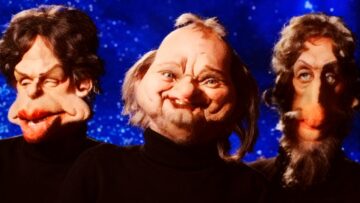
Elton John – Candle in the Wind
The album was named for an 88-piece orchestra. On the song that became the hit, not one of them played a note.
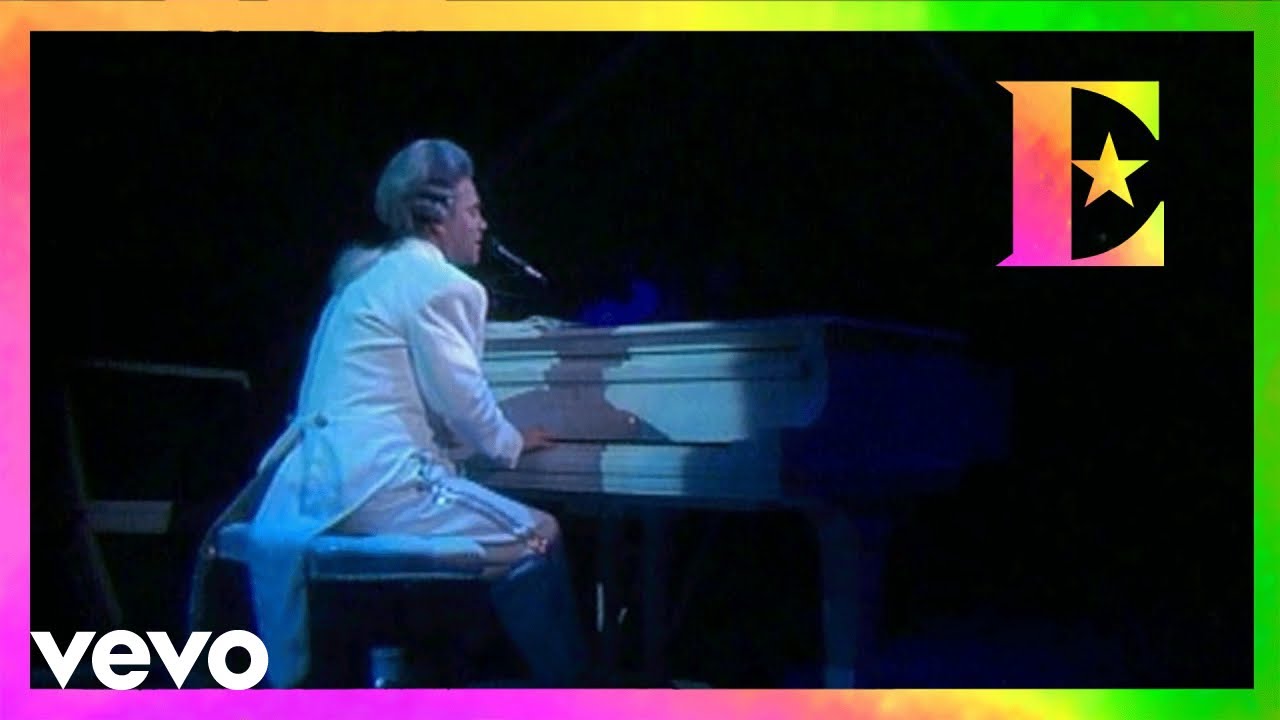
MCA put the Melbourne Symphony Orchestra in the album title and all eighty-eight players on the sleeve. On the one track from it that became a hit single, none of them played anything. What sits behind Elton John on the live Candle in the Wind is a piano, a set of bass pedals, a few keyboard textures, and a wave of applause that arrives before the song has finished. The applause has an explanation, and it was happening about ten feet behind his back.
Keep watching: Elton John – Your Song · explore more →
The night was December 14, 1986, at the Sydney Entertainment Centre, the last show of John’s Tour de Force run through Australia. The concert ran in two halves. The first belonged to John and his band, wigs and eyewear and all. The second brought on the Melbourne Symphony Orchestra, with John in a powdered wig and a white suit, playing Mozart for a room of eleven thousand people. Gus Dudgeon recorded the whole thing, and the tapes became Live in Australia with the Melbourne Symphony Orchestra, released the following year with no overdubs on it.
None of that was supposed to happen at all. John’s voice had been failing for weeks. Doctors found nodules on his vocal cords during the tour, and he was having coughing fits onstage in front of paying audiences. He worked through the whole Australian run anyway and went into surgery within weeks of the Sydney show. You can hear all of it on the recording. The voice is thicker and rougher than the twenty-six-year-old who cut the studio version, and it drops into a lower register in places where the original floats. The strain is not a flaw in the performance. It is most of what makes the performance land.
The sound he could not account for
For the Candle in the Wind section of the show, the orchestra had nothing to do. So the players set their instruments down and lit candles, eighty-eight of them, arranged in tiers behind the piano. John was facing the audience and never saw it. The crowd did, and the swell of noise that comes up under the song is a room reacting to something happening behind the man singing. The gesture went onto the record permanently, and it is the reason a solo piano performance carries a symphony orchestra’s name on the label.
The song they were lighting candles for had been written thirteen years earlier and had never quite been a hit in America. Bernie Taupin took the phrase from Clive Davis, who had used it about Janis Joplin, and built a lyric around Marilyn Monroe, naming her in the opening line by the name she was born with. Taupin has spent decades pointing out that he was not a Monroe devotee and that the subject could as easily have been Montgomery Clift or James Dean or Jim Morrison. The song is about the machinery that turns a dead young celebrity into a photograph. John recorded it at the Château d’Hérouville in France on May 7, 1973, and it went onto Goodbye Yellow Brick Road that October. DJM issued it as a UK single in February 1974, where it spent nine weeks on the chart and peaked at No. 11. America got Bennie and the Jets instead.
The live recording corrected that thirteen years late. Billboard’s Hot 100 took the Sydney version to No. 6 across twenty-one weeks, and it reached No. 2 on Adult Contemporary. The Official Charts Company put it at No. 5 in Britain in February 1988. The Recording Academy nominated it for Best Pop Vocal Performance, Male, an award category built around control, for a vocal delivered by a man whose doctors had told him not to speak. It also kept John on American radio through a stretch when he was not touring, recovering, and by his own later account not in good shape.
Two versions of this song have outsold almost everything else in the catalog, and neither is the one released in 1974. The 1997 rewrite became a global event that John has never performed again. The 1986 one is the version most Americans met first, and it is a recording of an accident: a rough voice, an orchestra with nothing to play, and a room applauding a gesture the singer could not see. The candles were not a production idea and no one planned them into the show. They are on the record because someone turned the tape on for the last night of a tour that should have been canceled.
SONG INFORMATION
Enjoyed this one? New forgotten gems every day — tap Music Videos Club below to visit and follow us on Facebook:
Related videos
 Watch LaterAdded
05:03
Watch LaterAdded
05:03  Watch LaterAdded
04:41
Watch LaterAdded
04:41  Watch LaterAdded
03:05
Watch LaterAdded
03:05