








Slade – Cum On Feel The Noize
It entered the British chart at No.1, stalled at No.98 in America, and became a US hit ten years later for a band that tried to play it badly.
No.98. That was the best the Billboard Hot 100 could do for Cum On Feel the Noize in 1973, only weeks after the Official Charts Company had placed the same record at No.1 in Britain in its first week of release, a feat no single had managed since the Beatles’ Get Back in 1969. The distance between those two numbers is the clearest measure of what Slade were at home and what they were not yet across the Atlantic. Noddy Holder and Jim Lea had written a song that only works when a crowd finishes it. In 1973, America had not yet supplied the crowd.
Keep watching: Slade – Gudbuy T’Jane · explore more →
The crowd was built in from the first idea. Lea told Record Mirror in 1984 that it came to him at a Chuck Berry concert in 1972. Berry kept stopping and letting the audience sing his songs for him, and it was the whole hall singing, not a handful of fans. Lea decided Slade should write the audience’s part into their records, chants included, and the result was Mama Weer All Crazee Now and then this. Holder’s lyric started out under a different title, one that asked listeners to hear the noise. He changed the verb after remembering a 1972 Slade show at which he had felt the sound of the crowd hitting him in the chest. Dave Hill later said there was no grand concept behind it, only a report on what life on the road was doing to them.
Even the opening was an accident that Slade kept. Holder’s three-word shout at the top of the record was a microphone test, recorded to set levels and never intended for the finished track. Chas Chandler, the former Animals bassist who managed Slade and produced their records, left it in. He also engineered the release. With Polydor head John Fruin he worked out a plan to load radio with the song before it reached the shops, so that advance orders would carry it straight to the top. Polydor released the single on February 23, 1973, and the plan worked exactly. The Official Charts Company ranked it No.1 on its chart dated March 3 and held it there for four weeks of a twelve-week run, and Ireland followed it to No.1.
One Saturday, Two Verdicts
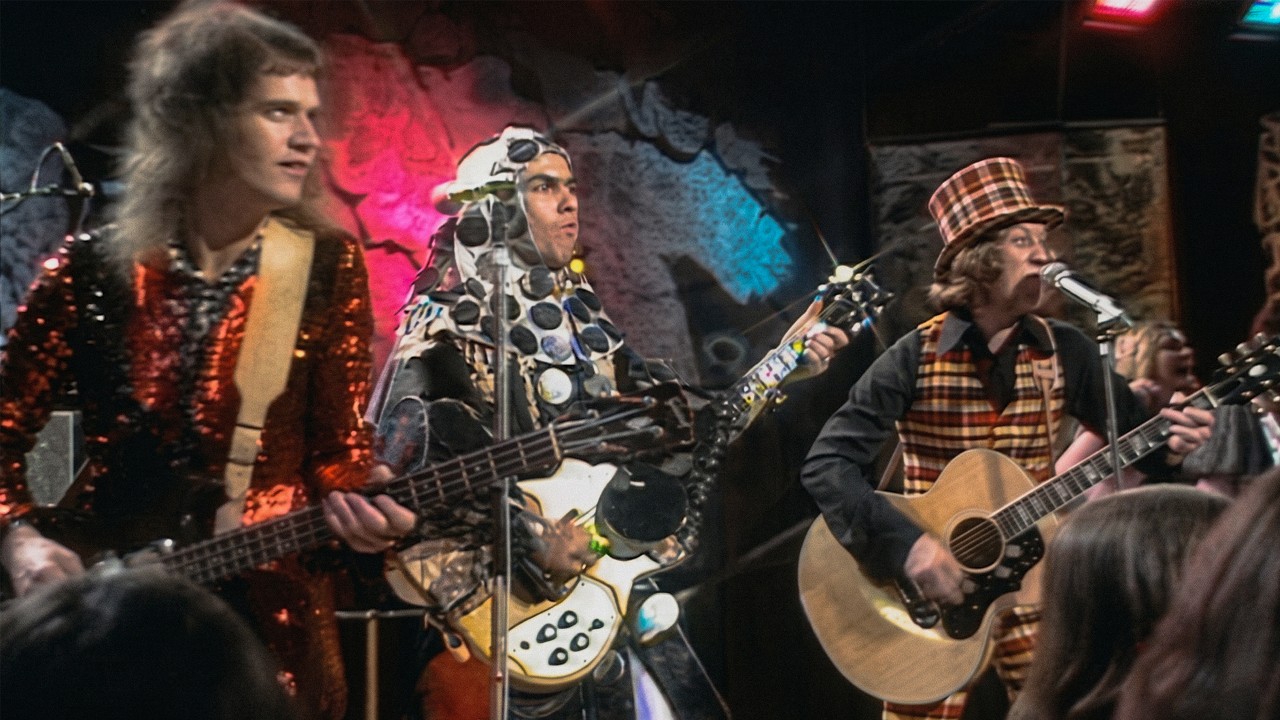
By spring the British run was finished, and continental Europe was still catching up. That is where the footage comes in. On April 28, 1973, ZDF broadcast Slade on Disco, the monthly West German pop show hosted by Ilja Richter and taped before a studio audience. The performance, now posted to Slade’s official channel, has the classic lineup intact: Holder, Hill, Lea and Don Powell. It was not their first visit that year. In February the band had brought Gudbuy T’Jane to the same show. The new single reached No.8 on the West German chart and landed in the Top 10 in Belgium, Switzerland, the Netherlands, Austria and Finland.
The same Saturday, an ocean away, the American trade weekly Cash Box named the single one of its picks of the week and praised its commercial appeal. Polydor had released it in the United States on April 21, so the timing could hardly have been better. It made no difference. The Hot 100 ranked it at No.98, the Cash Box chart at No.91, and Record World at No.63. Britain and Germany had spent two years watching Slade turn concert halls into choirs. America had only the record, and a crowd song without a crowd is just a loud single.
Somebody Else’s Crowd
Ten years later another band built that crowd. Quiet Riot, a Los Angeles heavy metal group, recorded the song in 1983 under protest. Drummer Frankie Banali later explained that singer Kevin DuBrow wanted the band to write everything on the album and had little time for Slade. So they agreed to play it as badly as they could, expecting the label to reject it. The label did not. Their version reached No.5 on the Hot 100 in November 1983, earned an RIAA gold certification, became a fixture on MTV and helped carry Metal Health to the top of the Billboard album chart. Speaking to Record Mirror, Lea thought it a bit cheeky that Quiet Riot asked permission only after they had recorded it. He liked their version anyway, and its success had major labels bidding for Slade.
That bidding ended with Slade signing to CBS and belatedly breaking through in America in 1984 on their own records. Holder, meanwhile, told Kerrang! that he had turned down every offer to remake the old hits, because the spontaneity of the originals could not be manufactured a second time. The Disco clip is a record of that spontaneity in the season the song set out to win two continents and won one. It did not fail in America in 1973. It was waiting, as it was designed to, for an audience loud enough to finish it.
SONG INFORMATION
Enjoyed this one? New forgotten gems every day — tap Music Videos Club below to visit and follow us on Facebook:
Related videos
 Watch LaterAdded
05:29
Watch LaterAdded
05:29 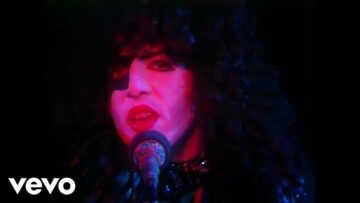 Watch LaterAdded
02:58
Watch LaterAdded
02:58  Watch LaterAdded
04:13
Watch LaterAdded
04:13