









Fleetwood Mac – Everywhere
Christine McVie wrote Fleetwood Mac’s simplest love song, and the video told it as a tragedy without the band.
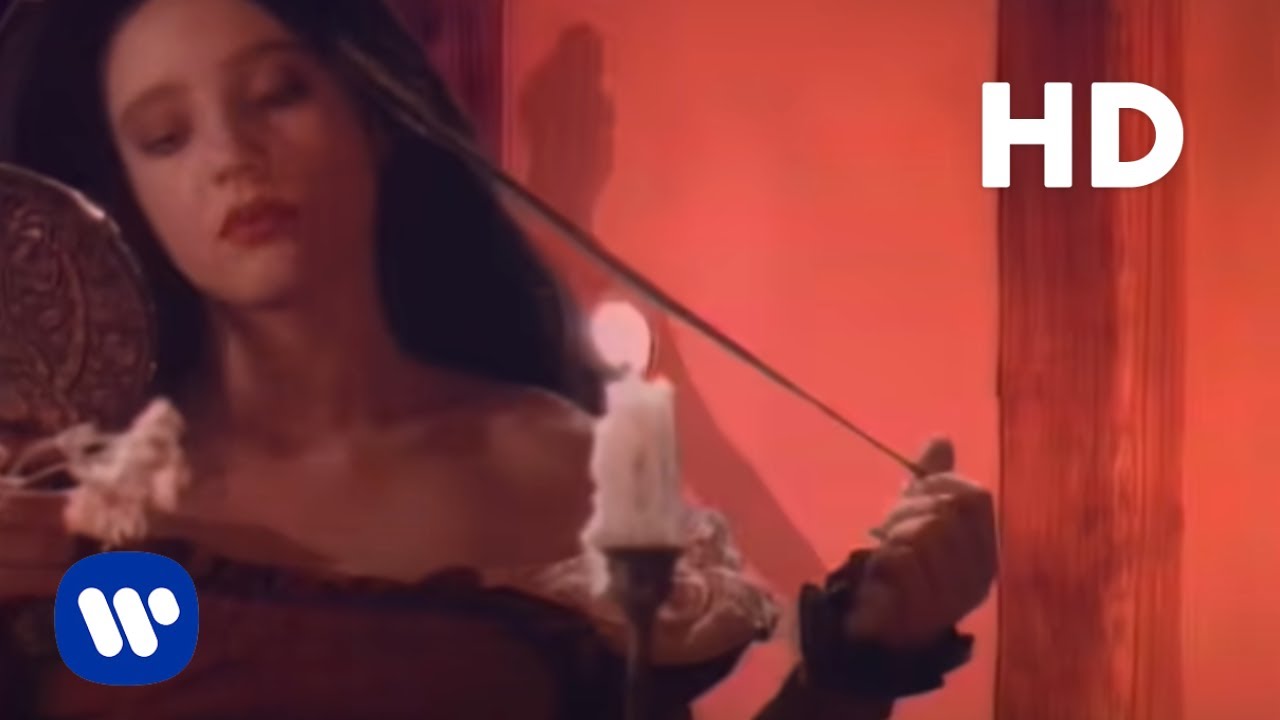
The inn in the video for Everywhere is a miniature. Model maker David Tremont was given two weeks to build an English inn small enough to sit in a studio, with six interior sets constructed alongside it, and director Alex Proyas filled that little building with a story Fleetwood Mac’s song never tells. Christine McVie wrote a love song about wanting to be close to someone wherever they are. Proyas answered it with Alfred Noyes’ poem “The Highwayman,” a romance that ends in betrayal and death, and in the version on this page not one member of the band appears.
Keep watching: explore more Fleetwood Mac →
The song arrived in the middle of a long and difficult album. Tango in the Night, released on April 13, 1987, was Fleetwood Mac’s first studio album in five years, recorded largely in 1986 with Lindsey Buckingham and Richard Dashut producing, and Buckingham shaped much of its sound with his new Fairlight CMI. McVie, recently married to keyboardist Eddy Quintela, who co-wrote songs elsewhere on the record, brought in a love song with almost no ornament: a melody, a feeling and a chorus built to be sung back.
Buckingham and Dashut built that simplicity out of studio craft. The shimmering intro, Dashut later explained in a 2019 BBC Four documentary on McVie, is a half-speed acoustic guitar combined with an electric. McVie sang lead and played keyboards, Buckingham added guitars, keyboards, programming and background vocals, Stevie Nicks sang background vocals, and John McVie and Mick Fleetwood played bass and drums. The track is dense with overdubs, and it still sounds weightless, which is what McVie’s melody needed.
A single after the split
Warner Bros. released Everywhere as the album’s fourth American single on November 13, 1987, backed with When I See You Again. By then Buckingham had quit the band, and Fleetwood Mac went out on tour promoting an album he had produced, without him. The single reached No.14 on the Billboard Hot 100, the band’s last visit to the American Top 20, and spent three weeks at No.1 on the Adult Contemporary chart. In Britain, where it came out in March 1988, it climbed to No.4 and has since been certified six times platinum by the BPI.
The video made a bold choice of its own. Proyas, the Australian director who later made The Crow, cut two versions: one intercuts Christine McVie, John McVie and Mick Fleetwood with the story, and the other, the one on this page, leaves the band out entirely. What remains is a period drama staged around Tremont’s miniature and the interior sets, with a highwayman, the daughter of the inn and the betrayal that undoes them, all shot with the silhouettes that ran through Proyas’ music videos of the era. Andrew McPhail produced it.
The song kept traveling long after the band that made it splintered. A Chevrolet commercial for its electric vehicles returned it to the Billboard charts in 2022, it passed one billion Spotify streams in October 2024, and it entered the Billboard Global 200 dated April 18, 2026, at No.188 on 9.6 million streams in a single week. McVie died on November 30, 2022, before that last climb. Proyas told her love song as a tragedy, and the lineup behind it broke apart before the single was even released. The song itself, the simplest thing on the album, is the part that lasted.
SONG INFORMATION
Enjoyed this one? New forgotten gems every day — tap Music Videos Club below to visit and follow us on Facebook: