



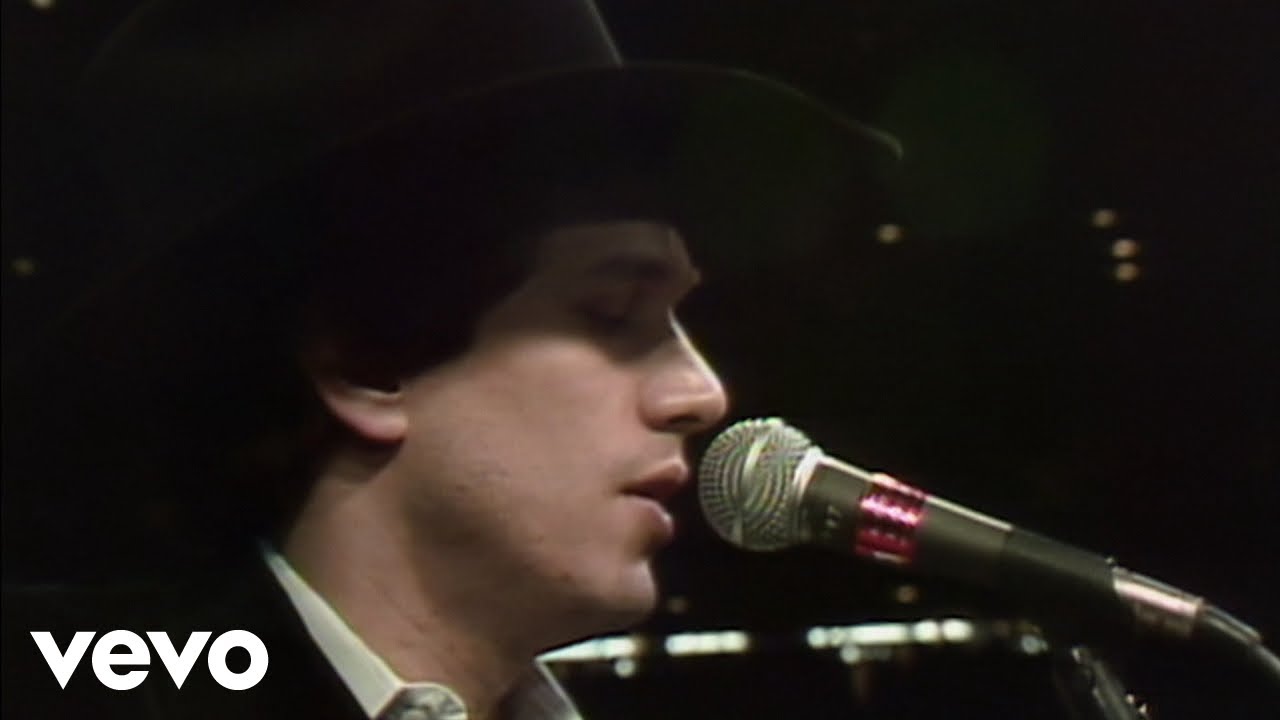




George Strait – Amarillo By Morning
A 1973 Country-Pop Song That Two American Writers Built Around a Federal Express Commercial’s Tagline — and That a 30-Year-Old Texas-Born Former Army Infantryman Named George Strait Rebuilt as Fiddle-Heavy Western Swing in 1982. The Single Reached #4 on the Country Chart in 1983 and Has Been Certified Four-Times Platinum.
The song was written one night in 1973 in Los Angeles by two veteran American songwriters who had been working together for a few months. Terry Stafford — the Oklahoma-born singer-songwriter who had reached number three on the Billboard Hot 100 in 1964 with the Elvis-styled hit Suspicion and then watched his commercial career stall for the next nine years — had been collaborating with the songwriter Paul Fraser on a film score for which the two of them had been hired earlier that summer. The pair were meeting every morning to work on the film material. One evening Stafford was at home watching television when a Federal Express commercial came on — the early-1970s air-freight company that had recently begun advertising next-day package delivery to American cities, with a tagline that promised to get a parcel to places like Amarillo by the morning. Stafford was from Amarillo. He had grown up in the Texas panhandle and had played a show there with his band only a few weeks earlier, then driven the 530 miles back home. The phrase stuck. He called Paul Fraser at home that night and pitched the idea. The two of them agreed to work on it the next morning at their regular session. Fraser could not wait. He sat down at his kitchen table that night after the phone call and, by his own subsequent account in Ace Collins’s book The Stories Behind Country Music’s All-Time Greatest 100 Songs, wrote the entire lyric in about an hour. The opening lines arrived first: Amarillo by morning, up from San Antone. The first-person narrator was a saddle-bronc rider working the Texas rodeo circuit. The narrator had had his saddle stolen in Houston, broken his leg in Santa Fe, lost his wife and a girlfriend somewhere along the way, was driving overnight to make the Amarillo rodeo the next morning, and was looking for the eight seconds at the chute that would earn him his next paycheck. By the time Stafford and Fraser sat down at their writing session the following morning, the song was finished.
Stafford recorded the song at Jack Clement’s Recording Spa in Nashville later in 1973 with the country-pop arrangement that Atlantic Records and his producer were pushing him toward — a steel-guitar bed with xylophone fills and a chorus of backing singers behind the lead vocal. The single was released later that year as the B-side of Say, Has Anybody Seen My Sweet Gypsy Rose, the title track of Stafford’s parent album. The A-side did not chart. Atlantic was about to give up on the single when the program director at the Amarillo country station KDJW 1360 AM — a local radio executive named Don Burns — flipped the record over and began promoting the B-side. The local response was immediate. The song became, in the words of Cash Box magazine’s contemporary report, the subject of a local movement to declare it the anthem of the city of Amarillo. The chart momentum followed. Amarillo by Morning entered the Billboard Hot Country Singles chart on October 6, 1973, eventually peaking at number thirty-one. The Stafford recording is a minor commercial success that hovered for a few weeks in the lower half of the chart, faded, and disappeared. Country Music Television would, decades later, rank the song the twelfth-greatest country song of all time on the strength of the Stafford original alone — but in 1973 it was simply a B-side that an Amarillo programme director had flipped.
The Texas Cowboy, the MCA Signing, and the Fiddle Arrangement
The recording that the wider world has come to know as the definitive version came nine years later. George Harvey Strait Sr., born May 18, 1952, in Poteet, Texas — a small ranching town south of San Antonio — had spent the late 1960s in garage rock bands at Pearsall High School, married his high school sweetheart Norma Voss in 1971, joined the United States Army in 1971, served as an infantryman with the 25th Infantry Division in Hawaii through 1975, and discovered Western swing during his Army years through his commanding officer’s record collection of Merle Haggard’s tribute album to Bob Wills. He had returned to Texas after his discharge, enrolled at Southwest Texas State University in San Marcos, and formed the Ace in the Hole Band — a country and Western swing covers act that played the Texas dancehall circuit through the late 1970s. Erv Woolsey, a former record promoter who had become Strait’s manager, brought him to the attention of Tom Collins at MCA Records’ Nashville offices. In February 1981, MCA signed Strait to a one-song contract. The first single, Unwound, reached number six on the Hot Country Songs chart in mid-1981 and earned Strait the extended record deal that made the rest of the story possible.
Strait’s second studio album, Strait from the Heart, was recorded at Music City Music Hall in Nashville between September 1981 and April 1982. The producer was Blake Mevis, the former Loretta Lynn publishing executive who had been at MCA since the mid-1970s and who had been Strait’s regular producer since the debut album. By April 1982 the band had eleven completed tracks. One of them was a reinterpretation of Amarillo by Morning, completely rebuilt from the Stafford country-pop original into a fiddle-and-steel-guitar Western swing arrangement that placed Buddy Spicher and Rob Hajacos’s twin fiddles at the centre of the recording, John Hughey and Sonny Garrish’s pedal steel guitars trading phrases around Strait’s vocal, and an unhurried mid-tempo groove underneath built on Larry Paxton’s bass and Jerry Kroon’s drums. The arrangement was, in stylistic terms, the deliberate opposite of where Nashville country radio had been going since the late 1970s. Mevis and Strait had bet that the audience was ready for a return to the traditional Texas honky-tonk and Western swing sound that the urban-cowboy crossover wave had crowded out. Strait from the Heart was released by MCA on June 3, 1982. The lead single Fool Hearted Memory became Strait’s first number-one country single in July 1982. Marina del Rey followed and peaked at number six. Amarillo by Morning was released as the album’s third single on January 14, 1983. It entered the Hot Country Songs chart on February 12, 1983 and peaked at number four — the highest position the song would reach on the chart, but never the top spot.
The Career That Followed and the Forty-Three-Year Afterlife of the Single
Amarillo by Morning never reached number one. The song that has been described by Billboard, American Songwriter, and Country Music Television as one of the ten greatest country songs ever recorded, that the Country Music Hall of Fame inductee George Strait has played at virtually every concert he has performed across the four decades since the recording, that was used as the wake-up call for the Amarillo-born NASA astronaut Rick Husband during the STS-96 space mission and again on STS-114 — peaked at number four. The Recording Industry Association of America has since certified the recording four-times platinum on the strength of catalogue sales across four decades. Strait went on to record what is, by every measure of commercial country music since 1983, the most successful catalogue in the history of the genre. Sixty number-one singles on the Billboard country charts — more than any other artist in any musical genre in chart history. Thirty-three platinum or multi-platinum albums certified by the RIAA, third behind only The Beatles and Elvis Presley across all genres. Country Music Hall of Fame induction in 2006. ACM Artist of the Decade in 2009. Grammy Award for Best Country Album for Troubadour in 2008. CMA Entertainer of the Year in 1989, 1990, and 2013. ACM Entertainer of the Year in 1990 and 2014. The largest ticketed concert for a single act in United States history — 110,905 people at Kyle Field in College Station, Texas, in June 2024. Amarillo by Morning sits at the absolute centre of that catalogue. The song that did not reach number one is, in working terms, the song the King of Country Music is most identified with. Terry Stafford died in March 2006. Paul Fraser died in 2024. The Federal Express tagline that began the whole thing has long since been retired. George Strait turns 74 on May 18, 2026 and continues to record and tour.
SONG INFORMATION
Related videos
 Watch LaterAdded
03:58
Watch LaterAdded
03:58  Watch LaterAdded
03:45
Watch LaterAdded
03:45  Watch LaterAdded
05:54
Watch LaterAdded
05:54