







Michael Jackson – Beat It
He asked Quincy Jones for a rock song because he was afraid disco was about to take him down with it.
By 1982 disco was radioactive. The backlash had cleared it off American radio inside three years, and Michael Jackson had made his previous album squarely inside it. He and Quincy Jones both understood the danger, and Jackson’s solution was direct: he wanted a rock song on the new record, something in the shape of the Knack’s My Sharona. He went away and wrote one. What he brought back changed which artists American television was willing to put on screen.
Keep watching: Michael Jackson – Billie Jean · Michael Jackson – Thriller
He cut the demo in E-flat minor and played it for Jones, who said it was exactly what he had been after. The band assembled around it was almost entirely Toto — Jeff Porcaro on drums, Steve Porcaro on synthesizer, Steve Lukather playing both lead guitar and bass. The seven bells that open the record are Tom Bahler on a Synclavier. And then Jones made a phone call that has become one of the best-known stories in American pop.
Eddie Van Halen hung up on him. He assumed it was somebody messing about and put the receiver down. Jones called back, convinced him it was real, and Van Halen agreed to play the solo — for nothing, as a favor, at a moment when his own bandmates were out of town and could not object to him taking outside work. He did not think anyone would ever know it was him.
What he did next was not what a session guitarist does. He decided the track underneath the solo was not going to support what he wanted to play, so he had the engineer restructure the song to accommodate it, without asking Jackson. Then he cut two takes. Jackson turned up after the second, heard what had been done to his arrangement, and was delighted that somebody had cared enough to rebuild it. Jones’s instruction to Lukather afterward was to make the rock guitar sit properly on R&B radio, which is the whole commercial project of the record in one sentence.
The video CBS refused to pay for
Steve Barron, who had directed Billie Jean, was first choice for the video. His pitch involved a ship full of white slaves with Jackson cast as the slavemaster. It did not proceed. Jackson instead brought in Bob Giraldi, who had never made a music video at all and was hired on the strength of a television commercial Jackson had liked.
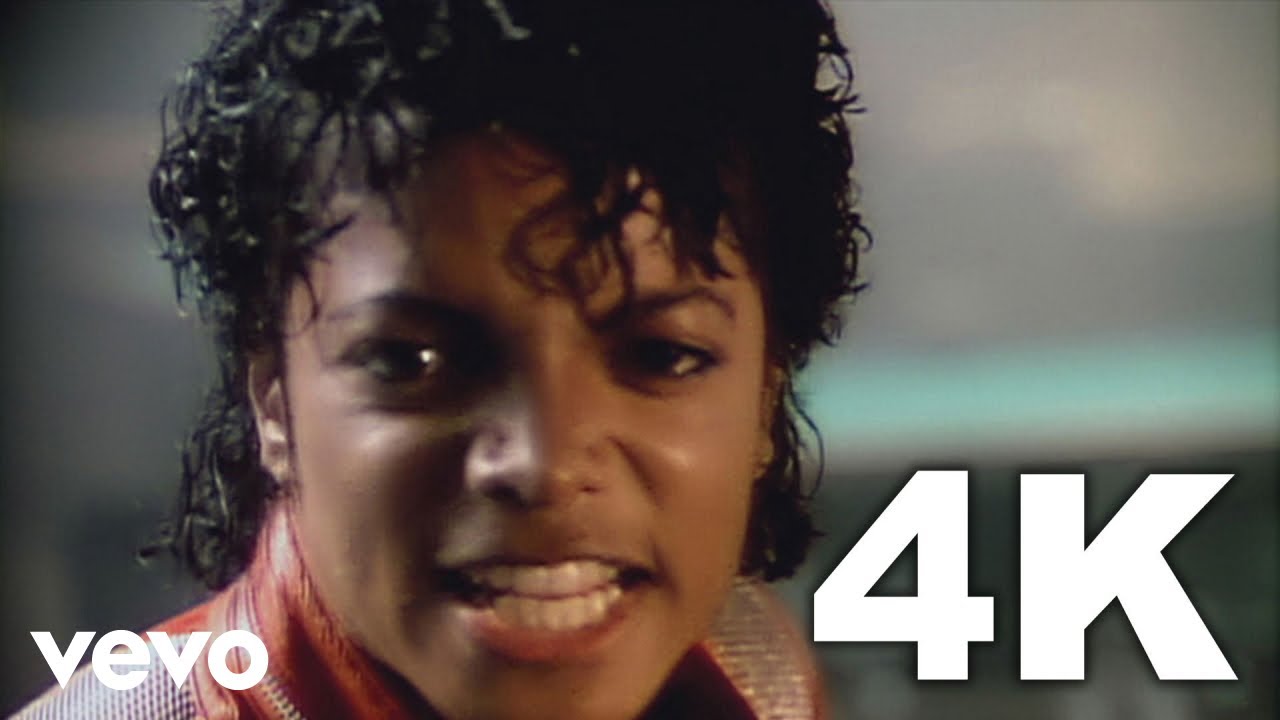
CBS declined to finance it. Jackson paid the hundred and fifty thousand dollars himself, which at the time made it about the most expensive music video ever made. Giraldi shot it on Skid Row, mainly on East 5th Street, around March 9, 1983, and Jackson insisted on casting roughly eighty actual members of the Crips and the Bloods alongside eighteen professional dancers and four breakdancers. Security was on set. The gang members could not dance, so they formed a ring and watched the dancers work, and by Giraldi’s account the thing that made the evening hold together was those men watching something they knew they could not do.
One correction worth making, because the claim is everywhere: the video is not based on West Side Story. Giraldi has been explicit that he had no idea what West Side Story was when he made it, and that his reference was the place he grew up — “the streets of Paterson, New Jersey, where I’m from.” Jackson, for his part, watched the film constantly, which is probably why the story refuses to die.
What it actually changed
A second correction, and a bigger one. Beat It is regularly credited with breaking MTV’s color barrier. It did not. Billie Jean got there first, weeks earlier, and it was that record which put a Black artist into regular rotation on a channel whose programmers had been accused by Jackson’s own label of excluding them. What Beat It did, premiering on March 31, 1983, was make the change permanent — the two videos ran together through the summer of 1983 and set a standard for production and choreography that held for twenty years.
The record went to No.1 in America, Canada, Belgium and New Zealand, No.2 in Australia, France and West Germany, and No.3 in Britain. At the 1984 Grammys it took Record of the Year and Best Rock Vocal Performance, Male — a rock award, for a song written by a pop singer to escape disco, played by the guitarist from Van Halen for free.
Jackson was born on August 29, 1958 and died on June 25, 2009. Eddie Van Halen died in October 2020. What the two of them made in a Los Angeles studio in October 1982 was a piece of deliberate commercial engineering that happened to be better than it needed to be, which is a fair description of most of Thriller.
SONG INFORMATION
Related videos
 Watch LaterAdded
04:05
Watch LaterAdded
04:05 ![David Lee Roth – California Girls (Official Video) [HD]](https://musicvideosclub.com/wp-content/uploads/2026/10/david-lee-roth-california-girls-360x203.jpg) Watch LaterAdded
04:37
Watch LaterAdded
04:37  Watch LaterAdded
05:29
Watch LaterAdded
05:29