Everyone assumes “Shout” is about screaming your feelings out in therapy — but the band who named themselves after that very therapy insist it’s something else entirely.
On August 3, 1985, “Shout” reached No. 1 on the Billboard Hot 100 and stayed there for three weeks — Tears For Fears’ first American chart-topper. Almost everyone who sang along assumed they knew what it meant. The band had famously named themselves after Arthur Janov’s primal scream therapy, and here was a song built entirely around the command to “shout, shout, let it all out.” The conclusion seemed obvious: this was a song about screaming your pain into the open, primal-therapy set to a beat. Roland Orzabal has spent forty years explaining that it isn’t.
The confusion is entirely understandable, because Tears For Fears did build much of their identity on Janov’s ideas. Orzabal and Curt Smith, who met as teenagers working as session musicians in Bath, were devoted followers of the American psychologist, whose primal therapy held that suppressed childhood pain could be released through screaming. The band even took their name from a passage in Janov’s book Prisoners of Pain, about tears serving as a replacement for fears. Their debut album, The Hurting, leaned heavily on that framework. So when “Shout” arrived with its scream-it-out chorus, listeners naturally filed it under the same heading.
Not therapy — protest
But Orzabal has been consistent and specific: “Shout” is, in his words, “a simple song about protest.” He wrote it in the mid-1980s, when Cold War nuclear anxiety hung over Britain and American missiles were stationed on UK soil, and he meant it as an encouragement to speak up rather than a prompt to scream out private pain. Curt Smith framed it the same way — the song concerns protest in the sense of urging people not to accept things without questioning them. The chorus never names what those things are, and that vagueness is the point: everyone brings their own grievances to it, which is exactly why it worked as a global hit rather than a niche statement. It is a protest song with the specifics left blank, ready to be filled in by whoever is listening.
The album track that became a No. 1
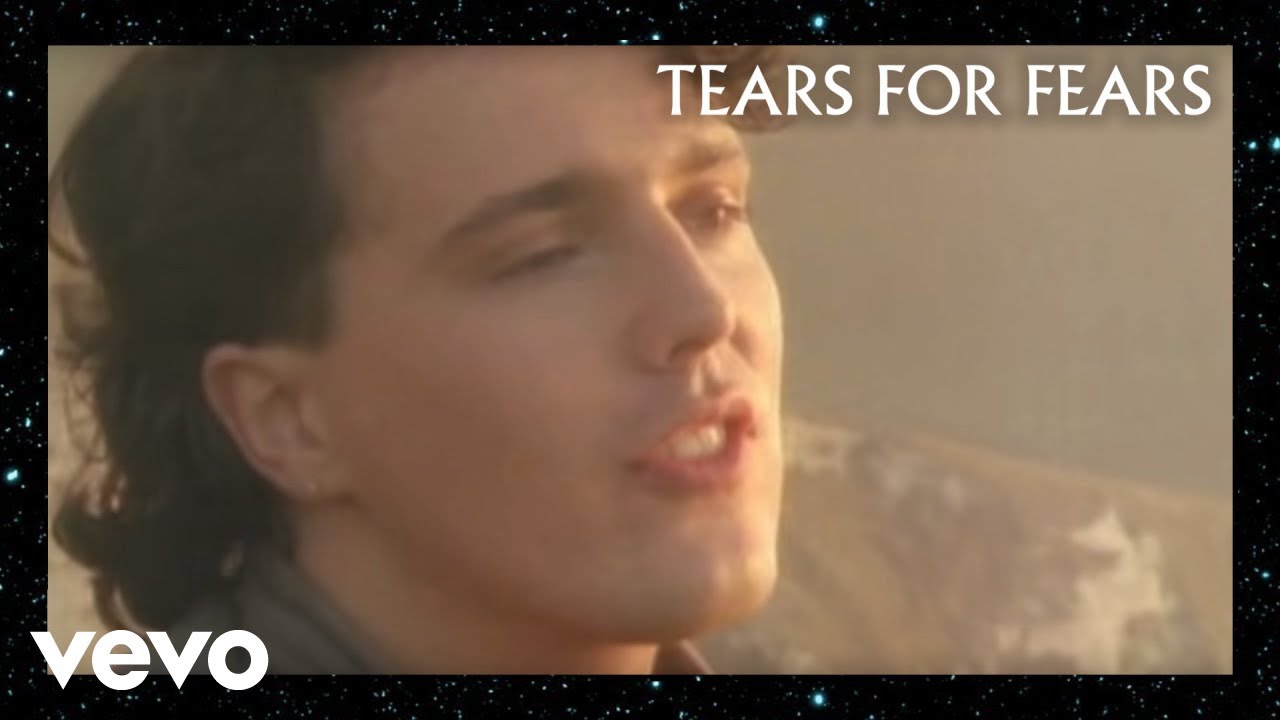
Orzabal nearly undersold it. He wrote “Shout” in his front room on a small synthesizer and a drum machine, and at first he had only the repetitive, mantra-like chorus. He played it for the band’s keyboardist, Ian Stanley — his co-writer on the song — and producer Chris Hughes, telling them he thought it made a decent album track. They were convinced it would be a hit around the world, and they pushed him to build it out. The finished record, from Songs from the Big Chair, ran over six minutes, driven by a hypnotic drum-machine loop, swelling synths, and an unexpectedly raw guitar solo. Its video, filmed on the dramatic cliffs of Durdle Door on the Dorset coast, went into heavy MTV rotation. “Shout” topped the charts in country after country — Australia, Canada, Germany, the Netherlands, and more — and reached No. 4 in the band’s native Britain. It remains one of the defining records of 1985, and one of the most misunderstood.
SONG INFORMATION
Artist: Tears For Fears
Song: “Shout”
Album:Songs from the Big Chair
Released: November 23, 1984 (single)
Label: Mercury / Phonogram
Songwriter(s): Roland Orzabal, Ian Stanley
Producer(s): Chris Hughes
Length: 6:34 (album version)
Chart Performance: US Billboard Hot 100 No. 1 (three weeks, from August 3, 1985); UK No. 4; No. 1 in Australia, Canada, Germany, Netherlands, and more
Video Location: Durdle Door, Dorset, England
Lineup: Roland Orzabal, Curt Smith, Ian Stanley, Manny Elias