Lionel Richie’s own band turned this song down. They thought it was too slow.
The Commodores heard it first and said no. Too slow, too romantic, not what they wanted to be doing — and by 1980 the members of the band who were not Lionel Richie had grown tired of being known as balladeers when they had started out as a funk group. So Richie took it elsewhere. Lady went on to spend six weeks at No. 1, become the first record of the decade to appear on all four Billboard singles charts at once, and hand its writer the career that took him out of the band that had turned it down.
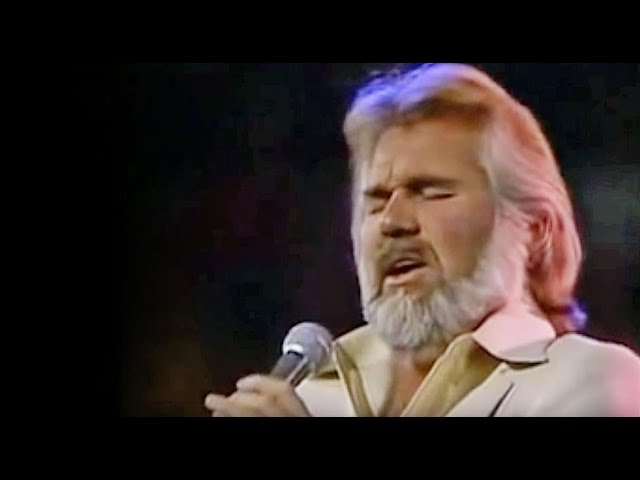
Kenny Rogers came looking for it. He had spent five years as the most successful crossover act in country music, working with producer Larry Butler through Lucille, The Gambler and Coward of the County, and had reached the point where the formula was starting to feel like one. He wanted somebody from a different part of the industry entirely. Richie, in the middle of writing ballads that were charting several times higher than his own band’s funk records, was looking outward for much the same reason.
Rogers described the plan afterwards in a single sentence that explains the whole record: the idea was that Lionel would come from R&B and he would come from country, and they would meet somewhere in pop. That is exactly what the finished song does. There is a country vocal on it and an R&B arrangement under it, and the join is invisible.
The second verse, written in a hurry
Richie has told the next part himself. He did not have the whole song. He had a first verse and a chorus and a country superstar sitting in front of him waiting to hear it, and no second verse at all. Rather than admit that, he excused himself, went and shut himself in a bathroom stall, and wrote the rest of it there and then. His own account of the reasoning is that telling Kenny Rogers he did not have a second verse was never a possibility he was prepared to consider.
They cut it at Concorde Recording in Los Angeles with Richie producing — the first record he had produced outside the Commodores. Liberty put it out on September 29, 1980, on a greatest hits album, as the one track nobody had heard before. That is an unusual place for a career-defining single to appear.
Four charts at once
It took the top of the Hot 100 from Barbra Streisand’s Woman in Love on November 15, 1980 and held it for six weeks. It went to No. 1 country and No. 1 adult contemporary, and reached No. 42 on the Top Black Singles chart — the first record of the 1980s to appear on all four of Billboard’s singles charts, and No. 1 on three of them.
For Rogers it was the tenth of the twenty country No. 1s he would collect between 1977 and 2000, and the only time he ever topped the Hot 100 on his own. The one other occasion was a duet, three years later, with Dolly Parton.
For Richie it was the door. He produced Rogers’s next album, Share Your Love, the following year, left the Commodores shortly afterward, and by the end of 1981 had two of the three biggest records in America on the Billboard year-end chart — this one, and Endless Love with Diana Ross. The song his band had rejected as too slow turned out to be the thing that told him he did not need the band.
SONG INFORMATION
Artist: Kenny Rogers
Song: “Lady”
Album:Kenny Rogers’ Greatest Hits
B-side: “Sweet Music Man”
Released: September 29, 1980
Recorded: 1980
Studio: Concorde Recording, Los Angeles
Label: Liberty
Songwriter(s): Lionel Richie
Producer(s): Lionel Richie
Length: 3:54
Chart Performance: US Billboard Hot 100 No. 1 for six weeks; Hot Country Singles No. 1; Adult Contemporary No. 1; Top Black Singles No. 42







![David Lee Roth – California Girls (Official Video) [HD]](https://musicvideosclub.com/wp-content/uploads/2026/10/david-lee-roth-california-girls-360x203.jpg)