She made the most famous synthesizer record of 1981. Seven years later she left Los Angeles to get away from machines.
Kim Carnes said she could not make another album in Los Angeles. She had tried, and she had stopped trying. What she wanted was to cut a record live, in her words, as opposed to running everything through a computer, with musicians in a room reacting to each other. That is a striking thing to hear from the woman whose 1981 single had been carried around the world on a synthesizer figure that almost nobody who heard it could shake loose.
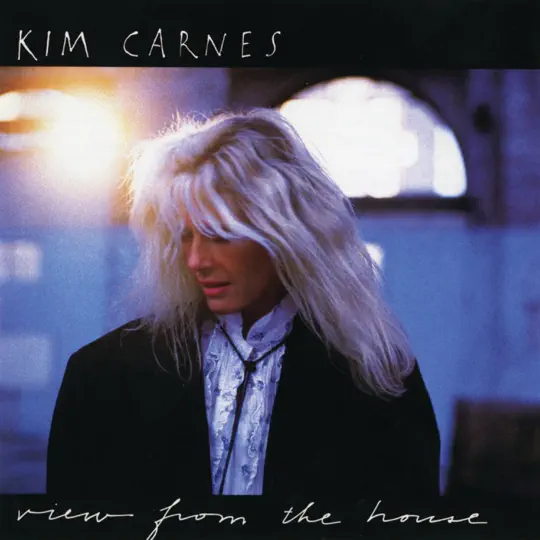
Bette Davis Eyes had spent nine weeks at No. 1 on the Billboard Hot 100 and taken the Grammy for Record of the Year, and it defined her so completely that most listeners never followed her past it. Carnes had a longer history than that suggested. She sang with the New Christy Minstrels in the late sixties, alongside Kenny Rogers, worked as a session background vocalist, and wrote songs other people took to the charts. By 1988 the pop run had ended and she went to Nashville to make her eleventh album, working with Jimmy Bowen, cutting at Sound Stage Studios with players rather than programmers. MCA released View from the House on July 25, 1988.
The song she picked for it had already been around. Even Stevens and Randy McCormick wrote Crazy in Love, and Joe Cocker recorded it first, on his 1984 album Civilized Man. It has nothing whatsoever to do with the Beyoncé single of the same name from 2003 — different song, different writers, no relationship beyond four syllables. Carnes cut hers in Nashville in 1988 and MCA put it out as the album’s second single, following her reading of John Prine’s “Speed of the Sound of Loneliness.” Billboard’s Adult Contemporary chart took it to No. 13, and it reached No. 68 on Hot Country Singles, which was as close to the country format as her voice ever got officially.
The song kept moving after she was done with it
What the record does is put that rasp — the one she has always credited to years of singing in smoky rooms — against an arrangement with almost nothing electronic in it. The 1981 hit worked because her voice sounded like it was fighting the machine behind it. This one has nothing to fight. The song itself is a plea to get back to how two people used to be with each other, which is material that rewards a voice with wear in it and punishes one without.
Two years later Conway Twitty recorded it for an album he named after it, and his version went to No. 2 on the country chart in 1990, higher than either earlier recording had reached anywhere. Three singers took the same Even Stevens and Randy McCormick song across three formats inside six years, and it worked every time it was tried. That is a fairly rare thing, and it says more about the writing than any one of the three performances does.
Carnes moved to Nashville full-time in 1994 and has spent the decades since writing, including “The Heart Won’t Lie,” which Reba McEntire and Vince Gill took to No. 1 on the country chart in 1993. The record she made in 1988 is not the one anyone reaches for first, and the chart numbers explain why. It is also the clearest evidence in her catalog that the singer people remember from one enormous synthesizer record had spent that whole time wanting to make something else entirely.
SONG INFORMATION
Artist: Kim Carnes
Song: “Crazy in Love”
Album:View from the House
B-side: “Blood from the Bandit”
Released: 1988 (album: July 25, 1988)
Recorded: 1988
Studio: Sound Stage Studios, Nashville
Label: MCA
Songwriter(s): Randy McCormick, Even Stevens
Producer(s): Jimmy Bowen, Kim Carnes
Length: 3:52
Original Release: Joe Cocker, 1984, from the album Civilized Man
Chart Performance: US Adult Contemporary No. 13; Hot Country Singles No. 68








![David Lee Roth – California Girls (Official Video) [HD]](https://musicvideosclub.com/wp-content/uploads/2026/10/david-lee-roth-california-girls-360x203.jpg)