



Queen – Keep Yourself Alive
Queen’s debut single is now ranked among the greatest guitar songs ever recorded — but when it came out in 1973, radio wouldn’t touch it, it flopped on both sides of the Atlantic, and it remains the only Queen single that never charted in Britain.
Every legend has a humble beginning, and Queen’s is a spectacular flop. Keep Yourself Alive — the roaring, riff-stuffed track that opens their 1973 debut album and served as their very first single — is now regarded as one of the finest curtain-raisers in rock, ranked by Rolling Stone among the hundred greatest guitar songs ever made. Yet on release it went nowhere. It failed to chart in Britain or America, barely troubled the radio, and holds a peculiar distinction to this day: it is the only Queen single that never once appeared on the UK chart.
Keep watching: Queen – Now I’m Here (Live in Rio 1985) · more Queen →
The song was written by guitarist Brian May, and it had been kicking around for years before it reached a studio. May first worked it out on acoustic guitar back in 1970, during Queen’s earliest practice sessions at Imperial College in London, when the band was still just May, Freddie Mercury, and drummer Roger Taylor, with no permanent bassist yet in place. May meant the lyrics to be ironic and tongue-in-cheek — a wry poke at the idea of chasing success, asking, as he later put it, whether there was “more to life than this.” Then Freddie Mercury got hold of them. Sung in Mercury’s commanding, full-throated voice, the same words landed as a bold, defiant statement of purpose. The irony evaporated; the swagger took over.
An entire album’s worth of riffs in one song
Getting it onto tape was a saga in itself. Queen first recorded the song in December 1971 at De Lane Lea Studios, where they had been hired to test the studio’s new equipment — a version May still calls his personal favourite. But once Trident Studios signed the band, they were made to re-record everything during studio down-time, often working from the small hours of the morning. The band and their producers, John Anthony and Roy Thomas Baker, chased the sound relentlessly; by some accounts seven or eight different remixes were attempted before engineer Mike Stone delivered the take everyone could live with. At the heart of it all was May’s homemade guitar, the Red Special, which he had built with his father out of spare wood in 1963. Layered into a wall of overdubbed parts and run through a Vox AC30 amplifier, it gave the song its distinctive cascading attack — what Rolling Stone would later describe as an entire album’s worth of riffs crammed into a single song.
EMI released Keep Yourself Alive in the UK on July 6, 1973, a week ahead of the debut album, with May’s Son and Daughter on the B-side; Elektra issued it in America that October. And then — nothing. According to Queen biographer Mark Hodkinson, EMI’s promotions team tried on five separate occasions to get the record onto BBC Radio 1’s playlist, and were turned down every time, reportedly because the song took “too long to happen” before the vocals kicked in. Undeterred, the band tried again: the single was re-released in the US in 1975, this time backed with “Lily of the Valley” and “God Save the Queen.” It still didn’t chart. The song that would one day be recognized as a masterpiece simply could not get arrested in its own time.
The song that never left the stage
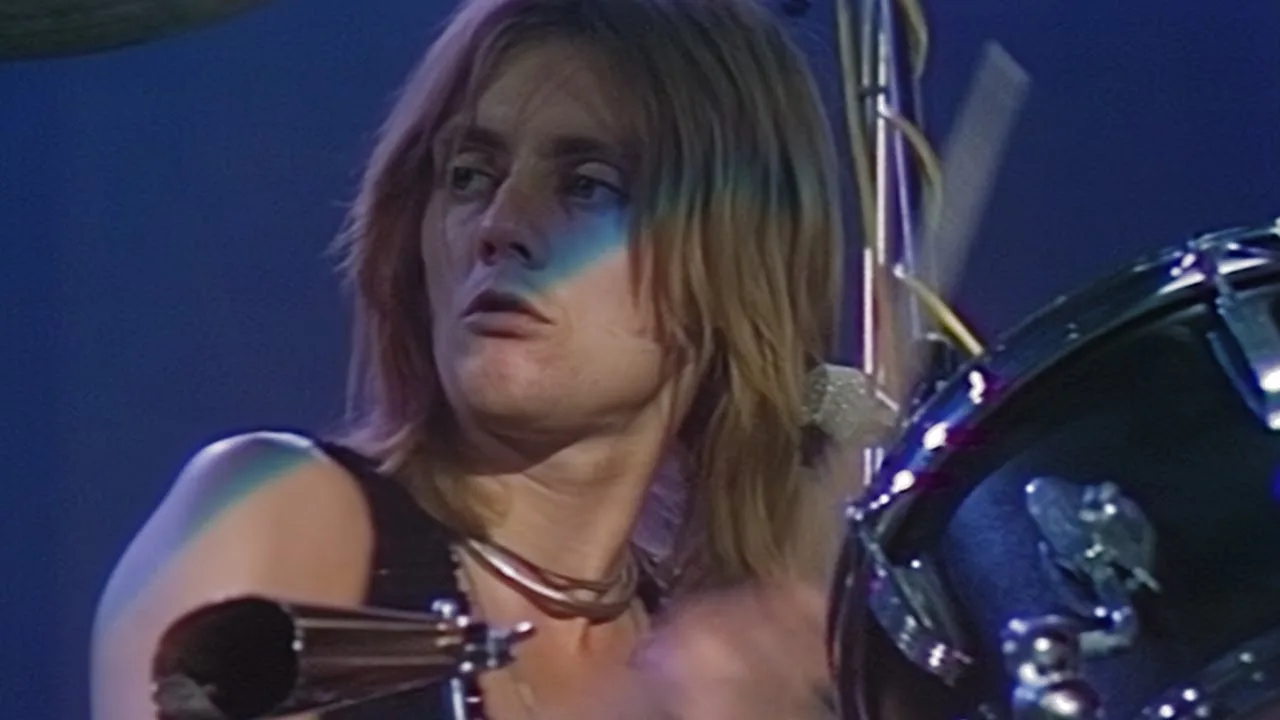
What the charts missed, audiences didn’t. Keep Yourself Alive became a fixture of Queen’s live set from their earliest gigs, a reliable showcase that, by the end of the decade, would expand on stage into a sprawling vehicle for Roger Taylor’s drum solo and Brian May’s guitar spotlight. Nowhere is that early live power better captured than in the performance featured on this page: Queen tearing through the song at London’s Hammersmith Odeon on Christmas Eve, December 24, 1975. That show was a landmark in its own right — broadcast on BBC’s Old Grey Whistle Test, it was the only time Queen ever played a full concert live on television, staged at the very peak of their Bohemian Rhapsody triumph, with that single sitting at No. 1. The band were, in the words of presenter Bob Harris, “at the peak of their powers.”
Time has been kinder to Keep Yourself Alive than 1973 ever was. Critics now routinely single it out as the standout of Queen’s debut, the moment the band’s ambition and Brian May’s guitar genius announced themselves in full. It’s a fitting irony for a song whose lyrics were half-joking about survival: the record that couldn’t buy a chart placement outlived nearly everything that beat it, and remains a favourite among the very fans who came to Queen through the hits that followed. Sometimes the first shot fired is the one that echoes longest, even if nobody hears it at the time.
SONG INFORMATION
Related videos
 Watch LaterAdded
03:46
Watch LaterAdded
03:46  Watch LaterAdded
03:13
Watch LaterAdded
03:13  Watch LaterAdded
04:41
Watch LaterAdded
04:41