









Chic – I Want Your Love
Nile Rodgers dreamed every note of it, wrote it for Sister Sledge, then kept it for Chic, and the one part he didn’t dream is the part everybody hears.
Nile Rodgers kept score paper on the nightstand, a working musician’s habit, and one morning in 1978 it paid for itself. He woke with a complete arrangement in his head and wrote the whole thing out before it could fade. Rodgers has called I Want Your Love the only song he ever dreamed note for note, and when he talked it through with Uncut in 2015 his account of the session was blunt: “We went in and played what I dreamt.” Nearly true. One idea on the finished record came from somebody else, and it is the idea that lifts the song out of the dance-floor catalog and into something closer to a lament.
Keep watching: Disco — The Golden Age of Dance Music · explore more →
The dream was not meant for Chic in the first place. Rodgers and Bernard Edwards were selling themselves as writers and producers for other acts as well as running their own band, and the song was earmarked for Sister Sledge, the Philadelphia sister act they had taken on as protégés. Before it reached them, the partners decided it belonged to Chic and kept it for the band’s second album, C’est Chic. Sister Sledge did not go empty-handed for long; within months the same partners handed them We Are Family. The lyric of the song they held back is a confession of wanting someone out of reach, and Rodgers has said exactly where it came from: he had fallen for the best friend of the woman he was dating at the time.
A confession like that needed a voice that sounded as if it meant every line, and Rodgers and Edwards gave it to Alfa Anderson alone. Anderson had spent the mid-1970s singing behind other people. She made her stage debut with Cannonball Adderley at Carnegie Hall in 1976 and added background parts for Dionne Warwick, until Luther Vandross encouraged her to try out for Chic. On C’est Chic she split lead duties with Luci Martin and shared the lead on Le Freak with session singer Diva Gray. I Want Your Love and At Last I Am Free were the two tracks she carried by herself.
The octave nobody dreamed
Behind her, the band cut the track at the Power Station in New York, with Edwards on bass, Tony Thompson on drums, Rodgers on guitar, and Bob Clearmountain engineering. The arrangement Rodgers dreamed runs close to seven minutes on the album, and that length is where the outside idea came in. The concertmaster suggested that when the horns arrived for the long second half, the strings should move up an octave; the album sleeve credits Gene Orloff in that chair. Rodgers tried it in the studio, kept it, and has been careful ever since to say it was not his. That higher string line, climbing behind Anderson’s voice, is the passage the whole record builds toward.
Clubs heard the result before radio did. Billboard’s disco chart put it at No.1 in November 1978, in a combined listing with Le Freak and Chic Cheer, and the album went on topping the R&B album chart for eleven weeks on its way to platinum. Atlantic issued I Want Your Love as the follow-up single in January 1979. Billboard’s Hot 100 carried it to No.7 that May, the soul chart to No.5, and the adult contemporary chart to No.9, while Cash Box ranked it No.10. Britain went further. The UK chart took it to No.4, the highest any Chic single has climbed there.
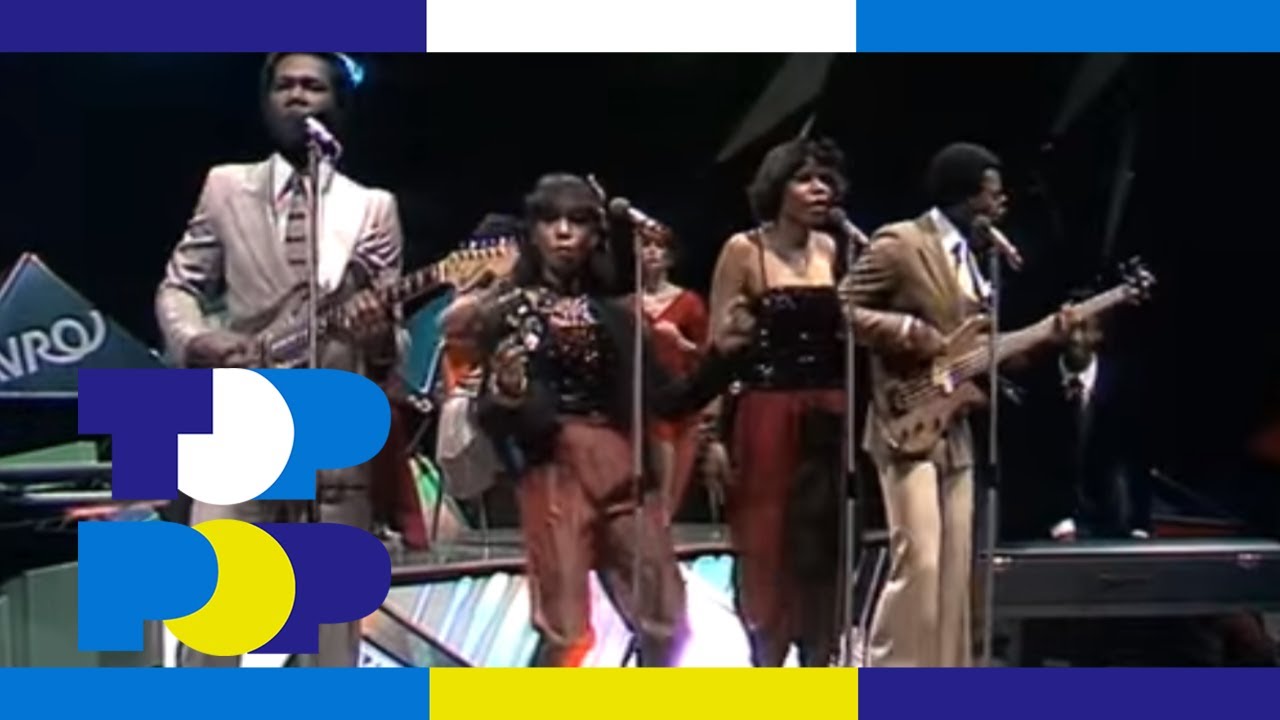
The song was still rising in Europe when Chic reached Dutch television. TopPop, the weekly pop show the AVRO network aired from 1970 to 1988, first broadcast this performance on March 1, 1979. That same date, the BBC’s Top of the Pops carried the song in Britain. TopPop’s standing approach was to bring acts into its own studio to perform to their current record, which gave Dutch viewers a look at Chic in the weeks the song was at its commercial peak.
Anderson kept singing long after Chic broke up in 1983. She toured with Vandross, later became principal of Brooklyn’s El Puente Academy for Peace and Justice, and came back to sing on Chic’s 2015 single I’ll Be There. Born in Augusta, Georgia, on September 7, 1946, she died on December 16, 2024. The song has outlived its era as well: Jody Watley’s version reached No.1 on Billboard’s club chart in 2007 with Rodgers on guitar, and Lady Gaga recorded it with him in 2015 for a Tom Ford campaign. Rodgers dreamed the song whole, but the record people keep returning to was finished by two things he never saw in his sleep: a concertmaster’s octave and a background singer handed the microphone to herself.
SONG INFORMATION
Related videos
 Watch LaterAdded
03:21
Watch LaterAdded
03:21  Watch LaterAdded
03:05
Watch LaterAdded
03:05  Watch LaterAdded
04:48
Watch LaterAdded
04:48