









Anita Ward – Ring My Bell
Anita Ward didn’t want to sing it, Frederick Knight had written it for someone else, and forty-seven years later TikTok decided it could beat a slot machine.
Early in 2026, a claim spread across TikTok that casinos had quietly banned Ring My Bell because something in its frequencies made slot machines pay out. Nothing supports it. The myth still did what promotion budgets rarely manage for a record that old: it sent buyers back to a 1979 single, and Billboard’s Dance Digital Song Sales chart registered the sales. A few months later, the English rapper Aitch built his single RMB (Ring My Bell) on Anita Ward’s hook. The song came back twice in one year, more than its own singer ever expected of it, because in 1979 Ward did not want to record it at all.
Keep watching: Disco — The Golden Age of Dance Music · explore more →
Ward was not a nightclub singer chasing a hit. She had studied psychology at Rust College in Holly Springs, Mississippi, sang gospel, and was working as a substitute teacher in Memphis when a manager introduced her to Frederick Knight. Knight was a singer who had scored a 1972 hit on Memphis’s Stax label with I’ve Been Lonely for So Long, and he now ran his own label, Juana, distributed by TK. He agreed to cut a three-song demo with Ward. He liked her voice enough that the sessions kept going until they had nearly an album, and both of them agreed it was still one song short.
The song Knight reached for already had a past. He had written it the year before for Stacy Lattisaw, a singer he hoped to sign to Juana, as a light phone-call song pitched at a much younger audience. When Lattisaw signed elsewhere, it sat unused. For Ward, Knight rewrote the words into a woman’s invitation to the man coming home at the end of a long day, and he has said he deliberately kept anything too explicit out of it to protect her clean-cut image. Ward still did not like it. She preferred ballads and worried that one disco record could end up defining her. Knight insisted the album needed an uptempo track, and she gave in.
The ping on beat one
They recorded it over two days at Malaco Sound Studios in Jackson, Mississippi, with engineer James Griffin, and what made it stand out was neither the voice nor the band but a machine. A Synare electronic drum strikes a high, decaying tom tone on the first beat of every bar, a pinging accent that plenty of disco records copied afterward. Over it Ward sings in a light, high soprano that never pushes. Whether the lyric carries a double meaning depends on who is asked: Knight said he wrote it clean, and Ward has said any meaning lives in the ear of the listener.
Listeners settled the argument by buying it. Juana issued it as the lead single from Ward’s debut album, Songs of Love, and Billboard’s Hot 100 picked it up on May 12, 1979. By mid-June it led the soul chart, where it stayed five weeks, and it topped the disco chart as well. On June 30 the Hot 100 put it at No.1 for two weeks, between Donna Summer’s Hot Stuff and her Bad Girls. Britain sent it to No.1 that summer, and Canada’s RPM chart followed in late July. It earned Ward a Grammy nomination for Best Female R&B Vocal Performance, which Dionne Warwick won.
This footage comes from Dutch television at the peak of that run. TROS, one of the Netherlands’ public broadcasters, recorded Ward’s performance for episode 52 of its weekly chart show, the TROS Top 50, broadcast June 23, 1979, one week before the Hot 100 put her at No.1. The clip survives in the archive of AVROTROS, the broadcaster formed when TROS merged with AVRO in 2014.
The run never repeated. Ward’s second album, Sweet Surrender, followed within the year and produced only Don’t Drop My Love, which stopped at No.87. Disputes with Knight, a serious car accident and the disco backlash ended the momentum, and Ward went back to teaching. She kept singing the song anyway, in Times Square on New Year’s Eve 2002 and at shows since, and it is always the last one in her set. The 2026 revival makes the case Knight made when he talked her into it: a record does not need its singer’s approval to outlast her doubts. It needed that ping on beat one, and it is still what announces the song before Ward sings a note.
SONG INFORMATION
Related videos
 Watch LaterAdded
03:13
Watch LaterAdded
03:13  Watch LaterAdded
03:21
Watch LaterAdded
03:21 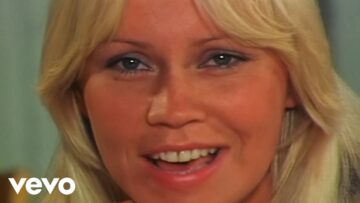 Watch LaterAdded
03:05
Watch LaterAdded
03:05