



Roxette – Joyride (Live 1992)
The Swedish duo named themselves after a long-forgotten Dr. Feelgood B-side and turned a Paul McCartney throwaway line about songwriting with John Lennon into their fourth US number one — a song their own record label tried to talk them out of releasing.
The whole thing started with a Post-it note. Per Gessle came home one day in 1990 to find a message left on the piano by his girlfriend Åsa — now his wife — that read “Hej, din tok, jag älskar dig,” a Swedish phrase that translates loosely as “Hello, you fool, I love you.” Gessle pocketed the line, sat down, and within an afternoon had written the opening verse of what would become Roxette’s biggest single. The title arrived a few days later from a different source entirely: Gessle read an interview in which Paul McCartney described his songwriting partnership with John Lennon as “a long joyride,” and that was that. Lennon and McCartney had given the song its name without knowing.
Joyride was released on February 25, 1991, as the lead single from Roxette’s third studio album of the same name. Written by Gessle and produced by Clarence Öfwerman, it was recorded in July 1990 at EMI’s Stockholm studios as part of a sprawling album session that also moved through Abbey Road in London and the band’s own Halmstad room, then immortally named Tits & Ass Studios. The arrangement is built around a piano figure, a clean glam-rock guitar line, a spoken-word intro by the band’s tour manager Dave Edwards, and a whistled hook Gessle came up with after watching Monty Python’s Life of Brian: he later told Billboard the whistle on the record is his own, overdubbed twelve times.
EMI did not want it as the single. The label thought an uptempo track was too risky for the American follow-up to It Must Have Been Love, the Pretty Woman-soundtrack ballad that had taken Roxette to number one in the US the previous summer, and pushed instead for the gentler Spending My Time. Gessle and Marie Fredriksson refused. Joyride came out as the lead single anyway, reached number one on the Billboard Hot 100 the week of May 11, 1991, spent eight weeks at the top of the German chart, and was their first ever number one in Sweden — and their first platinum-certified single at home. It hit number one in Australia, Austria, the Netherlands, Norway, Spain, and Switzerland; reached number four in the UK; and topped the European Hot 100. Spending My Time, released later that year as the album’s fourth single, became the first Roxette single to miss the US top 30.
The Sydney night that became the home video everyone owned
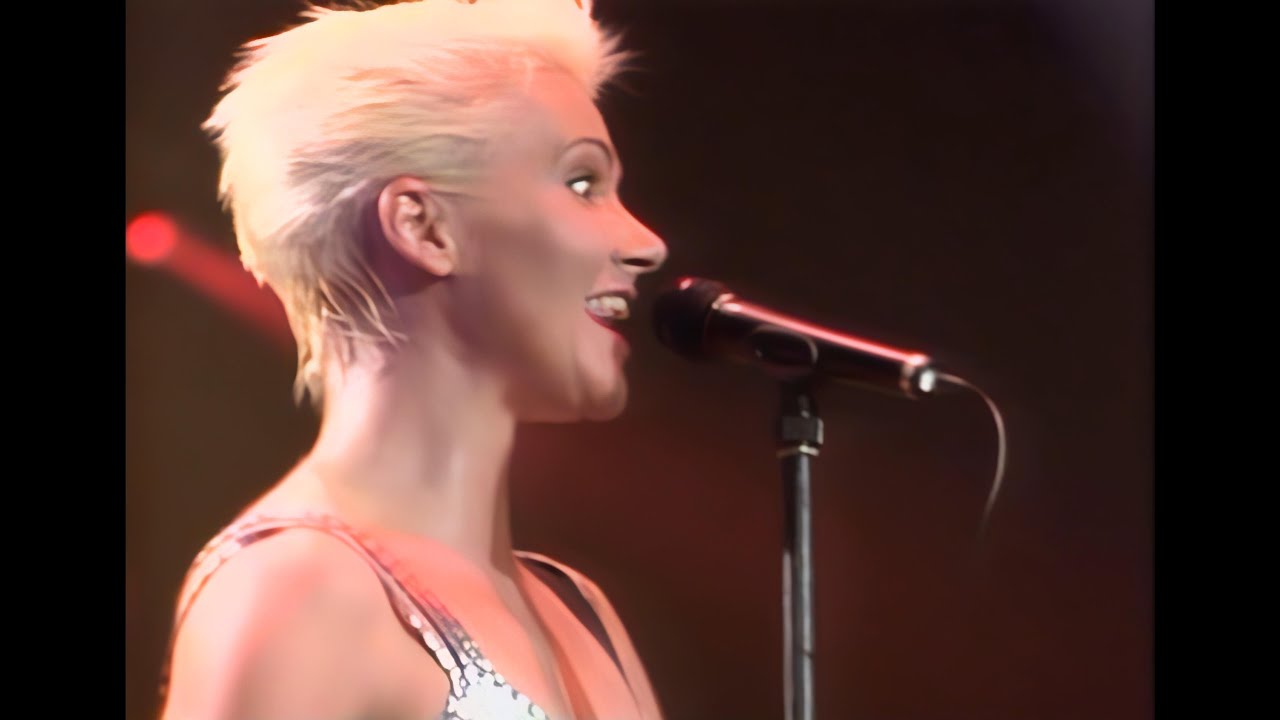
The Join the Joyride! Tour was Roxette’s first proper world tour — a hundred and eight shows across four continents over 1991 and 1992, performing to over one and a half million people. They cut Sydney into the schedule for a residency at the Entertainment Centre in December 1991, and EMI flew in a film crew to shoot one of the nights. The director Wayne Isham, by then already responsible for Mötley Crüe’s Home Sweet Home, Bon Jovi’s Livin’ on a Prayer, and Metallica’s Enter Sandman videos, was hired to film the December 13, 1991 show with co-director Jeff Richter. The footage was edited and released the following August 21, 1992 on VHS and LaserDisc by EMI and Picture Music International as Live-Ism — companion piece to the Tourism album, which arrived a week later.
The Live-Ism performance of Joyride is the version most fans of a certain generation know best, and the one this page features. Marie Fredriksson is in absolute command of the room — she handles the verses with the careful, conversational restraint that defined her voice on record, and then opens up across the chorus in a way the studio version had to be polished into. The touring band — Pelle Alsing on drums, Anders Herrlin on bass, Jonas Isacsson on guitar, Clarence Öfwerman on keyboards, with Vicki Benckert and Staffan Öfwerman on backing vocals — keeps the arrangement tight enough that Marie can do whatever she likes on top of it, and she does. Wayne Isham’s direction is unfussy and physical: close on the eyes, wide on the band, repeat. The film closed on its Joyride performance for a reason.
Marie Fredriksson was diagnosed with a malignant brain tumour in September 2002 and survived for another seventeen years, performing and recording in spite of the diagnosis until her health made touring impossible. She died on December 9, 2019, aged 61. Per Gessle has kept the catalogue alive ever since, and Joyride has remained, by some distance, the song most listeners reach for when they want to remember her in full voice. The studio recording is the artefact that made the record famous. The Sydney film is the one that explains why a hundred and eight nights’ worth of arenas kept selling out across four continents. Watch the video.
Below: the official 1991 music video for the studio recording — directed by Doug Freel and built around a black-and-white-into-colour palette that became one of the most-rotated clips on MTV Europe that summer.
SONG INFORMATION
Related videos
 Watch LaterAdded
04:41
Watch LaterAdded
04:41  Watch LaterAdded
04:53
Watch LaterAdded
04:53  Watch LaterAdded
04:22
Watch LaterAdded
04:22